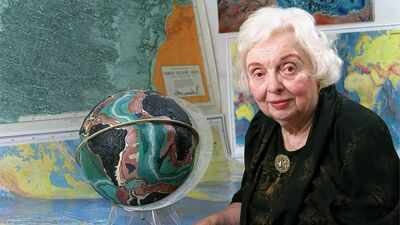
Meet Marie Tharp: The woman who never went to sea but discovered the hidden world beneath the oceans in 1957 and changed Earth science forever |

For much of the twentieth century, the deepest parts of the oceans remained among the least understood places on Earth. Ships crossed vast stretches of water every day, yet almost nobody knew what lay beneath them beyond scattered depth measurements collected for navigation. The seabed was often imagined as a broad, featureless plain interrupted only…
Read More

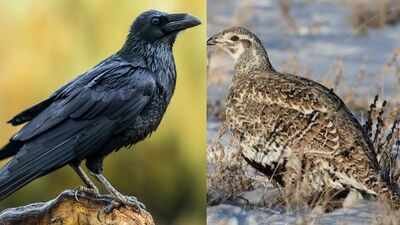
Why wildlife managers are coating raven eggs with nontoxic oil to protect sage-grouse

Egg oiling helps protect vulnerable Sage-Grouse by reducing raven numbers. Common ravens are among the most intelligent birds in the world. Over the years, raven numbers have increased in many places because they benefit from food and nesting sites linked to human activity. According to USGS research, from 1966 to 2018, raven numbers across North…

Read More

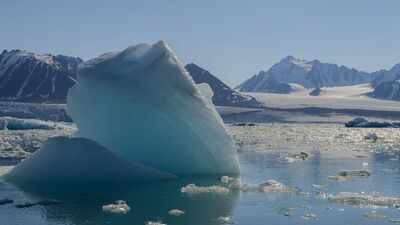
Scientists discover the hidden process in the Arctic that could reshape Earth’s future climate by changing cloud cover |

Image Credit: Hannes Grobe The Arctic region is warming three times faster than the global average since the past 40 years, which makes it one of the most sensitive areas on the planet. Recent scientific findings published in Nature Geoscience have uncovered a previously unknown natural process that massively increases the number of cloud-forming particles…

Read More

Scientists say California’s 2020 drought may have permanently damaged a massive underground water reserve that can no longer store as much water |

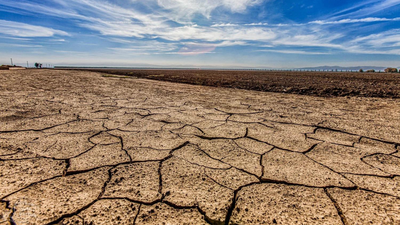
California’s ongoing drought has inflicted lasting harm on its underground water reserves. The over-extraction of groundwater has resulted in aquifer compaction, diminishing the earth’s capacity to store water. In certain areas of Sacramento Valley, land subsidence has exceeded half a meter. This irreversible damage casts a shadow over future agricultural water security, serving as a…

Read More

Colorado scientists convert carbon dioxide into durable plastic: Solving two biggest environmental problems of planet Earth |

Image Credit: (Representational Image: iStock) Carbon dioxide is a naturally occurring gas, abundant in quantity but its chemical stability makes it difficult to convert into useful materials. Since the 1960s, scientists have been attempting to transform carbon into polymers, which require specific catalysts to overcome the energy barriers. Some success was achieved in creating various…

Read More

James Webb’s ‘little red dots’ may be 100,000-sun monster stars; their collapse could have seeded the universe’s first giant black holes

‘Little red dots’ may be pulsating monster stars that created early-universe black holes, study finds Mysterious, compact objects discovered in the early universe may actually be enormous “monster stars” with masses up to 100,000 times greater than the Sun.According to a new study by the Center for Astrophysics | Harvard & Smithsonian, these giant stars…

Read More

80-million-year-old snake skull discovery in Brazil proves that ancient snakes conquered the three worlds at once |

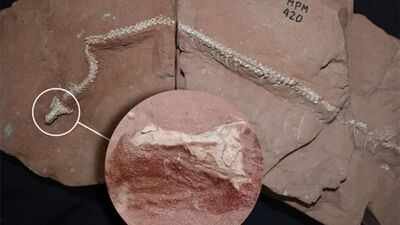
The skull and brain case of a newfound ancient snake species were still intact. Image Credit: Agustin Martinelli/ScienceNews Snakes represent one of the most successful groups of vertebrates on Earth, with over 4,200 living species accounting for one-third of all scaled reptiles. Despite a long history going back to at least the Middle Jurassic, the…

Read More

Quote of the Day by Marie Curie: “Nothing in life is to be feared, it is only to be understood.” |

Marie Curie’s profound observation underscores the power of understanding as a tool to conquer life’s fears. She posited that knowledge serves as a buffer against uncertainty, fostering self-assurance. As a trailblazing scientist, she unearthed polonium and radium, earning Nobel Prizes for her remarkable contributions to physics and chemistry. Her enduring message of curiosity and the…

Read More

15000-year-old bones and teeth reveal what humans ate before agriculture

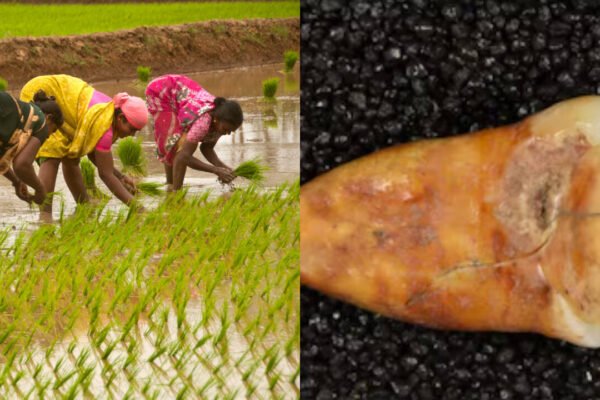
The introduction of agriculture, around 11,500 years ago in the Middle East was a milestone for humankind. For decades, the image of the prehistoric hunter-gatherer has been remarkably consistent: hunters skilled in living off mainly meat, with plants as occasional supplements. It’s an image deeply embedded in popular culture, in documentaries and even in modern…

Read More

Scientists reveal how green roofs lower rooftop temperatures by 40°F from heat traps to cooling systems |

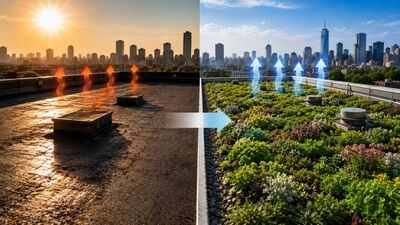
Green roofs offer a solution to urban heat by absorbing sunlight and releasing water. Vegetation shades surfaces and evapotranspiration naturally cools surrounding areas. These living roofs also manage rainwater and provide habitats for urban wildlife. Extensive and intensive systems cater to different building needs and budgets. Cities worldwide are adopting green roofs to combat rising…

Read More