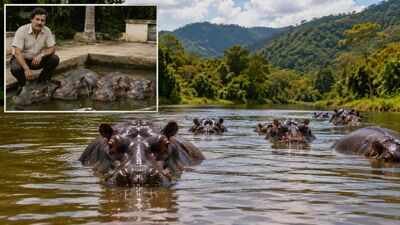
In 1980s, Colombia inherited 4 hippos left behind at Pablo Escobar’s estate, but today they have grown into world’s largest invasive hippo population |

In Colombia, the hippos originally imported by Pablo Escobar have become an ecological menace. Initially introduced for his private zoo, their population has surged to over eighty, wreaking havoc on local waterways. Their excrement disrupts the delicate balance of river ecology, depleting oxygen levels and triggering harmful algal blooms. Addressing this invasive species poses significant…


Read More

US buried 56 million gallons of highly radioactive waste in 177 underground tanks in 1990, now experts will use it to make 4.2 metric tons of glass daily

Along with Russia, the United States possesses nearly 90% of all nuclear weapons on Earth. The country has over 5,044 total warheads and is known to have the most balanced and heavily maintained strategic triad delivery systems. While it has no need to amp up on developing more nuclear weapons, it needs to urgently clear…

Read More

Scientists develop technology that turns factory exhaust carbon dioxide into useful chemicals; new study reveals |

Industrial plants release vast amounts of carbon dioxide every day, yet much of the conversation around cutting those emissions has focused on capturing the gas and storing it underground. Turning it into something useful has always been a more attractive idea, but one that has struggled outside laboratory conditions. Factory exhaust is not made up…

Read More

Part of SpaceX rocket the size of a school bus crashed into the Moon, scientists say it caused a huge explosion and a 60-foot crater

SpaceX has been achieving many of its targets these days, even by accident. After months of anticipation, a discarded upper stage of a SpaceX Falcon 9 rocket is believed to have careened into the Moon early Wednesday morning near the Einstein Crater. It exploded on impact, causing a flash that may have been visible from…

Read More

Meet Aakash Manaswi, the Florida student whose CO2 mite blower made bees healthier and increased honey across 60 hives while killing a parasite that harms 50% of them annually

Honey bees are one of the most important insects across the globe. The buzzing bees do more than just make sweet nectar, they pollinate crops, maintain ecosystems and produce natural goods. According to the UN Environment Programme, they directly contribute to food security and a third of the world’s food production depends on bees. However,…

Read More

The African Great Lakes contain more than 25% of Earth’s surface freshwater, yet many of their unique species face extinction |

Somewhere along the East African Rift Valley sits a chain of lakes holding more than a quarter of all the surface freshwater on the planet. Most people have never heard of them. The African Great Lakes span ten countries, keep over 50 million people fed and employed, and rarely get a mention alongside the world’s…

Read More

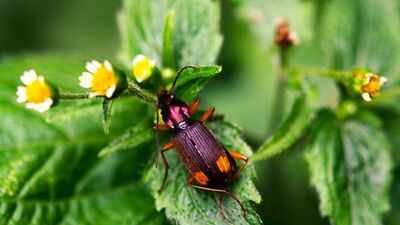
The insect that carries its own bomb: How the bombardier beetle turns chemistry into a weapon against its predators

Bombardier beetles possess a unique defense mechanism involving explosive chemical sprays. These insects mix chemicals to create a hot, noxious spray for protection. Their specialized internal structures allow them to survive these powerful self-inflicted explosions. Bombardier beetles can fire their chemical bombs multiple times before needing to escape. These fascinating insects have evolved remarkable adaptations…

Read More

Scientists discover three new stomach bacteria after 21 years of research that may be linked to chronic stomach disease in pygmy sperm whales |

Pygmy Sperm Whale’s Deep Dive (AI-generated image) Pygmy sperm whales are among the least studied large mammals in the ocean, spending nearly their entire lives far offshore, diving deep to hunt squid and fish, and rarely surfacing long enough to be observed alive. Most of what scientists know about the species comes instead from whales…

Read More

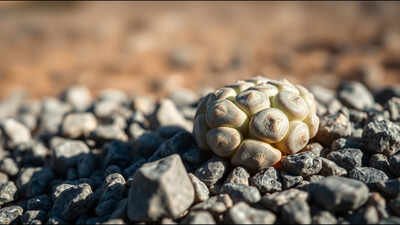
Lithops werneri: The tiny Namibian plant that survives by disguising itself as a pebble. Fewer than 200 now remain in the wild |

Representative Image of Lithops werneri camouflaged among grey stones in Namibia’s Erongo Mountains (AI-generated image) In a small patch of Namibia’s Erongo Mountains, a tiny succulent grows so convincingly disguised as a pebble that most people would walk straight past it without a second glance. This plant, Lithops werneri, survives by mimicking the grey, weathered…

Read More

In 2006, a tiny deep-reef fish was pulled from deep water off South Australia and misfiled; 20 years later, scientists recognised a new species

Image Credit: Journal of Lost Species Some discoveries happen the moment a specimen is collected. Others take years. In this case, it took nearly two decades.A tiny deep-reef fish brought up from the waters off South Australia in 2006 spent nearly two decades in a museum collection after being mistaken for a known species. According…

Read More