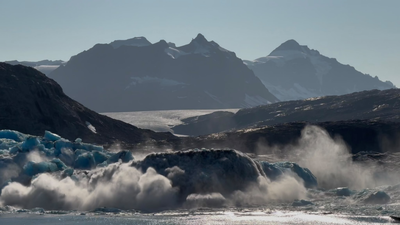
Scientists aboard RRS Sir David Attenborough watched a 1km-wide, 100m-thick section of Greenland’s Sorgenfri glacier break away, weighing an estimated 18 million tonnes

A scientist on board captured the moment the glacier crashed into the ocean. Credit: Alice Fremand Scientists aboard Britain’s flagship polar research vessel, RRS Sir David Attenborough, watched an estimated 18 million metric tonnes of ice crash into the ocean when a massive section of Greenland’s Sorgenfri glacier broke away in a single evening event.The…
Read More

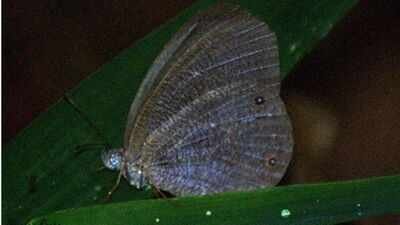
Butterflies are changing where they live across the planet, with climate and extreme weather driving most documented shifts

In Brazil, the blue butterfly Godartiana byses has expanded from the states of Rio de Janeiro and Bahia to Sao Paulo. Butterflies are relocating across the world as climate change and extreme weather continue to alter their habitats. According to a new global study, many species are expanding into new areas, while others are disappearing…

Read More

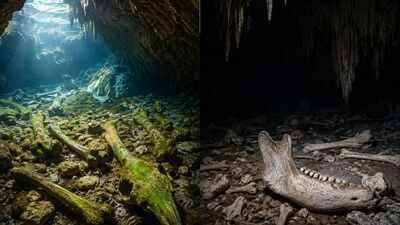
Scientists studied animal bones in South Australia’s underwater caves; those near light carried algae marks while bones in total darkness remained remarkably pristine

Representative Image (AI-generated) Animal bones resting on the floors of South Australia’s underwater caves are revealing far more than the identity of the creatures they once belonged to. According to a new study published in PLOS One, the cave environment itself leaves distinct “fingerprints” on bones, helping scientists reconstruct how they were deposited, the environmental…

Read More

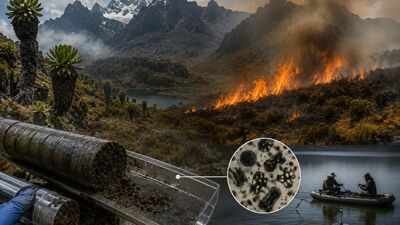
In 2012, a wildfire scorched 42 sq km of the Rwenzori alpine zone; lake cores showed it was the first large-scale fire there in 12,000 years, with charcoal jumping over 100-fold

Representative Image (AI-generated) A wildfire that swept through the high-altitude alpine zone of Africa’s Rwenzori Mountains in 2012 has been identified as the first large-scale fire to strike the region in at least 12,000 years, according to a study published in Nature. By analysing ancient lake sediment cores (cylindrical samples of layered mud from the…

Read More

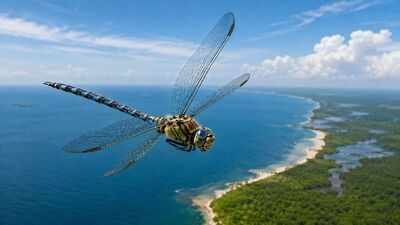
In 2016, Biologists at Rutgers University discovered that the globe skimmer dragonfly is the world’s longest-distance flying insect

In March 2016, researchers identified the globe skimmer dragonfly, Pantala flavescens, as the world’s longest-distance flying insect. Led by researchers at Rutgers University-Newark, the study used genetic analysis rather than direct observation to reach its conclusion, comparing DNA samples collected from dragonfly populations scattered across multiple continents. Rutgers University-Newark findings suggested these insects were travelling…

Read More

Meet Millie Pradawong, the 14-year-old Virginia student using machine learning and CRISPR to make microalgae produce more biofuel

Millie Pradawong developed an AI and CRISPR tool to improve microalgae biofuel production. A fourteen-year-old teen in United States has developed a computational tool with the help of machine learning and CRISPR gene editing to improve biofuel production. Millie Pradawong is one of the ten finalists in the 3M Young Scientist Challenge this year.Her project…

Read More

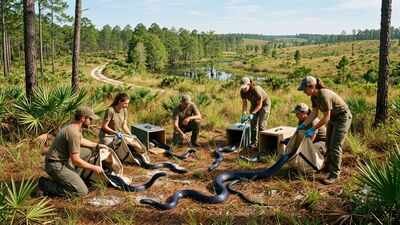
A giant snake vanished from parts of the US decades ago. Scientists are now releasing 42 eastern indigo snakes to bring it back |

In Spring 2026, conservationists released 42 eastern indigo snakes into their historical habitats in Florida and Alabama. After a year of specialized care, these reptiles have adapted well, with monitoring indicating successful survival and breeding in the wild. This significant reintroduction effort seeks to restore self-sustaining populations of this unique snake species to their native…

Read More

Scientists created the world’s whitest paint that reflects 98.1% of sunlight and it could cool buildings without air conditioning |

Keeping buildings cool has become an increasingly difficult challenge as temperatures rise and air conditioning demand continues to grow. While cooling systems provide comfort, they also consume large amounts of electricity, adding to energy costs and greenhouse gas emissions. That has encouraged scientists to look for alternatives that work with nature rather than against it….

Read More

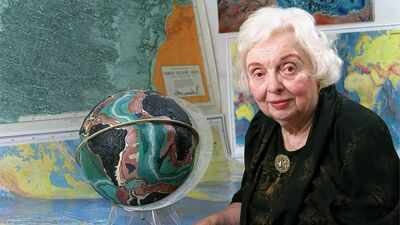
Meet Marie Tharp: The woman who never went to sea but discovered the hidden world beneath the oceans in 1957 and changed Earth science forever |

For much of the twentieth century, the deepest parts of the oceans remained among the least understood places on Earth. Ships crossed vast stretches of water every day, yet almost nobody knew what lay beneath them beyond scattered depth measurements collected for navigation. The seabed was often imagined as a broad, featureless plain interrupted only…

Read More