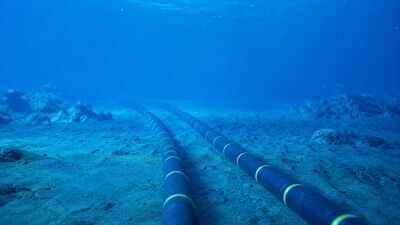
Scientists turn undersea internet cables into giant whale detectors that can track even silent whales through tiny changes in water movement |

Subsea fibre-optic cables. Image Credit: AI Generated Fibre-optic cables spread across the seafloor have long carried internet traffic between countries, but researchers are discovering another surprising use for this global network; detecting whales. A 2022 study in ‘Frontiers in Marine Science’ showed that existing submarine fibre-optic cables could be turned into vast underwater sensors capable…
Read More

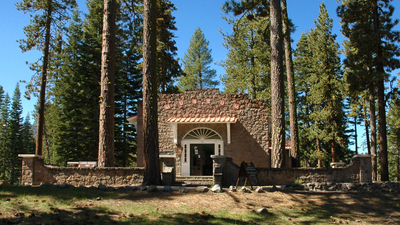
In 1929, Benjamin and Estella Loomis gave Lassen Volcanic National Park 40 acres, a museum and a seismograph building; they kept only a tiny lifetime lease, while their museum became the first privately built one donated to a US national park

In 1929, local homesteader and photographer Benjamin Loomis and his wife, Estella, formally gave 40 acres of valuable mountain land to the United States government. The donation included a hand-built museum and a working seismograph station beside Manzanita Lake. The deal was the first known case in American history of a privately built museum being…

Read More

In 1965, a mountaineer found a dead seabird high in New Zealand’s mountains. Then, spent next 50 years to save its species from extinction |

PC: New Zealand’s Forest and Bird In 1965, Geoff Harrow walked into the Kaikōura mountains following a story about an unusual seabird nesting somewhere high above the valleys. He did not find the colony on his first attempt. The next morning, on a steep deer track, a decomposing bird provided the clue he needed. It…

Read More

In 2015, this ordinary coffee cup hid seeds inside its paper; after the last sip, you could plant it instead of throwing it away |

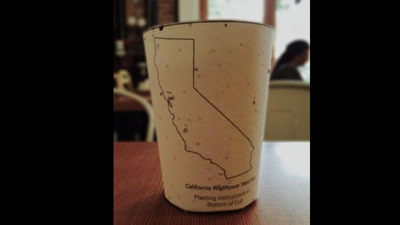
A disposable coffee cup normally has a very short life. It holds a hot drink, travels with its owner for a while and is then left behind as waste. In 2015, an unusual idea proposed changing what happened next. Reduce. Reuse. Grow. Developed what it called the “World’s First Plantable Coffee Cup”, a paper cup…

Read More

In 2024, fishers accidentally caught a 2.5-metre goblin shark alive off the Canary Islands, marking the first recorded live sighting of the species there |

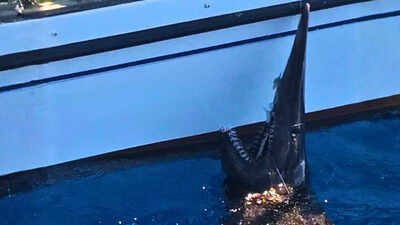
Goblin shark, PC: University of La Laguna In May 2024, a group of recreational fishers off the coast of San Cristóbal, roughly 9.5 kilometres from Gran Canaria, hooked something none of them expected while fishing in 900 metres of water. What came up was a 2.5 metre goblin shark, a species so rarely seen alive…

Read More

In 1867, New Zealand introduced brown trout for sport fishing; more than 60 million were released by 1921, and the invader later caused local extinctions and fragmented native fish populations

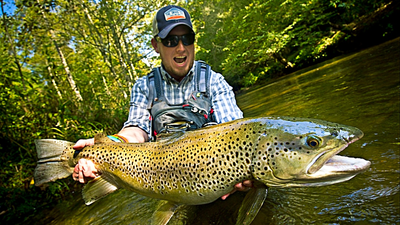
New Zealand introduced brown trout for sport fishing When British settlers packed thousands of brown trout ova onto ships bound for the Antipodes in 1867, they hoped to recreate the sport fishing they knew from Europe. Over the next five decades, acclimatisation societies bred and released more than 60 million brown trout into waterways across…

Read More

A 2,500-year-old animal bone found in Sicily reveals how ancient people wrote on clay |

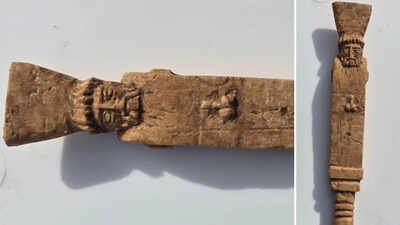
Archaeologists uncovered a rare stylus depicting Dionysus, PC: Superintendency of Caltanissetta/Sicilian Government In Gela, on Sicily’s southern coast, archaeologists have uncovered a rare and remarkably well-preserved bone stylus dating to the 5th century BCE, decorated with imagery that appears to connect craftsmanship with the worship of Dionysus. The object measures 13.2 centimetres long and was…

Read More

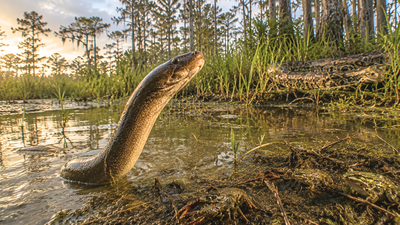
Florida’s Everglades face new threat as an invasive Asian swamp eel wipes out local crayfish and frogs and could be more destructive than the Burmese python |

Florida’s Everglades is facing a stealthy invasive threat beneath its waters as the Asian swamp eel spreads through wetlands and preys on fish, crayfish, frogs and other aquatic animals. The air-breathing fish, native to East and Southeast Asia, has been established in Florida for decades, but researchers are increasingly documenting severe ecological consequences in the…

Read More

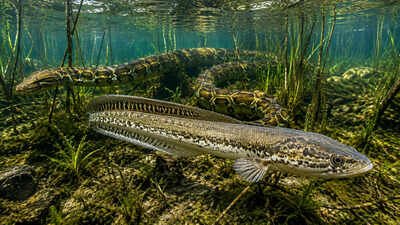
Since the 1980s, Florida’s biggest threat has been Burmese pythons; but this snake-like fish may be even worse for the Everglades ecosystem |

In Florida’s canals and wetlands, some of the most consequential changes are difficult to see. An Asian swamp eel can spend much of its time buried in mud or hidden beneath vegetation, emerging to feed when water returns. That makes it very different from the Burmese pythons that have become a familiar symbol of the…

Read More