Scientists develop AI sensor that identifies cobra or viper venom with 95% accuracy in 4 minutes; how liquid crystals make it possible |

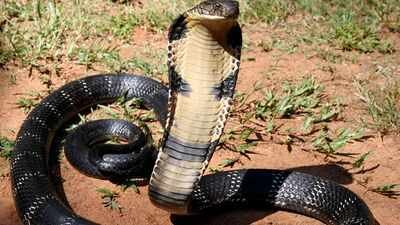
Identifying the type of snake venom quickly can help doctors choose the right treatment after a bite. Researchers have developed a laboratory sensor that can distinguish between cobra and viper venom with the help of artificial intelligence. The system achieved 95% accuracy in identifying the two types of venom with a sensing time of four…

Read Full News

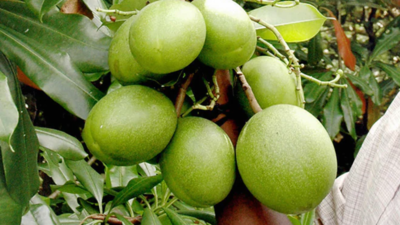
The ‘suicide tree’ of Kerala: How an innocent-looking fruit became linked to hundreds of deaths and a forensic puzzle

Inside that fruit lies a toxin capable of disrupting the human heart. (Photo: The Washington Post) It looks like an ordinary tree growing beside Kerala’s backwaters, its glossy green leaves swaying in the breeze and its white flowers adding to the landscape. Its green, mango-like fruit does little to suggest danger. Yet inside that fruit…

Read Full News

In 1975, Kodak began operating a uranium-based research device beneath its Rochester laboratory; 31 years later it shut down, and a new account explains why it was never a self-sustaining nuclear reactor

Kodak’s equipment contained about 3.5 pounds of highly enriched uranium (Representational AP photo) For most people, Kodak is a name associated with cameras and photographic film. But for 31 years, the American company had something far less familiar inside its research facility in Rochester, New York: a nuclear device containing highly enriched uranium.The machine began…

Read Full News

England put £25 million into 20 nature projects in 2024; two years later, they had improved 4,800 hectares, planted 127,500 trees and beaten the programme’s habitat target by nearly 30%

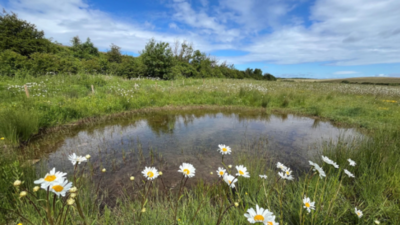
A £25 million conservation programme has helped restore thousands of hectares of habitat across England, plant more than 127,500 trees and bring tens of thousands of people into nature-focused activities. According to a final independent evaluation published by The National Lottery Heritage Fund on October 5, 2026, the Species Survival Fund exceeded its original habitat…

Read Full News

In 2023, California scientists moved 246 endangered black abalone to a protected coastline; three years later, site counts rose from 54 to 302, density hit 1 per sq metre and juveniles appeared

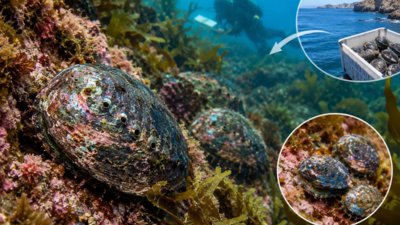
Representative Image (AI-generated) In 2023, scientists relocated 246 endangered black abalone to a protected coastal site in California to help restore a population devastated by disease. Three years later, surveys recorded 302 individuals, compared with 54 before the intervention, while the density in high-quality habitat reached one abalone per square metre. Researchers also discovered juvenile…

Read Full News

SpaDeX sats re-enter Earth’s atmosphere after nearly 21 months in orbit

BENGALURU: The two satellites — SDX01 and SDX02 — that formed the core of the Indian Space Research Organisation’s (Isro) Space Docking Experiment (SpaDeX) re-entered Earth’s atmosphere on Oct 12 and 13, bringing the mission to an end after nearly 21 months in space.A senior scientist from the Isro Telemetry, Tracking and Command Network (Istrac)…

Read Full News

Scientists develop a tiny 98-gram hopping robot that uses snapping elastic metal rods to move faster across six terrains, climb stairs and swim through water |

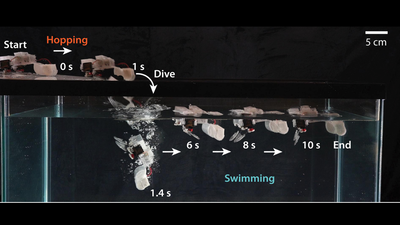
PC: Study: Geometry-controlled instability pathway selection in elastic helices enables fast, efficient robotic locomotion​ Researchers have developed a small, untethered robot that uses snapping elastic rods to hop across sand, grass, glass-like acrylic and other surfaces, as well as swim in water. According to the study published in Science Advances, titled ‘Geometry-controlled instability pathway selection…

Read Full News

Rare hawks nest in California county after 30 years as abandoned farmland gets a new life

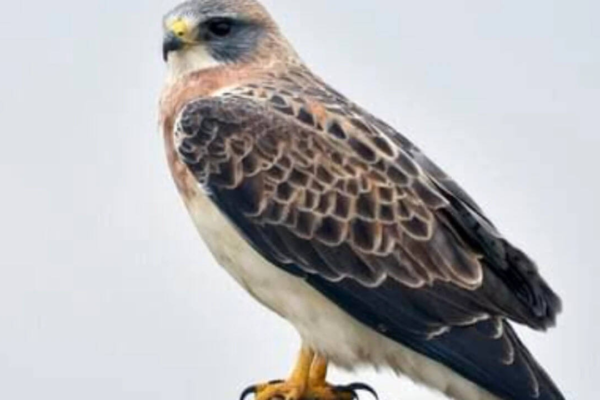
A California floodplain restoration project launched in 2023 has recorded its first confirmed nesting Swainson’s hawks in Shasta County in about 30 years. More than 32,000 native trees and plants were introduced across 150 acres of damaged land near the Sacramento River. Conservationists have also recorded rare indigo buntings breeding at the site, raising hopes…

Read Full News

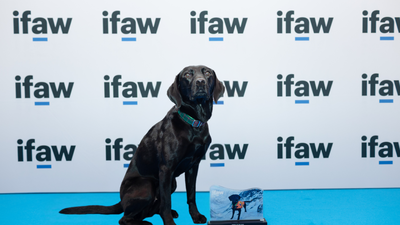
A Labrador once trained for mountain rescue becomes a marine conservation detection dog; Sgiath can sniff out the invasive organism known as “sea vomit” and wins IFAW’s 2026 Animal of the Year Award

Photo credit: The International Fund for Animal Welfare (IFAW) A six-year-old black Labrador from the Scottish Highlands in the UK has found an unusual new role in conservation. Sgiath, who was originally trained as a mountain rescue search dog, can now detect an invasive marine organism known as “sea vomit” by smell. Her work has…

Read Full News

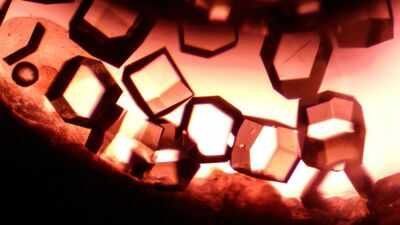
NASA grew crystals from a protein found in human tears aboard ISS; scientists use them to study how proteins form in space |

Image Credit: Redwire/Nasa Nasa has grown crystals of lysozyme, a protein found in human tears, saliva and milk, aboard the International Space Station (ISS) to study how crystals form in microgravity. The experiment offers a closer look at how proteins develop under conditions that differ from those on Earth. According to Nasa, the crystals were…

Read Full News