6,500 years ago, someone drilled a human tooth and wore it as a pendant; archaeologists found it sitting in a Serbian museum collection

When archeologists found the tooth it was already damaged, measuring only 23 millimeters. Its crown had been split by agricultural activity into two parts. (Image Courtesy: N. Marković) It sat on a museum shelf for nearly twenty years, unseen, mistaken for something far more common. But now a closer look at a tiny, worn tooth…
Read More

In 2025, 11-year-old Touren Pope spotted a fossil exposed on the ground in Wyoming; it turned out to be a nearly complete 48-million-year-old turtle shell, and he was allowed to name it

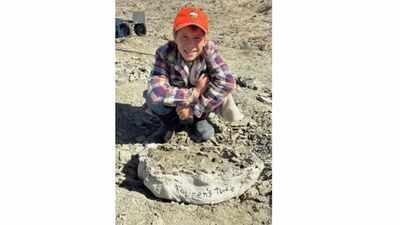
11-year-old Touren Pope finds 48-million-year-old turtle fossil in WyomingPhoto credit: Craig Thomas, BLM Rock Springs Field Office What began as a routine family rock-hounding trip in southwest Wyoming turned into a paleontological headline when 11-year-old Touren Pope noticed something unusual poking out of the ground. What he’d spotted was the fossilized shell of a softshell…

Read More

1,500-year-old child burial unearthed in Peru with whistles, a rattle and a striking sculptural vessel, archaeologists uncover clues to an ancient civilisation’s rituals

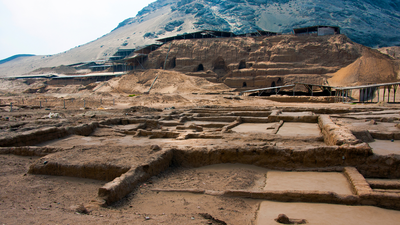
Huacas de Moche (Image Credit: Canva) Archaeologists working at the Huacas de Moche Archaeological Complex in northern Peru have uncovered the burial of an infant estimated to be about 1,500 years old. The child, approximately 1.5 years old, was buried with a funerary assemblage that included two whistles, a rattle and a sculptural vessel. Researchers…

Read More

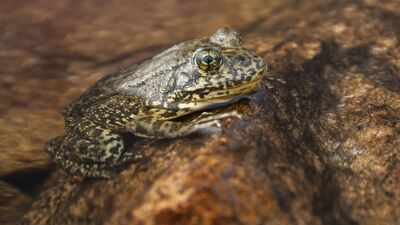
California releases more than 3,000 endangered mountain frogs into the wild, restoring a species that has lost most of its home |

Mountain yellow-legged frog. Image Credit: US Fish & Wildlife Service More than 3,000 endangered mountain yellow-legged frogs and tadpoles have been released into California’s mountain ranges in 2026, giving a once widespread amphibian another chance to survive in the wild. The reintroduction, carried out by the ‘San Diego Zoo Wildlife Alliance’ and its partners, is…

Read More

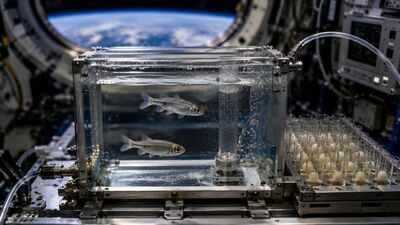
In 1973, Nasa sent two fish and 50 eggs into space; the unusual experiment helped reveal what happens to living organisms without gravity |

When humans leave Earth, even something as basic as knowing which way is up can become confusing. That made fish surprisingly useful subjects for space research. In 1973, Nasa sent two mummichogs and 50 eggs aboard Skylab 3, giving scientists a chance to watch both adult fish and young that developed entirely in orbit. Soon…

Read More

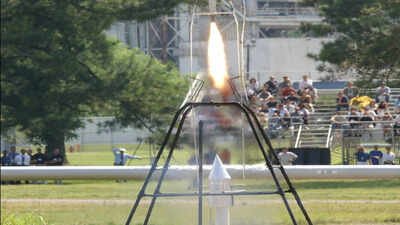
In 1926, a 10-foot rocket rose just 41 feet from a Massachusetts farm; 35 years later, NASA put its creator’s name in space |

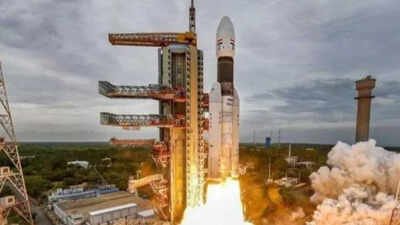
A replica of the world’s first liquid propellant rocket, PC: Wikimedia Commons On March 16, 1926, on a snowy farm in Auburn, Massachusetts, physicist Robert H. Goddard set up a slim, 10-foot rocket he had nicknamed Nell on a launch frame in an open field. Fueled by gasoline and liquid oxygen, the rocket climbed just…

Read More

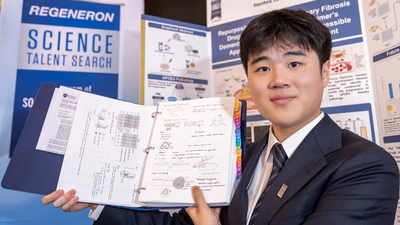
Meet Leon Wang, the 17-year-old Connecticut student who found 2 FDA-approved drugs that reduced Alzheimer’s-linked damage in lab-grown brain cells

Leon Wang, the 17-year-old Connecticut student (Image Credit: Society For Science) Alzheimer’s disease remains one of the most difficult neurological disorders to treat, partly because the processes behind it can begin damaging brain cells long before symptoms become apparent. Now, a project by 17-year-old Connecticut student Leon Wang has drawn attention for exploring whether medicines…

Read More

Scientists turned plastic bottles and corn waste into protein-rich cookies; the food could help tackle hunger problem and also feed space crews

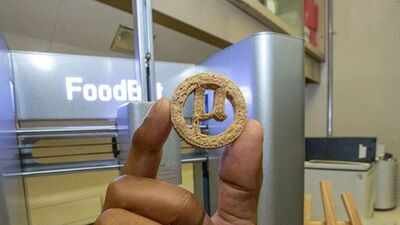
The technology could also potentially be used in places such as submarines and future human settlements on the Moon or Mars (American chemical society photo) Researchers at Southern Illinois University Carbondale (SIU Carbondale) are working on a technology that turns plastic waste from a water bottle into part of a cookie. For this, they programmed…

Read More

In 1926, a 10-ft rocket flew 41 ft; 35 years later, NASA honored its creator in space |

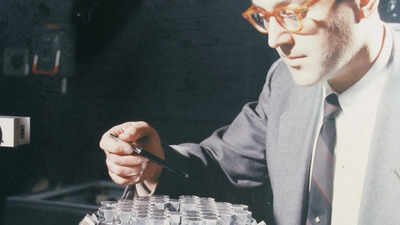
Goddard physicist Henry Plotkin inspects the retroreflector array destined for the 1964 Beacon Explorer A satellite, PC: Henry Plotkin/ Nasa On October 29, 1964, a team at NASA‘s Goddard Space Flight Centre in Greenbelt, Maryland, recorded the first successful laser returns from an artificial satellite. The target was Beacon Explorer B, also known as Explorer…

Read More