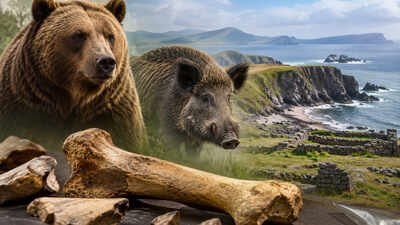
For 30 years, the “Kerry cow” bones were seen as proof of early farming in Ireland; scientists now say they belonged to a bear and wild boar

Representative Image (AI-generated) For more than three decades, a collection of animal bones from Ireland’s Ferriter’s Cove was considered some of the earliest evidence that farming had reached the island. But new research has now overturned that interpretation. According to University College Dublin (UCD), bones once identified as cattle have instead been identified as belonging…
Read More

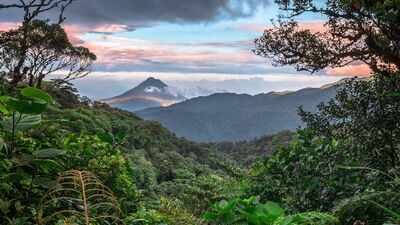
In 1972, Costa Rica began protecting a misty mountain forest: Decades later, Monteverde’s 10,500 hectares have become a remarkable conservation story |

High in Costa Rica’s Tilarán mountains, the forest often appears to be suspended between land and sky. Mist moves through the trees, settles on leaves and mosses, and becomes part of the water moving down the slopes. At Monteverde, that moisture is not simply a feature of the scenery. The forest sits along the Continental…

Read More

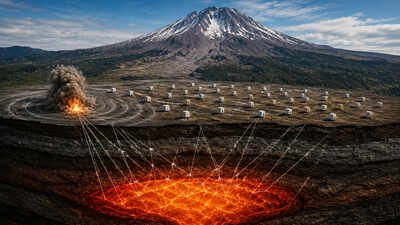
In 2014, scientists set off 23 explosions and deployed 3,500 seismographs around Mount St Helens; the experiment helped image a magma reservoir roughly 4 to 15 km beneath the volcano

Representative Image (AI-generated) Mount St. Helens is one of the most closely studied volcanoes in the United States, but scientists still cannot directly see the complex system of magma and rock hidden beneath it. In 2014, researchers launched an ambitious experiment to change that. According to the Imaging Magma Under St. Helens (iMUSH) project, a…

Read More

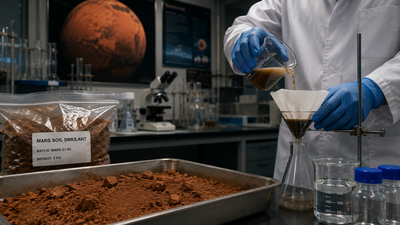
Meet Jeremiah Bents, the Minnesota student who recreated Mars soil in a lab to test whether future astronauts could clean contaminated water |

Mars may be millions of kilometres from Minnesota, but for Cloquet student Jeremiah Bents, one small part of a future Mars mission could be tested much closer to home. Instead of looking at how to reach the Red Planet, Bents turned his attention to what astronauts might do once they get there, particularly when dealing…

Read More

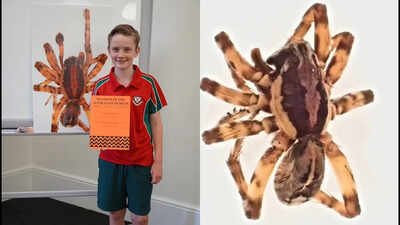
In 2020, 10-year-old Murphy Widdowson collected a spider on a remote Australian island that experts could not identify; scientists later declared it a new species and named it Artoriopsis murphyi after him

While on the remote island Murphy picked up a small spider that intrigued him, and he decided not to wonder what sort of spider he’d found, but to seek the opinion of an expert. For most kids, finding a spider would be a scream, and then a quick retreat. But for Murphy Widdowson, it was…

Read More

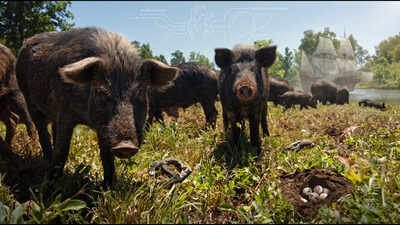
In the 1500s, Spanish explorers left pigs on a Georgia island as future food; centuries of feast and famine produced hogs that rapidly store fat and are now used to study obesity and metabolic disease

Ossabaw Island Hogs (Representational Image Generated using AI tool) Centuries ago, Spanish explorers sailing along the coast of what is now the United States brought pigs with them as a practical food supply. Some escaped, while others were deliberately released so future expeditions would find animals waiting when they returned. On Ossabaw Island, a barrier…

Read More

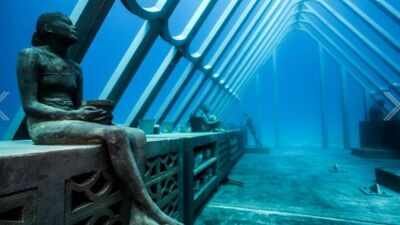
In 2019, a 165-tonne underwater art structure was submerged beneath the Great Barrier Reef; today, coral and marine creatures are slowly transforming the structure |

Beneath the surface of the Great Barrier Reef, a 165-tonne building is being slowly reshaped by the environment around it. The Coral Greenhouse, an underwater installation at John Brewer Reef, was designed to work with the sea rather than simply sit on the seabed. Coral can grow across its surfaces, fish can move through its…

Read More

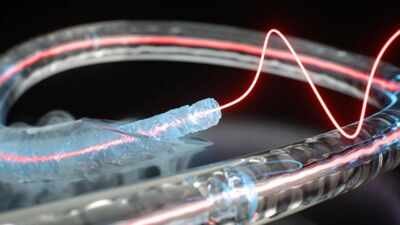
Freezing liquid inside optical fibre makes light and sound interact more than 1,000 times more strongly

Representational photo of a frozen optical fiber core in a glass capillary, which guides and couples light and sound waves efficiently. (Science Daily picture) Freezing liquid inside an optical fibre has helped scientists create an unusual environment where light and sound can interact more than 1,000 times more strongly than they do in ordinary optical…

Read More

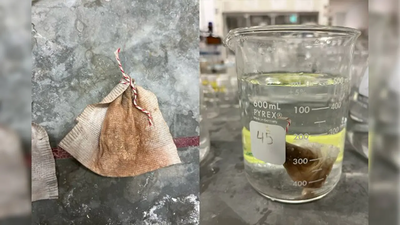
Meet Vick Tan: The Minnesota student who turned a teabag into a low-cost filter that removed more than 90% of arsenic from water |

A small teabag may not seem like much of a solution to polluted drinking water, but for Minnesota student Vick Tan, it became the centre of a science project that went far beyond the classroom. Tan helped develop a simple-looking pouch designed to capture arsenic from contaminated water, using a mix of cellulose fabric, crushed…

Read More

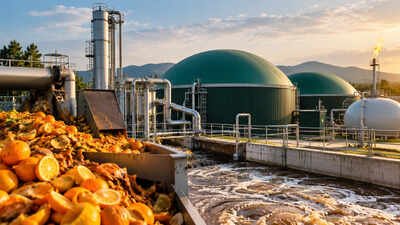
Brazil’s giant orange juice plant will turn citrus wastewater into biogas to power industrial operations |

A major orange juice processing project in Brazil is taking an unusual approach to one of the industry’s biggest waste streams: turning citrus wastewater into renewable energy. Louis Dreyfus Company (LDC) is building what it describes as the world’s largest plant dedicated to producing biogas from citrus effluent at its industrial facility in Bebedouro, São…

Read More