
Scientists finally discover why gold never loses its shine after thousands of years |
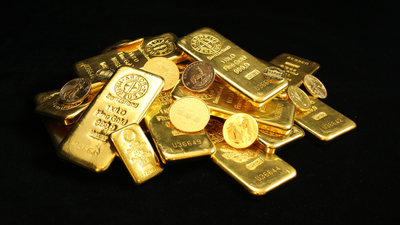
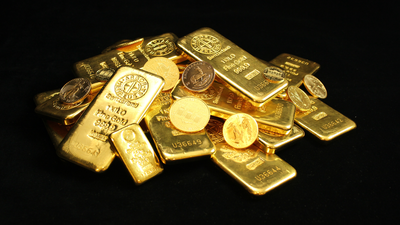
Gold has fascinated civilisations for millennia because of one remarkable quality: it rarely loses its shine. Ancient coins, jewellery and royal artefacts buried for thousands of years can still emerge gleaming with their familiar golden glow. Scientists have long known that gold resists corrosion better than most metals, but the exact atomic mechanisms behind this durability remained unclear. Now, a new study published in Physical Review Letters has revealed that gold atoms rearrange themselves into highly stable microscopic structures that dramatically suppress reactions with oxygen. Researchers say this hidden atomic defence may explain why gold remains untarnished for centuries and could even reshape future industrial chemistry.
Scientists uncover gold’s hidden atomic defence
The study was conducted by researchers at Tulane University, including chemical engineer Matthew Montemore and postdoctoral researcher Santu Biswas.Using advanced computer simulations, the researchers examined how oxygen molecules interact with two common gold crystal surfaces known as Au(110) and Au(100). They discovered that atoms on gold’s surface naturally rearrange themselves into tightly packed hexagonal patterns that strongly resist oxidation.According to the researchers, these structures reduce oxygen reactions by factors ranging from a billion to a trillion compared with less stable surface arrangements.Most metals react with substances in the environment, especially oxygen and sulfur compounds in air. These reactions create surface layers commonly known as tarnish or corrosion.Silver, for example, forms silver sulfide, which gives old silverware its dark appearance. Copper oxidises into the familiar green patina seen on old statues and rooftops.Gold behaves differently because it is considered a “noble metal”, meaning it naturally resists many chemical reactions. However, the new study suggests that gold’s resistance is not simply due to weak oxygen attraction. Instead, its surface atoms actively reorganise themselves into more protective structures.The researchers found that hexagonal surface structures were exceptionally stable and prevented oxygen molecules from easily breaking apart and bonding with gold atoms.When gold surfaces formed rectangular or square-like arrangements instead, oxygen interacted more aggressively with the metal and oxidation became easier.This means the geometry of gold’s surface plays a major role in its durability. The atomic arrangement itself effectively acts like a microscopic shield protecting the metal from chemical attack.
Why gold appears yellow instead of silver
Gold’s colour is also unusual from a physics perspective.Most metals appear silvery because they reflect nearly all wavelengths of visible light equally. Gold is different because of relativistic effects inside its atoms, where electrons move at extremely high speeds.These effects cause gold to absorb blue wavelengths of light more strongly. With blue light removed from the reflected spectrum, the remaining light appears yellow-gold to human eyes.Scientists already understood this optical property, but the new research explains why the colour remains stable for such long periods without becoming dull.
Ancient artefacts show gold’s incredible stability
Gold’s resistance to tarnishing is one reason it became associated with royalty, wealth and religious symbolism throughout history.Ancient Egyptian treasures, including the famous funerary mask of Tutankhamun, still retain much of their original brilliance after more than 3,000 years.Similarly, gold coins recovered from shipwrecks and archaeological sites often appear remarkably well preserved compared with objects made from silver, bronze or iron.The new study offers a detailed atomic explanation for this extraordinary longevity.
The discovery could help future industries
The findings may also have major industrial implications because gold is widely used in catalysis, where materials help accelerate chemical reactions.Gold-based catalysts already play important roles in:
- Chemical manufacturing
- Pollution control
- Renewable fuel research
- Electronics production
- Hydrogen technologies
One important industrial application involves gold-palladium catalysts used to produce vinyl acetate, a key ingredient in plastics, paints and adhesives.However, gold’s strong resistance to oxidation can sometimes limit its effectiveness in catalytic reactions that require oxygen activation.
Scientists may learn how to ‘switch on’ gold’s reactivity
The researchers believe future engineers may be able to deliberately manipulate gold’s surface structure to make it more chemically reactive when needed.By preventing or reversing the protective atomic rearrangements, scientists could potentially encourage oxygen molecules to interact more efficiently with gold surfaces.According to Montemore, this could turn gold into a far more effective catalyst for certain industrial reactions without requiring complex chemical modifications.The discovery suggests that simple physical changes to gold’s atomic geometry may eventually help improve energy-efficient manufacturing and sustainable chemical production.Gold has remained one of humanity’s most treasured materials partly because of its extraordinary resistance to time and decay. While scientists already understood that gold reacts weakly with oxygen, the new study finally reveals the hidden atomic restructuring that gives the metal its exceptional stability.