In 2021, researchers scanning a New Mexico lakebed found 23,000-year-old human footprints that rewrote the oldest chapter of American history |
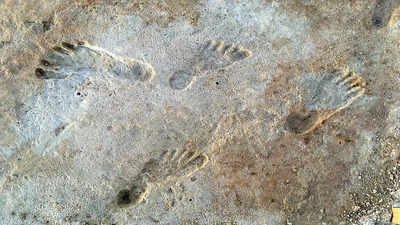
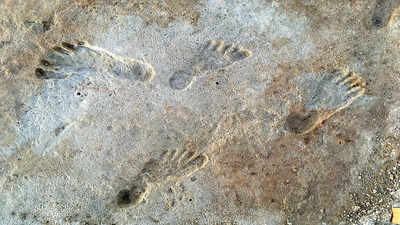
There is a part of the desert in New Mexico that, at first glance, looks like nothing. White dunes, dry air, the kind of landscape that makes a man squint. Buried beneath the sands of White Sands National Park is one of the most extraordinary discoveries in American history. Fossilised footprints of people who walked this land more than 20,000 years ago. Not just one or two prints, but entire trackways of adults and children walking together over wet ground in the Ice Age.The discovery that rewrote everythingThe dominant model for many years was the Clovis-first model, which suggested that humans came to the Americas relatively late, well after the Last Glacial Maximum, the coldest and most severe phase of the last Ice Age. Then came white sands.Human footprints found in ancient mud on a dry lake bed in New Mexico have been dated at between 21,000 and 23,000 years old, putting people in North America right in the middle of the Last Glacial Maximum, well before the time the Clovis model would allow.That’s a huge difference. That’s thousands of years earlier than the previous consensus. The site is the oldest evidence of human footprints in North America, and unlike stone tools or scattered bones, footprints are instantaneous. These are actions. They tell you someone was there, alive, moving and surviving.Time capsule at the bottom of the lakeWithout ancient geology, these prints would be gone. The lakes were shallow, and the shores were wet, so there was muddy ground where footprints formed before drying and being covered over with sediment. Here, the lakebed was a natural record-keeper, leaving human steps in place, not shifting them through time.The most remarkable thing in the record is the human detail. They are not just simple carved marks or isolated bones, but trackways made by adults and children walking on wet ground beside an ancient lake; evidence of behaviour, not just presence. Such physical evidence, left at the very instant of crossing the mud, is rare in a field where dates are always challenged.Did the dates add up? Scientists tested againLake sediments are very hard to date, and such a bold claim needed more than one line of evidence. It was independently tested in a follow-up study in 2023.Published in Science, the research used two independent dating methods: radiocarbon dating of terrestrial pollen and optically stimulated luminescence, which can reveal the last time grains of sediment were exposed to light. Both methods are in accordance with the original age range.
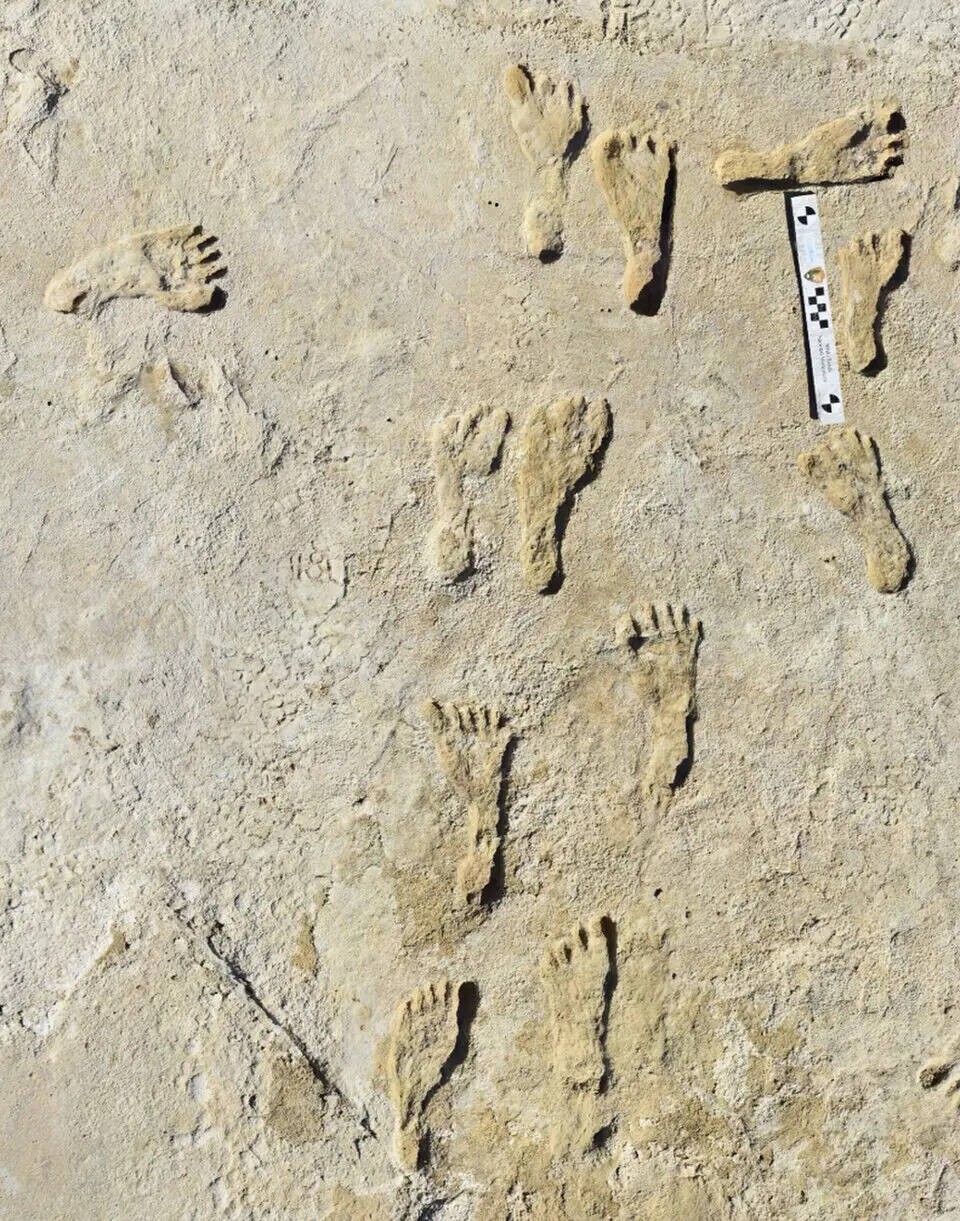
A trackway left by an adult and child crossing wet ground near an ancient Ice Age lake, preserved in the White Sands lakebed for over 20,000 years. Image Credits: Wikimedia Commons
Humans weren’t the only ones thereThose people walking across that ancient lake bed were not walking across a barren landscape. They were sharing it with the mammoths. In the same landscape, the ancient shore left behind tracks of mammoths, giant ground sloths, and other Pleistocene species, indicating an overlap between humans and megafauna. Those same slimy edges which had trapped a child’s foot had trapped the footprints of creatures long dead as well.The UAS Mapping of Pleistocene Fossilised Trackways states that White Sands is just a small part of a much larger trackway field along the shoreline of ancient Lake Otero, where human prints are preserved alongside those of mammoths, giant ground sloths, and dire wolves. That’s not a single surface; that’s a complete Ice Age ecosystem, frozen in time.What a footprint can tell you that a tool cannotTracks at White Sands show normal movement. Adult and child trackways show people walking together around water, offering a glimpse of family movement and everyday survival, not just arrival dates. A trackway is about direction, pace and reason. It is a snapshot of a moving person, and here it is a snapshot of motion in a shared living landscape of Ice Age megafauna, not a wasteland.Why it still mattersTrackways can be washed away by erosion, so scientists are mapping and recording them before they disappear. So this is a scientific milestone as well as a conservation work in progress. There is something worth thinking about this, especially for Americans. The discovery is not just archaeology. It’s about identity, about the story of who was here first, and how and when they lived, and White Sands is rewriting the story slowly.