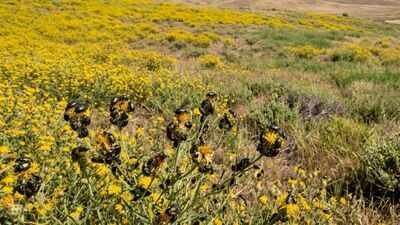
California had 2.34 million acres covered by a toxic yellow weed until tiny Australian beetles fought back and reduced it by 99% within a decade |

For years, St. John’s wort was treated as a useful medicinal plant in parts of Europe. In northern California, its reputation became very different. The yellow-flowered weed spread across pasture and open land, reducing the value of grazing areas and creating another problem for livestock because animals that consumed enough of it could become dangerously…

Read More

Quote of the day by Carl Jung: “A dream that is not understood remains a mere occurrence; understood it becomes a…” |

Jung was a celebrated psychologist Two people can wake up from the exact same vivid, strange dream and treat it in completely different ways. One dismisses it within minutes, filing it away as random mental noise generated by an unremarkable night’s sleep, forgotten entirely by breakfast and never thought about again. The other sits with…

Read More

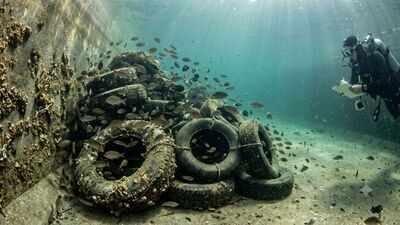
In 1994, researchers in California and Arizona turned discarded tyres into underwater reefs and found 20 times more fish in concrete canals |

When engineers lined canals across the dry American Southwest with concrete, they solved one problem while creating another. The hard surfaces helped stop precious water from disappearing into the soil, but they also stripped away the irregular edges, vegetation and sheltered spaces that aquatic life had used in the old earthen channels. Fish eventually returned,…

Read More

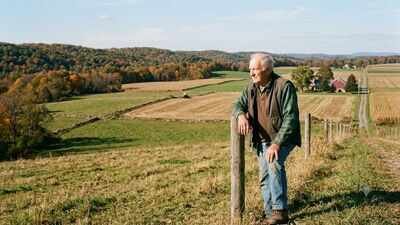
An 86-year-old Pennsylvania farmer was offered $15.7 million for 261 acres but chose $1.9 million to protect the land from development |

At 86, Mervin Raudabaugh had a decision to make over 261 acres of Pennsylvania farmland he had spent decades working. The land had caught the attention of data-centre developers, who reportedly put forward offers exceeding $15 million, including one estimate of about $60,000 an acre. On paper, it was the kind of figure that could…

Read More

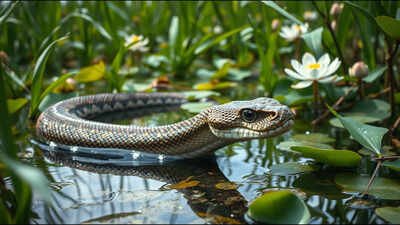
Scientists are tracking Burmese pythons to find other Burmese pythons; a single tagged snake can lead researchers to breeding females |

​Representative Image of a male Burmese python moving through South Florida wetlands in search of females (AI-generated image Wildlife researchers in the Everglades are using one Burmese python to help find another. Scientists at the University of Florida are fitting captured snakes with small radio transmitters and releasing them back into the wild, then following…

Read More

Meet Prakhar Purohit, the North Carolina student who found a way to make tiny batteries from dirty water |

Prakhar Purohit. Image Credit: Young Scientists Lab Prakhar Purohit, a student from North Carolina, has earned recognition for a science project with a unique yet simple-sounding idea of ‘making tiny batteries from dirty water.’ His project, titled ‘Tiny Batteries from Dirty Water,’ was selected as the 2026 North Carolina State Merit Winner in the 3M…

Read More

13-year-old Kevin Tang turned his grandmother’s fall into a device that detects when seniors need help and won $25,000 for the invention |

A 13-year-old inventor has turned a family emergency into a device designed to help older people who may be alone when they fall. Kevin Tang developed FallGuard after his grandmother suffered a fall at home that resulted in permanent brain damage. The problem became harder to ignore when Tang learned that a friend’s grandfather had…

Read More

Meet Harshith Nelabhotla, the Ohio student who built an AI system that can recognise American Sign Language words in real time |

Harshith Nelabhotla. Image Credit: Youth Scientists Lab Harshith Nelabhotla, an Ohio student, has earned recognition for developing a ‘Real-Time ASL Word Recognition System,’ a project that brings artificial intelligence to American Sign Language (ASL). His work has been named the ‘2026 Ohio State Merit Winner’ in the 3M Young Scientist Challenge, placing his idea among…

Read More

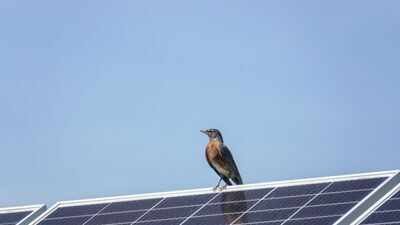
AI cameras watched birds around solar panels for 17,000 hours and recorded no collisions; scientists are now testing the system in 7 US states |

PC: US Department of Energy Solar farms are expanding across landscapes, but scientists still have questions about what happens to birds that live and move around these large arrays. Now, scientists and researchers at Argonne National Laboratory have developed an artificial intelligence-powered camera system that can continuously watch birds around solar panels and identify what…

Read More