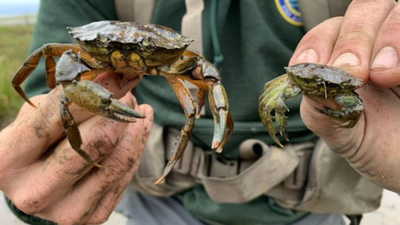
New England has battled invasive green crabs for more than 200 years; now people are eating the destructive species in a bid to protect shellfish, wetlands and coastal ecosystems

Since time immemorial, humans have been consuming food derived from the land, air and water. From vegetables and birds to even crabs, there is not much we have not used to survive on. But currently, people in New England are feasting on green crabs not to survive themselves but to help the native species subsist….
Read More

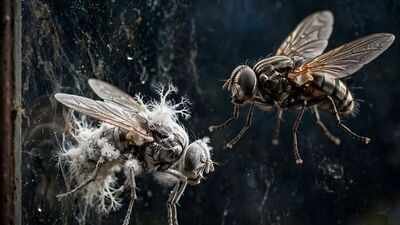
Scientists found a fungus that turns female flies into zombies, then uses their dead bodies to spread spores to healthy flies |

A fungus that infects house flies has evolved a remarkable way to send spores towards new hosts. Entomophthora muscae grows inside an infected fly and, after the insect dies, it produces microscopic stalks that emerge from its body. Each stalk forms a single spore at its tip. Instead of simply dropping away, the spore is…

Read More

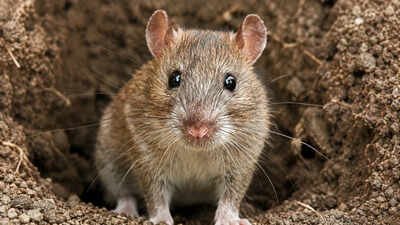
In 2011, up to 30,000 rats were eradicated from Palmyra Atoll; five years later native tree seedlings jumped from fewer than 150 to more than 7,700

In 2011, conservation teams set out on one of the biggest rat eradications ever on a tropical atoll, targeting an estimated 30,000 invasive rodents on Palmyra Atoll in the central Pacific. The goal was not just to remove a pest, but to restore an entire ecosystem that had been suppressed for more than a century….

Read More

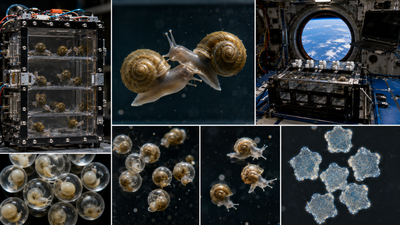
In 2003, Nasa researchers found freshwater snails mated and reproduced in space, with gravity-sensing statoconia 50% larger by volume than ground controls |

In 2003, Nasa researchers reported that freshwater snails carried into orbit aboard the Space Shuttle had mated and reproduced during their mission, allowing their gravity-sensing organs to develop entirely under microgravity. According to the study published in PubMed, tittled ‘Otoliths developed in microgravity‘ formed part of the results of the STS-90 Neurolab Spacelab mission, a…

Read More

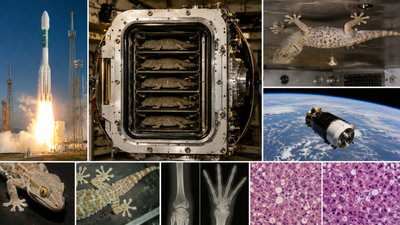
In 2005, NASA sent five geckos into space for 16 days without food or water, with later tests revealing changes in their bones and liver cells |

In 2005, five thick-toed geckos left Earth aboard the unmanned Russian spacecraft Foton-M2, embarking on a 16-day orbital flight with no access to food or water. The mission, a joint undertaking between Nasa and the Russian Academy of Sciences, was designed to test whether a reptile species could serve as a viable model for studying…

Read More

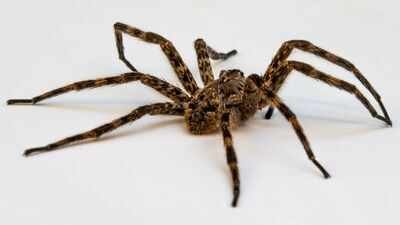
Scientists tested spiders as living DNA traps; their stomach contents can reveal which insects and other animals are living around them |

Wolf spider on white background. Image Credit: Philip N. Cohen/Wikipedia A study published in ‘Experimental and Applied Entomology’ has explored how spiders could tell what animals are living around them by examining traces of prey DNA left inside their bodies. The research tested how ‘reliable prey DNA’ could be found in wolf spiders after feeding…

Read More

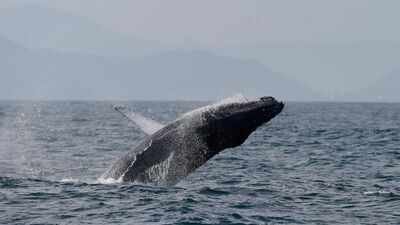
Once hunted to near extinction, Brazil’s humpback whales make a stunning comeback, population surges from just 2,000 to nearly 35,000 in two decades

A humpback whale breaches off the coast of Rio de Janeiro, Brazil. (AP photo) Humpback whales are returning in large numbers to Brazil’s coast after being pushed close to extinction by commercial whaling. Their population in the South Atlantic has risen from about 2,000 to around 35,000 in roughly 40 years, bringing the species close…

Read More

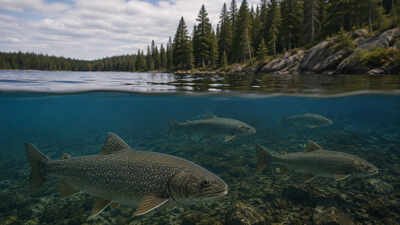
Scientists added sulfuric acid weekly to an Ontario lake for 17 years, lowering pH from 6.8 to 5.2; decades later its lake trout population remains below half its former level

Representative Image (AI-generated) A lake in northwestern Ontario became the setting for a landmark experiment on the effects of acid rain. For 17 years, scientists deliberately added sulfuric acid to Lake 223 every week, gradually changing the water’s chemistry to mimic the effects of acid rain that was damaging lakes across North America and Europe….

Read More

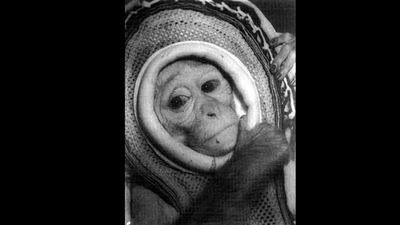
In 1960, Nasa launched rhesus monkey Miss Sam on a Mercury escape test, reaching 1,800 mph before she landed safely in the Atlantic |

In January 1960, Nasa launched the rhesus monkey Miss Sam aboard a Little Joe rocket from Wallops Island, Virginia, to test the launch escape system built for Project Mercury. The flight was designed to confirm that the escape tower could pull the capsule clear of its booster during an abort, a safeguard critical to any…

Read More

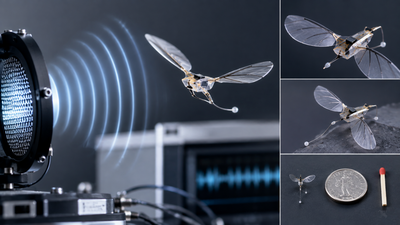
Swiss scientists built tiny flying robots without motors or batteries, using sound waves to generate thrust and steer them through the air |

Engineers in Switzerland have worked out how to make miniature robots fly and steer without a single motor, magnet or battery on board. Researchers at the École Polytechnique Fédérale de Lausanne have built hollow structures that turn sound waves directly into thrust, drawing on Helmholtz resonance, the same physics behind the low hum produced by…

Read More