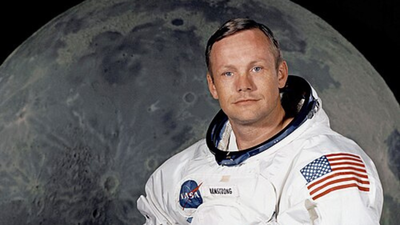
Quote of the day by Neil Armstrong: “We’re required to do these things just as salmon swim upstream” |

Human beings have always been drawn towards challenges that appear difficult, uncertain or even impossible. From exploring unfamiliar places to developing new technologies and solving scientific problems, progress often begins with the decision to attempt something that has never been done before. Astronaut Neil Armstrong, the first person to walk on the Moon, once offered…
Read More

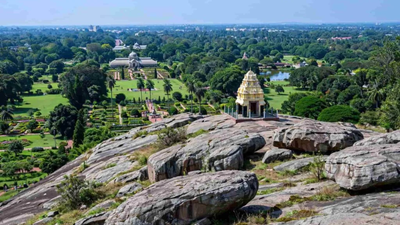
Older than dinosaurs and Himalayas: Why Bengaluru’s 3-billion-year-old Lalbagh Rock is in the news; history of city’s ancient landmark and why citizens are fighting to protect it

On August 30, thousands of Bengalureans gathered at Lalbagh and marched towards the iconic rock. It has been standing in what is now Bengaluru for billions of years, long before humans, cities or even the Himalayas existed. Now, one of Bengaluru’s most significant geological landmarks has found itself at the centre of a modern infrastructure…

Read More

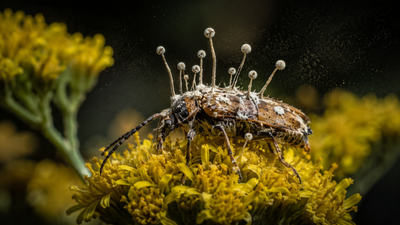
A fungus turns beetles into zombies and makes them die on flowers; scientists say the timing helps infect the next generation |

A fungus infecting goldenrod soldier beetles can alter their behaviour before death and cause changes to their bodies afterwards. Researchers investigating Eryniopsis lampyridarum found infected Chauliognathus pensylvanicus beetles clamped their mandibles tightly onto flower heads shortly before dying. Between 15 and 22 hours after death, the fungus caused the beetles to raise their hardened forewings…

Read More

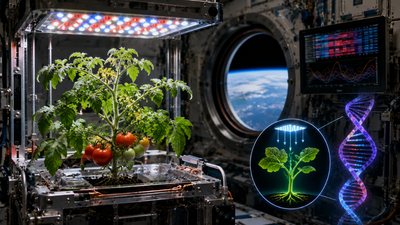
Tomato plants grown in space switched thousands of genes; Nasa study reveals how light helps replace gravity as a growth signal |

A tomato plant carries thousands of genes that stay largely quiet under normal growing conditions. Send that plant into orbit, however, and a striking number of them switch on or off within weeks. New research examining ‘Red Robin’ tomatoes grown aboard the International Space Station has found that once gravity is taken out of the…

Read More

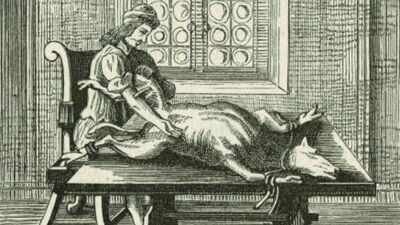
In 1816, a Barbados-born doctor used dogs and cats to test blood transfusion; his forgotten experiments showed why animal blood could not replace human blood |

Human blood was used in an attempt to revive exsanguinated dogs. Image Credit: National Library of Medicine In 1816, a young doctor from Barbados carried out blood transfusion experiments that challenged a dangerous medical assumption and helped point the field towards a safer future. ‘John Henry Leacock’ used dogs and cats to investigate whether blood…

Read More

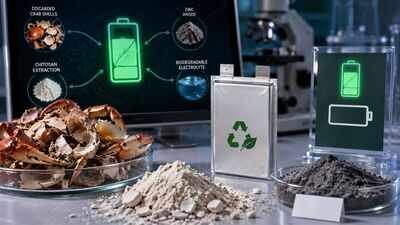
Scientists turned discarded crab shells into a biodegradable zinc battery that stayed 99.7% efficient after 1,000 charging cycles |

A crab shell left behind after a meal might seem destined for the bin, but scientists have found a very different use for it. Engineers at the University of Maryland have turned material derived from discarded crustacean shells into part of a zinc battery, using chitosan to make its electrolyte. The unusual ingredient is tied…

Read More

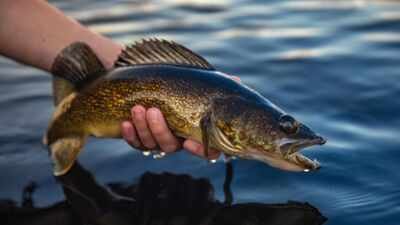
In 2018, scientists began removing about 285,000 fish from Wisconsin’s McDermott Lake; 4 years later yellow perch were up 788%, but walleye recruitment was still zero

Both McDermott Lake and Sandy Beach Lake had previously supported natural walleye recruitment. Scientists removed about 285,000 warm-water fish from a Wisconsin lake over four years in an attempt to help its declining walleye population recover. The large-scale experiment reduced several fish species and was followed by a sharp rise in yellow perch. However, it…

Read More

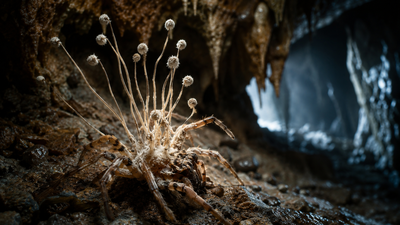
In 2025, scientists discovered a new “zombie” fungus in British caves; it appears to manipulate spiders before killing them |

A new species of fungus capable of manipulating spiders before killing them has been formally identified in caves and disused buildings across Northern Ireland, the Republic of Ireland and Wales, marking one of the first confirmed cases of such behavioural control found in a temperate climate. Named Gibellula attenboroughii in honour of the broadcaster Sir…

Read More

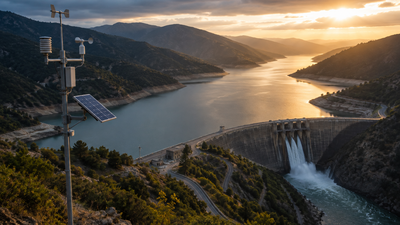
A California reservoir forecasting system could add enough usable water to save $100 million to $200 million a year without building a new reservoir, a study estimates

Representative Image (AI-generated) California’s water problem is often framed around the need for more storage, new infrastructure and expensive construction. But a new study suggests that part of the answer may already be sitting behind the state’s existing dams. By using better weather and water forecasts to decide when reservoirs should release or retain water,…

Read More

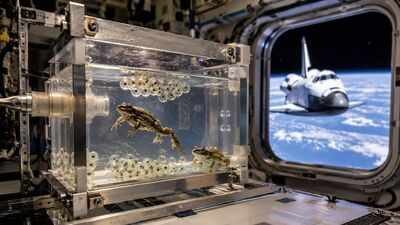
In 1992, Nasa put live frogs and their eggs aboard the Space Shuttle; the eggs were fertilised and developed in microgravity |

For a developing frog embryo, gravity is more than the force that keeps it on the ground. It can provide a reference for how the egg is oriented as development begins, helping establish the direction in which the embryo will form. Nasa wanted to find out what would happen if that reference disappeared. During a…

Read More