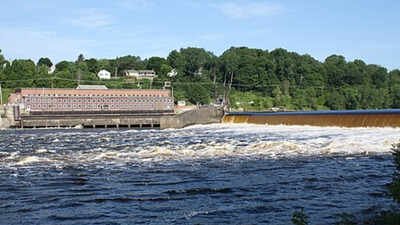
A diver searching the bottom of England’s River Wear has pulled up a huge three-legged iron cauldron that lay hidden underwater for hundreds of years, and researchers are still trying to work out how it got there
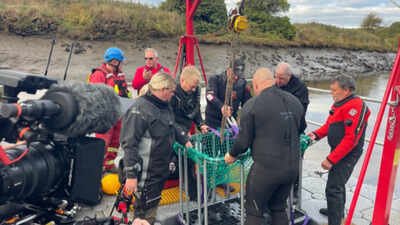
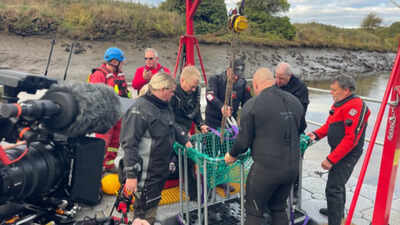
A whole world of material culture, ruling dynasties, and the history of communities and their elusivity is etched in the world around us, in the buildings and the roads. But beneath it all, deep-seated in our rivers, lies the archive of its own history—the world that survived before us. So, when a diver went searching the bottom of England’s River Wear, it was with a target in mind: finding, in the depths of the deep blue waters, an artefact. An iron cauldron with three legs has been recovered from the River Wear in northern England after being buried underwater for centuries, leaving archaeologists with an unusual discovery and a question they have yet to answer: how did it end up there in the first place?The cauldron was found near Offerton, close to Sunderland, by underwater archaeologist Gary Bankhead in September 2025. It was eventually brought to the surface on October 11, 2026, following months of planning and preparations by a team of divers. Although researchers believe the object could date to the medieval period or possibly even the Iron Age, but the precise timeline of this cauldron is yet to be known. However, the recovery has drawn attention to an object that would ordinarily have been used for everyday tasks, including cooking, but whose presence at the bottom of a river has raised questions about the people who once owned it and what actually led to its deposition underwater.
A discovery that took months to bring to the surface
Bankhead, president of Vedra Hylton Community Association first spotted the cauldron while exploring the river in September 2025. Its size made the task of recovering it considerably undertaking, and the team had spent months working outhow to spent months working out how to bring it ashore without damaging the object.
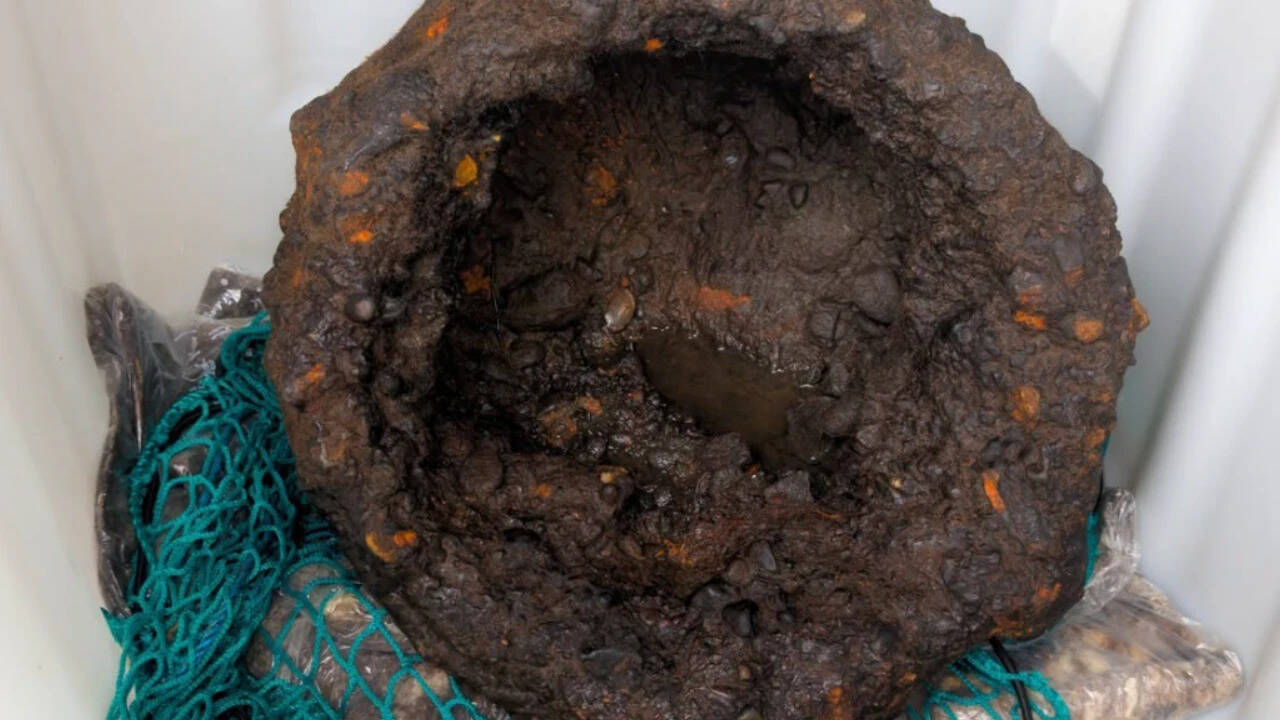
(Image credit: Facebook/ Gary Bankhead)
According to Smithsonian Magazine, the cauldron was estimated to weigh around 70 pounds, making it too heavy for a single diver to lift safely. The recovery involved a coordinated team that freed the object from debris before securing it in thick green netting inside a metal cage. It was then raised onto a boat waiting at the surface.For Bankhead, seeing the object out of the water was a moving experience from spotting it beneath the river. He told the BBC that he had estimated its size while underwater but was struck by its scale when it emerged into daylight. The recovery was the result of months of preparation, including training divers and obtaining the necessary permissions and funding. The cauldron was subsequently transported to York Archaeology’s conservation facilities, where specialists are working to preserve it and remove the deposits accumulated during its time underwater.
What could the cauldron reveal about its past?
Although the cauldron was discovered in an area where numerous Roman artefacts have been found, its construction does not fit neatly with a typical Roman example. The object is made of iron, has three legs and retains a single lifting handle. Bankhead has suggested that it could date to the late Iron Age or the early medieval period, while researchers have also considered a medieval origin. Its exact date has yet to be established, and its association with nearby Roman discoveries does not, by itself, prove that it was made during the Roman period.Researchers plan to use X-rays to examine features that may be concealed beneath the accumulated deposits. These could include rivets, repairs, decorative details and evidence of the techniques used to construct the vessel.
Why was a valuable object left in the river?
As the Smithsonian Magazine reports, Gary Bankhead shared with Sunderland Echo’s Neil Fatkin, that he bleeives that the caludron perhaps came from a “high-status settlement”. This intriguing possibility makes one wonder that if it was a valuable possession, why did it end up underwater rather than remaining in use or being passed down?One explanation being considered is that the cauldron may have been deliberately placed in the river as a ritual offering. However, there is currently no conclusive evidence establishing that this is what happened. It could also have entered the water under different circumstances, and researchers will need to examine the available evidence before drawing conclusions.Its recovery also forms part of a wider archaeological investigation into the history of the River Wear. The surrounding area has yielded more than 800 Roman whetstones, tools used to sharpen blades, alongside coins, stone anchors and other artefacts. Durham University researchers have identified evidence suggesting that Offerton may have been an important centre for whetstone production during Roman Britain.The cauldron’s relationship to this wider archaeological landscape is still being investigated, but it offers another opportunity to examine the people who lived and worked along the river across different periods.
A piece of history that may eventually go on display
For now, the cauldron remains in the hands of specialists as conservation and examination work of the artifact continues. Gary Bankhead hopes the cauldron remains in the hands of specialists as conservation and examination work continues. Bankhead hopes it will eventually be displayed in a museum in the Durham or Sunderland area, alongside other discoveries from the region.Such an exhibition could allow visitors to encounter an object that has remained hidden underwater for centuries, while learning about the archaeological work required to recover and interpret it.For researchers, however, the most significant questions are still unanswered. Establishing when the cauldron was made, how it was used and why it ended up in the River Wear could help explain its place in the history of the region. But as the cauldron after centuries has now seen daylight, the researchers and experts will be able to ascertain the origin, story, and ultimate arrival of the cauldron in the sea.