In 2011, a tiny turtle disappeared into the Massachusetts wild. 15 years later, her daughters were released into the wild |

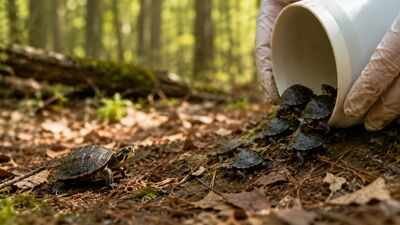
In 2011, Ivy was released into a Massachusetts marsh as a tiny seven-gram Blanding’s turtle after spending her first months in human care. Then she disappeared. For more than a decade, there was no confirmed sign of the turtle, leaving conservationists with no way of knowing whether she had survived. According to the Commonwealth of…

Read More

Scientists create a brain-to-brain network that lets people communicate without words, offering a breakthrough for human communication |

Brain-to-Brain communication between humans. Image Credit: PASIEKA/Science Photo Library/Corbis Scientists have demonstrated direct brain-to-brain communication using a system that transmitted information between people without speech, typing or physical gestures. The research led to ‘BrainNet,’ a system that connected three people and allowed them to collaborate on a task using brain signals. Electrical activity was recorded…

Read More

A rotating ‘garbage island’ spreads over 1.6 million sq km in the Pacific: Plastic averages 50 kilograms per square kilometre, and 75 to 86% of the debris comes from fishing gear

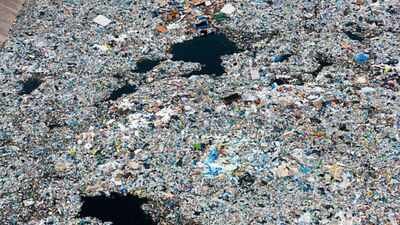
A floating and rotating ‘garbage island’ of an estimated area of 1.6 million square kilometres lies between Hawaii and California, according to a scientific estimate published in 2018. The area of the island is said to be larger than Para and nearly three times the size of metropolitan France. What exists here is a plastic…

Read More

Meet Finnegan McGill, the 18-year-old Arizona student who spent four years building an AI device that can identify birds from their calls and pinpoint where they are |

Finnegan McGill. Image Credit: Chris Ayers/Society for Science Finnegan McGill has spent more than four years turning a concern about declining bird populations into a working piece of technology. This 18-year-old student from Tucson, Arizona, developed a device known as ‘A-BiRD’ (Automated Bird Recognition Device) which could help in identifying birds by their calls and…

Read More

Meet Zainab Nathani, the Illinois student who designed a material that can pull water from humid air using sunlight |

Zainab Nathani, a high school junior from Niles, Illinois, has designed a material that can pull drinkable water straight out of humid air, powered entirely by sunlight. Studying at Niles Township West High School, she built her project around emulsion-templated composite biogels, porous, bio-based structures engineered to trap moisture from the atmosphere and release it…

Read More

Meet Ankan Das, the 15-year-old Florida student who built a shape-shifting robot that crawls on Moon soil and squeezes through tight spaces |

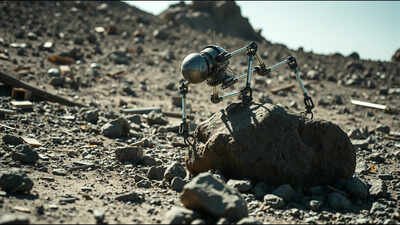
Representative Image of a tensegrity robot navigating obstacles during a search-and-rescue mission (AI-generated image) Ankan Das is a 15-year-old sophomore at Oviedo High School in Florida, but his latest science-fair project looks more like something from a robotics laboratory than a school classroom. For his Regeneron International Science and Engineering Fair project, Das built a…

Read More

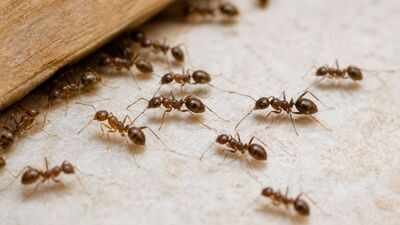
California scientists poisoned invasive Argentine ant colonies with two common baits; one sent workers roaming before death, the other made them stop searching for food and cluster near water

Argentine ants are invasive ants commonly found in homes and gardens in Southern California Seeing more Argentine ants after putting out pesticide bait may not mean the treatment has failed. A new University of California, Riverside, study found that the chemicals can change the ants’ behaviour, with the response varying depending on the type of…

Read More

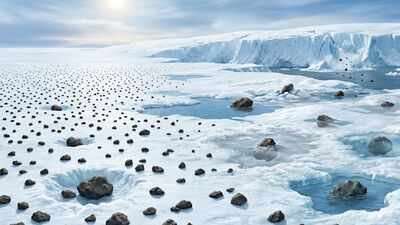
Antarctica holds more than 60% of the world’s meteorites, but warming could make thousands disappear into the ice |

Antarctica holds more than 60% of the world’s meteorites, but warming could make thousands disappear into the ice (PC: AI Generated) More than 60% of all meteorites ever found on Earth have been recovered from Antarctica, where dark rocks can remain exposed on bright blue-ice fields for thousands of years. Now, climate warming is putting…

Read More

Coffee beans found in Civet poop used to make one of the world’s most expensive Kopi Luwak coffee which costs thousands of dollars per kilogram |

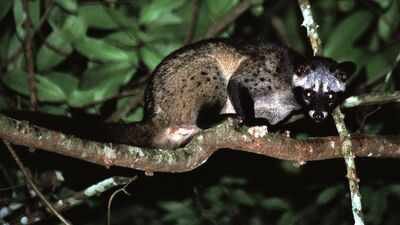
Asian palm civet. Image Credit: Bernard DUPONT/Wikipedia Kopi luwak is one of the world’s most unusual coffees because its production begins inside the digestive system of an animal. The coffee is made from beans eaten and later excreted by the ‘Asian palm civet,’ a small mammal found across parts of South and Southeast Asia. The…

Read More