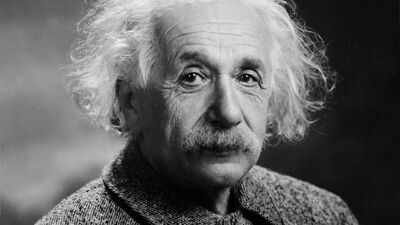
Quote of the day by Albert Einstein: “Imagination is more important than knowledge…” – the deeper meaning behind his view of intelligence |

There is a difference between knowing something and being able to see what might come next. Knowledge gives people facts, experience and established ways of understanding the world. Imagination works in a less certain space, where an idea can be considered before there is evidence to prove whether it will work. Albert Einstein often spoke…

Read More

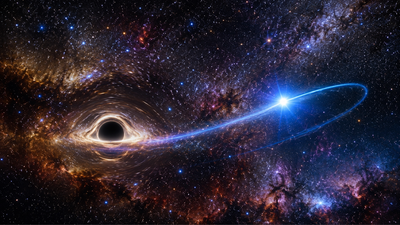
Scientists found the world’s fastest star moving at 15,500 miles per second, over 8% the speed of light, and it could test Einstein’s theory |

Astronomers have found what is currently the fastest known star in the Milky Way, a faint star racing through the extreme environment around Sagittarius A*, the supermassive black hole at the centre of our galaxy. Called S301, the star reaches a staggering speed of about 15,500 miles per second, or 25,000 kilometres per second, which…

Read More

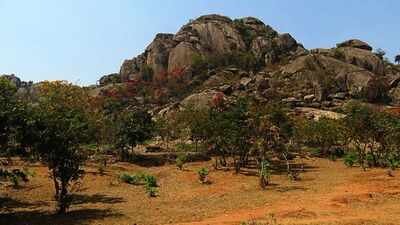
Oldest evidence of life on Earth has been discovered in India: A 3.4 billion-year-old layered rock shows signs of microbial life

Evidence of the oldest life on Earth has been discovered in India. In recent scientific findings in eastern India, biological traces buried for almost 3.5 billion years were revealed. The revelation suggests a much more distant and organic origin for the planet.The samples were taken from the Singhbhum geological block, which preserves cellular remains trapped…

Read More

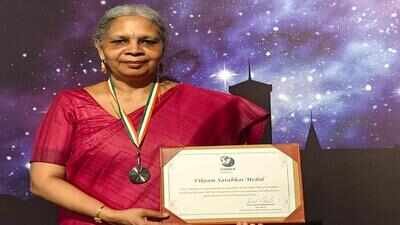
Meet Annapurni Subramaniam, the Indian astrophysicist who became the first Indian woman to win the COSPAR Vikram Sarabhai Medal

Annapurni Subramaniam (Indian Institute of Astrophysics, FB) India’s space science community is celebrating a big event as Professor Annapurni Subramaniam, Director of the Indian Institute of Astrophysics (IIA), Bengaluru, has been awarded the COSPAR Vikram Sarabhai Medal for 2026. It is among the most prestigious international honours recognising outstanding contributions to space research in developing…

Read More

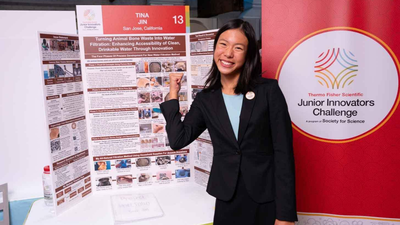
Meet Tina Jin, the 15-year-old Massachusetts student who turned animal bones into a new material for cleaning polluted water |

A 15-year-old Massachusetts student is exploring an unusual way to make polluted water cleaner: using discarded animal bones. Tina Jin, a student at Phillips Academy in Andover, developed a filtration system that uses ground cow, lamb or pig bones arranged in multiple layers to target different contaminants in water. Her research focuses on places where…

Read More

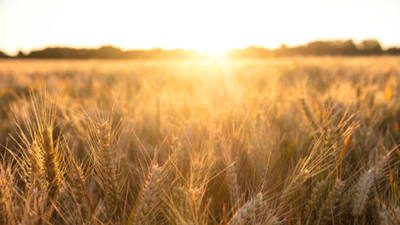
In 1961, British scientists stopped farming a 4-hectare barley field and left it alone; 60 years later, it had turned itself into a complex native woodland

The four-hectare barley field was abandoned in 1961 after researchers harvested its final crop, allowing nature to take over without further human intervention. In 1961, researchers at Monks Wood in Cambridgeshire harvested a final crop of barley from a four-hectare agricultural plot known as Stocking Close, ploughed the soil and walked away. They did not…

Read More

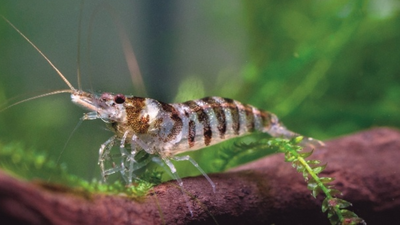
In 1968, Montana began stocking tiny shrimp to feed kokanee salmon; after they reached Flathead Lake, the salmon collapsed and hundreds of bald eagles and bears lost a reliable food source

An ecosystem collapse in Montana remains a lasting lesson in how well-intentioned wildlife management can have devastating consequences. When state wildlife officials introduced a non-native, tiny crustacean into nearby lakes in 1968, the goal seemed simple. They believed stocking the opossum shrimp, Mysis diluviana, would provide an extra food source and help increase populations of…

Read More