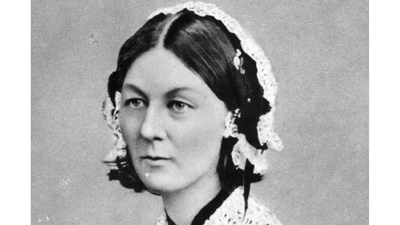
Quote of the day by Florence Nightingale: “So never lose an opportunity of urging a practical beginning, however small” |

Florence Nightingale, widely remembered as the “Lady with the Lamp”, became one of the most influential figures in the history of nursing and healthcare. Born in 1820, she challenged the expectations placed on women of her time and devoted her life to improving the treatment of sick and injured people. Her work during the Crimean…
Read More

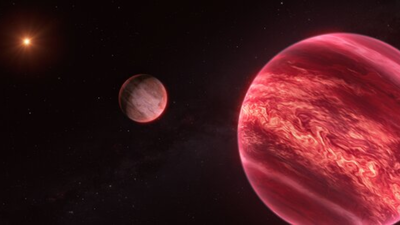
Exomoon: Have we found first exomoon? Strange object forcing astronomers to rethink what a moon is

A conceptual illustration of CD-35 2722, featuring an object resembling a moon (Credit: ESO) For decades, astronomers have been finding planets orbiting stars far beyond our solar system. More than 6,000 exoplanets are now known.But there is one glaring omission.Not a single moon outside our Solar System has been confirmed with the same level of…

Read More

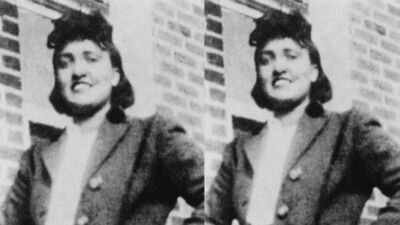
Henrietta Lacks died at 31 in 1951, but her cells kept multiplying; the discovery that transformed medicine and helped save millions of lives

Henrietta Lacks (Image Credit: Wikipedia) In 1951, Henrietta Lacks, a 31-year-old African-American woman, was diagnosed with cervical cancer at Johns Hopkins Hospital in Baltimore. During her treatment, doctors removed tissue from her tumour for research without telling her or obtaining her permission. The cells behaved unlike any human cells scientists had successfully maintained before: they…

Read More

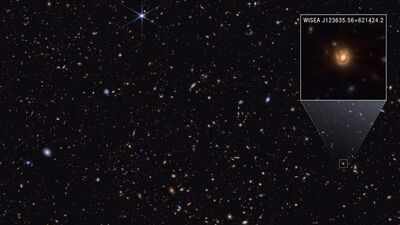
Since Webb discovered mysterious “little red dots” in 2022, astronomers have struggled to explain them; a galaxy seen 3.3 billion years after the Big Bang may finally reveal their hidden evolution

Photo credit: NASA, ESA, CSA, STScI, Pierluigi Rinaldi (Steward Observatory); Image Processing: Alyssa Pagan (STScI) Since NASA’s James Webb Space Telescope first revealed mysterious “little red dots” (LRDs) in 2022, astronomers have been racing to understand what these strange objects really are. Compact, extremely distant and glowing red, they appear throughout the early universe, but…

Read More

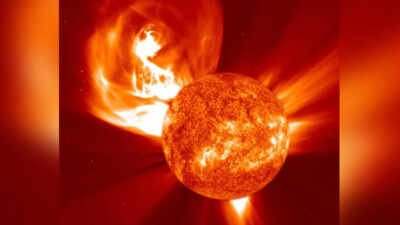
Solar Storm Forecasts: New model may improve solar storm forecasts

Representative image of CME (Image credit: Nasa) BENGALURU: Scientists have developed a computer model that could help predict how quickly powerful eruptions from the Sun will travel towards Earth, potentially improving warnings for disruptions to satellites, power grids and communication systems.The three-dimensional model was developed by researchers at the Indian Institute of Astrophysics (IIA), an…

Read More

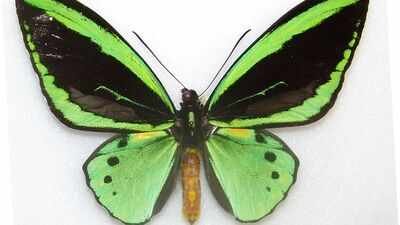
Butterfly wings inspire a breakthrough solar panel design that could boost electricity production by 66% |

Ornithoptera priamus. Image Credit: Robert Nash/Curator of Entomology Ulster Museum/Wikipedia Butterfly wings could offer a unique solution to one of the biggest problems faced by solar panels, which is ‘sunlight that bounces away before it can be used.’ A study published in ‘Solar Energy’ explored how the tiny structures found on the black scales of…

Read More

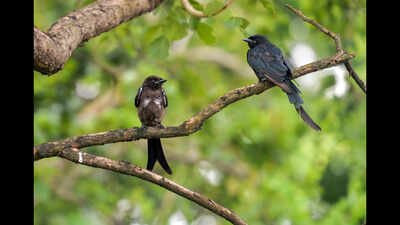
In 1935, black drongos were introduced on Rota to control crop pests; decades later the aggressive birds spread to Guam and became a threat to native birds

A juvenile and an adult Black Drongo perch on a tree branch (ANI Photo) In 1935, the Japanese South Seas Development Company made a decision that would have repercussions for Mariana Islands’ ecosystems for nearly 100 years. In search of a natural method for controlling agricultural pests, they imported black drongos (Dicrurus macrocercus) from Taiwan…

Read More

In 2026, scientists found oak trees can delay spring leaf growth by three days to starve hungry caterpillars |

​Representative Image of oak trees with delayed budburst as caterpillars wait for young leaves to emerge (AI-generated image) In temperate forests, spring timing can determine whether newly hatched caterpillars find a feast or almost nothing to eat. Many herbivorous insects emerge around the time trees produce their first young leaves, when the foliage is soft…

Read More

Meet Max Hung Nguyen, the 17-year-old California student who used Nasa data and AI to predict which stars are most likely to have giant planets |

Max Hung Nguyen was 17 when he began looking at a problem that astronomers have been studying for decades: whether the chemical make-up of a star can offer clues about the planets that form around it. The Leland High School student from San Jose used data from Nasa’s Exoplanet Archive and the Hypatia Catalogue for…

Read More