World’s first trillionaire: Elon Musk’s net worth crosses $1 trillion after SpaceX’s stock market debut
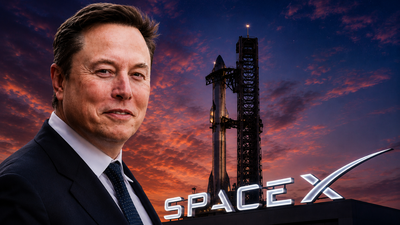
Elon Musk has become the world’s first trillionaire on Friday after SpaceX made its stock market debut on Nasdaq.The company’s shares jumped over 21 per cent shortly after listing, lifting Musk’s estimated fortune above the $1 trillion mark, according to Bloomberg. The bulk of his wealth exists on paper, rather than cash, derived primarily from his equity holdings.The blockbuster debut also propelled SpaceX into the ranks of the world’s most valuable companies, with investors betting on Musk’s sprawling empire spanning rockets, satellite communications and artificial intelligence. Shares rose 20 per cent in early trading, lifting the company’s valuation to about $1.96 trillion.Meanwhile, the SpaceX Options will begin trading on Tuesday, June 16, according to Bloomberg.The listing is being closely watched as a test of investor appetite for a new wave of mega-IPOs, including anticipated offerings from AI firms Anthropic and OpenAI. Market participants are also viewing it as a gauge of the so-called “Musk premium” that has long supported the lofty valuations of his ventures.Additionally, as SpaceX made its debut with ticker SPCX, Musk vowed to take people to Mars. “SpaceX wants to be able to take you to the moon, take you to Mars, and ultimately beyond,” Musk said at the launch event in Starbase, Texas, before the free trade began on Nasdaq.Despite reporting a nearly $5 billion loss last year on revenue of $18.7 billion, SpaceX has attracted investors with its dominant position in the space industry, the rapid growth of its Starlink satellite network and its ambitions in artificial intelligence. The company says its addressable market is worth $28.5 trillion, spanning space, communications and AI-related opportunities.However, some analysts have questioned the valuation. With a price-to-revenue ratio of roughly 94, Morningstar recently estimated the company is more fairly valued at around $780 billion. Others argue traditional metrics fail to capture the long-term potential of a business seeking to reshape multiple industries simultaneously.