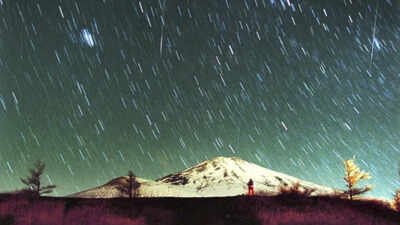
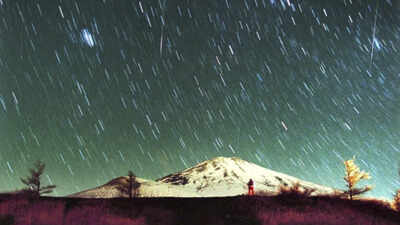
The Leonid meteor shower will reach its peak on the night of November 17-18, offering skywatchers an opportunity to see shooting stars streak across the night sky. The annual meteor shower is expected to produce around 15 meteors an hour under ideal viewing conditions. However, the number visible to observers will depend on factors such as cloud cover, light pollution and the position of the shower’s radiant.The Leonids are among the fastest meteor showers observed from Earth. Their meteors travel at speeds of around 71 kilometres per second as they enter the atmosphere. Some can produce bright fireballs and long, glowing trails across the sky.According to Space.com, although the annual display is generally modest, the Leonids have a remarkable history of producing much more intense meteor activity. One of the most extraordinary events occurred in 1833, when hundreds of thousands of meteors appeared across the sky. The event became known as the Great Meteor Storm of 1833 and remains one of the most impressive meteor displays in recent history.According to Nasa, the storm was best visible over eastern North America during the early morning hours of November 13, 1833. Many people were woken up by the spectacle, including a young Abraham Lincoln. The meteors appeared to pour out of the constellation Leo, creating an extraordinary display across the sky.
When will the Leonid meteor shower peak in 2026?
The Leonid meteor shower is active from November 6 to November 30. According to the International Meteor Organisation’s meteor shower calendar, its peak is expected on November 17. The predicted maximum is November 17 at 6.45 pm EST (11.45 pm GMT).The best time to watch the shower will be between midnight and dawn. During these hours, its radiant, the point in the sky from which the meteors appear to originate, climbs higher.For observers in North America, the early hours of both November 17 and November 18 are worth watching. Skywatchers in Europe should focus on the early hours of November 18.The Moon is not expected to interfere significantly with viewing this year. It will be around its first-quarter phase during the peak and will set before the best early-morning viewing hours. This will leave darker skies for observers trying to spot meteors.
How many shooting stars can be seen?
The Leonids typically have a Zenithal Hourly Rate (ZHR) of around 15 meteors per hour under ideal conditions.However, this figure does not mean that every observer will see 15 shooting stars in an hour. ZHR is a standard measurement based on specific conditions, including a clear and dark sky and the meteor shower’s radiant being directly overhead.Actual viewing conditions are usually different. Artificial lights, clouds, moonlight and the position of the radiant can reduce the number of meteors visible to the naked eye.As a result, observers may see only a handful of shooting stars during an hour of watching. The number can vary depending on where they are and how favourable the viewing conditions are.
Where to look for the Leonids
Meteor showers are named after the constellations from which their meteors appear to originate. In the case of the Leonids, the radiant is located in the direction of the constellation Leo.The shower is best viewed from the Northern Hemisphere, although it can also be seen from several locations in the Southern Hemisphere.To locate Leo, observers can first look for Regulus, its bright star. They can then trace a pattern of stars resembling a backward question mark, known as the Sickle, which represents the lion’s mane.However, observers should not restrict their view to Leo. Meteors can appear across different parts of the sky. Looking towards nearby constellations can also help because meteors seen farther from the radiant tend to leave longer and more visible trails.A dark location away from artificial lighting offers better viewing conditions. Observers should allow their eyes around 30 minutes to adjust to the darkness. Telescopes and binoculars are not necessary. Instead, looking at as much of the sky as possible gives a better chance of spotting meteors.
What causes the Leonid meteor shower?
The Leonid meteor shower occurs when Earth passes through a trail of dust and debris left behind by comet 55P/Tempel-Tuttle. The comet follows a highly elliptical orbit around the Sun and completes one revolution approximately every 33 years.As Earth moves through the debris, small particles enter the planet’s atmosphere. They heat up and produce bright streaks of light that are commonly called shooting stars.The meteors travel at approximately 71 kilometres per second, making the Leonids one of the fastest annual meteor showers. Their high speed can also produce bright fireballs and long-lasting glowing trails.Comet 55P/Tempel-Tuttle has a nucleus measuring around 3.6 kilometres across. Ernst Tempel and Horace Tuttle discovered it independently in 1865 and 1866, respectively. The letter P in its name indicates that it is a periodic comet, meaning it has an orbital period of less than 200 years. The comet is expected to return in 2031.
The extraordinary history of the 1833 Leonid storm
The Leonids do not produce spectacular meteor storms every year. Most annual displays remain relatively modest, but the shower has occasionally produced extraordinary bursts of activity.The Great Meteor Storm of 1833 was one such event. NASA describes it as a night when hundreds of thousands of meteors blazed across the sky. The display was particularly visible over eastern North America before dawn on November 13.The meteors appeared to emerge from Leo, creating the impression that the constellation was releasing streams of shooting stars. The event was so striking that people across the region were woken up to witness it.Scientists now understand that the storm occurred because Earth passed through a particularly dense part of the dust trail released by comet Tempel-Tuttle.