The Indian scientist who bent light — and changed the internet forever: Why Dr Narinder Singh Kapany is called the ‘Father of Fiber Optics’
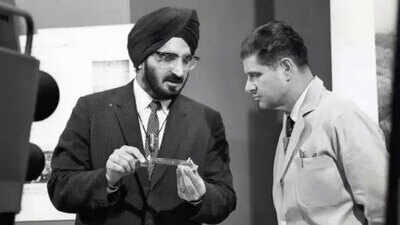
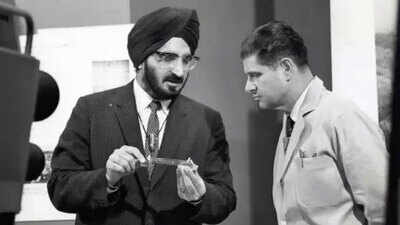
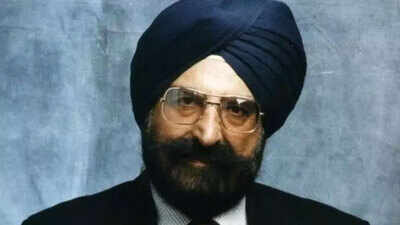
Imagine being told in school that light can only travel in a straight line. Most students would memorise the lesson and move on. But one young boy from Punjab asked a different question: What if light could be bent?That curiosity eventually changed the world.Decades later, Dr Narinder Singh Kapany would prove that light could travel through curved glass fibres without losing its path—an achievement that laid the foundation for today’s high-speed internet, fibre broadband, medical endoscopes and laser surgeries. Revered globally as the “Father of Fiber Optics,” his work continues to power the digital world, yet his story remains unfamiliar to many students.
From a classroom in Dehradun to a scientific revolution
Born on October 31, 1926, in Moga, Punjab, Narinder Singh Kapany completed his schooling in Dehradun before graduating from Agra University. He later worked in the Indian Ordnance Factories before moving to Imperial College London in 1952 to pursue advanced research.Working with renowned physicist Harold Hopkins, Kapany achieved what many believed was impossible. In 1953, he successfully demonstrated that light could travel through bent glass fibres, proving the principle of total internal reflection along curved paths.Just a year later, he transmitted high-quality images through bundles of optical fibres, a breakthrough that eventually made medical endoscopy possible.In 1960, he introduced the term “fiber optics” to the world through a landmark article in Scientific American, giving a name to a technology that would later transform global communication.
The invention behind the internet millions use every day
Every video call, online class, digital payment or movie streamed over fibre broadband depends on the same scientific principle that Kapany helped establish.Today, fibre optic cables carry enormous amounts of data across continents through networks of ultra-thin glass fibres using pulses of light. The technology also powers advanced medical imaging, laser-based treatments, aerospace systems and precision industrial equipment.Kapany’s pioneering work demonstrated that light could be guided efficiently through flexible glass fibres, making these modern applications possible.
Scientist, entrepreneur and champion of Indian heritage
Beyond research, Kapany also became a successful entrepreneur.In 1961, he founded Optics Technology Inc., becoming one of the earliest Indian-origin entrepreneurs to build a technology company in Silicon Valley. He later established Kaptron Inc. and accumulated more than 100 patents during his distinguished career.Alongside science, he remained deeply committed to preserving Sikh history and culture. In 1967, he and his wife founded the Sikh Foundation, which went on to build one of the largest collections of Sikh art outside India.
The Nobel debate and a lasting legacy
When the 2009 Nobel Prize in Physics recognised breakthroughs in fibre optic communication, the award went to Charles Kao for solving signal-loss problems in optical fibres. Kapany’s absence from the list sparked widespread debate among scientists, many of whom acknowledged that his earlier discoveries had laid the scientific foundation for the field.His contributions, however, have continued to receive global recognition. Fortune magazine named him one of the “Seven Unsung Heroes of the 20th Century” in 1999. Following his death in 2020, the Government of India honoured him with the Padma Vibhushan in 2021, recognising his extraordinary contribution to science.For students, Dr Narinder Singh Kapany’s journey offers a timeless lesson: one curious question asked in a classroom can sometimes illuminate the future of the entire world.Disclaimer: This article is intended for educational and informational purposes. Readers are advised to refer to official scientific publications and historical records for detailed information about Dr Narinder Singh Kapany’s research and contributions.