
Scientists turn railway track vibrations into electricity, with a system producing 7.44 W of peak power |
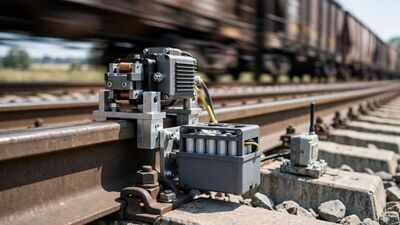
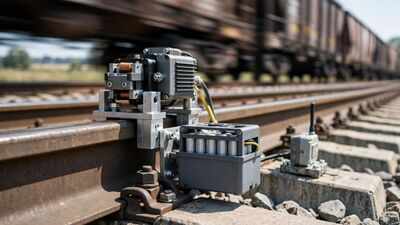
Train movement produces vibrations along railway tracks, much of which is normally lost to the surrounding environment. Researchers have developed a system that captures some of this wasted energy from heavy-duty freight railway tracks and converts it into electricity. The study, published in ‘Applied Energy‘, describes a vibration energy harvesting system that uses the irregular vertical movement created when train wheels pass over the rails. A mechanical mechanism turns this repeated up-and-down movement into one-way rotation, which then drives a generator to produce electricity. Tests showed that the system reached a maximum mechanical efficiency of 73.38% and generated a peak power output of 7.44 watts.
How the railway system converts track vibrations into electricity
The researchers designed the system around three main parts that are a vibration conversion module, a generator module, and a power storage module. When a heavy freight train moves along the track, the interaction between the wheels and rails produces irregular vertical vibrations. The vibration conversion module captures this movement and converts its repeated up-and-down displacement into one-way rotation. It does this using a scissor linkage and slider mechanism. A three-phase generator is connected to the shaft of the energy conversion module. As the shaft rotates, the generator produces electricity. The electrical output then passes through rectification and filtering before being stored in supercapacitors.
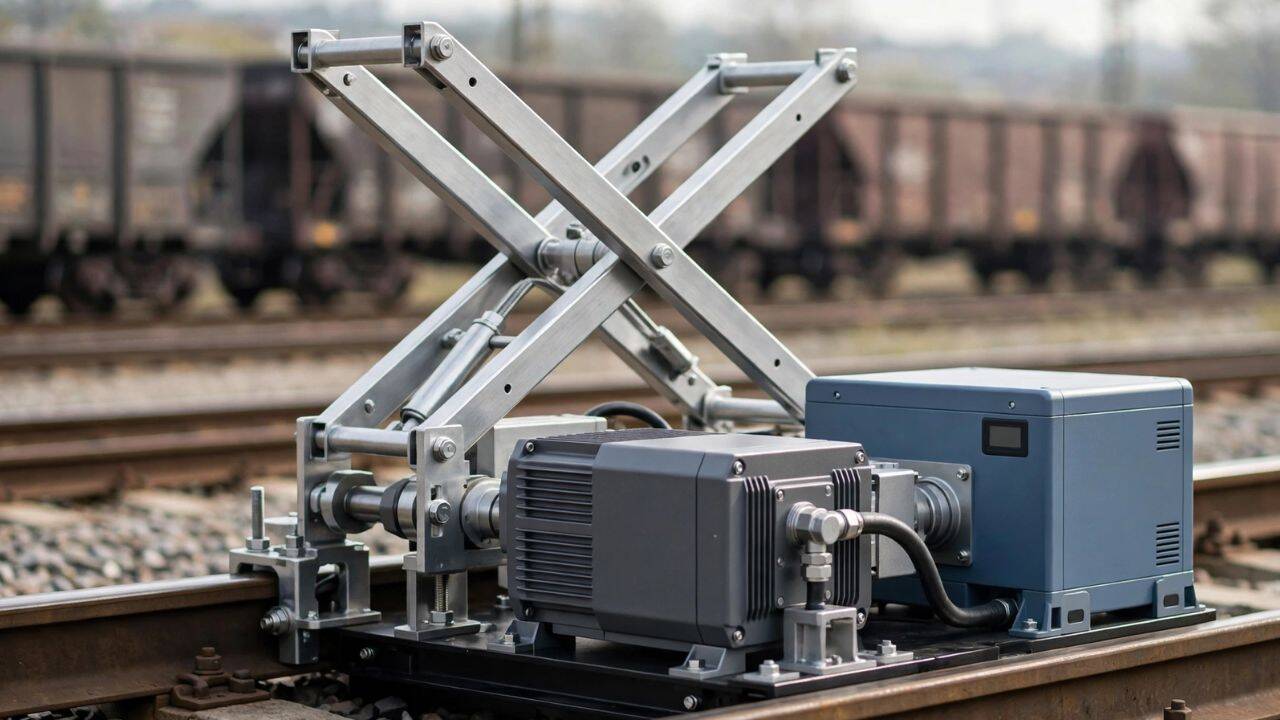
PC: AI Generated
How much energy could be recovered from railway track vibrations
The researchers used theoretical analysis, dynamic modelling, and mechanical simulations to examine how the proposed system responded to vibration. Then, they carried out physical testing using a mechanical testing and sensing machine. These tests showed that the system achieved a maximum mechanical efficiency of 73.38%. The measured peak power output reached 7.44 watts.The results showed that the vibration conversion mechanism could turn the track’s repeated movement into rotational motion that drives electricity generation. The researchers then tested whether the generated electricity could be stored in a supercapacitor. The charging tests showed that the harvested energy could be stored and later used by applications that require a self-powered electricity supply.
How could the system reduce the need for batteries in railway sensors
Railway systems use electrical equipment for monitoring and safety. The researchers focused on using recovered vibration energy to power low-power sensors placed around heavy-duty freight railroads. The proposed system could provide electricity for devices such as wheel sensors, tilt sensors, gyroscope sensors, and strain gauges. These sensors can collect information about railway conditions and send it to a remote monitoring system through a wireless sensor network and a railway communication satellite.The researchers noted that conventional power supplies can require wiring or battery replacement. By recycling vibration energy already produced within the railway system, the proposed approach is intended to provide a self-powered option for monitoring equipment installed along freight railroads.
How do train movements create energy for the harvesting system
The study focuses on vibration produced naturally when trains travel along railway tracks. Because the track is not completely rigid, factors including train speed, cargo or passenger load, and rail roughness can affect the degree of vibration. The researchers noted that this vibration is normally dissipated into the environment as heat.Unlike solar or wind energy systems, the proposed approach does not depend on weather conditions. The track vibrates as trains move, providing the energy source for the harvesting system. The researchers therefore considered track vibration particularly suitable for powering wireless sensors installed along railway lines, where a reliable source of small amounts of electricity can be useful.
How can recovered vibration energy be used by railway sensors
The final stage of the proposed system involves storing the electricity produced from track movement. After the generator produces electricity, the output is rectified and filtered before being sent to supercapacitors. The researchers conducted charging tests to examine whether this storage method could support the intended application.Their results indicated that the proposed system was suitable for self-powered railway sensors. The study indicates that electricity recovered from track vibrations can be fed back into the railway system to power intelligent sensors and support real-time monitoring of railway health.