Scientists studied how animals survive winter and found fruit flies rebuild their biological clock into a separate seasonal mode
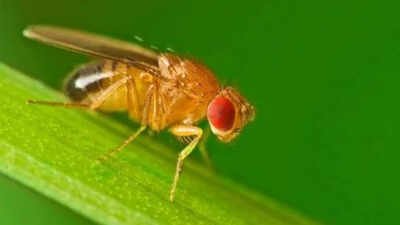
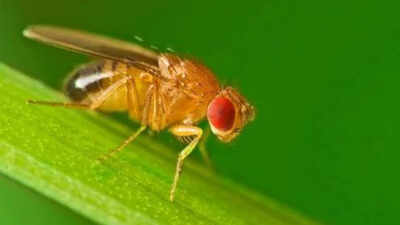
Scientists studying how animals survive the winter have discovered that fruit flies completely rebuild their internal biological clocks to switch into a separate seasonal mode. For context, a fruit fly is a tiny insect that feeds on ripe, rotting, or fermenting fruits and vegetables. They are usually about 2–4 millimeters long, have tan or yellowish-brown bodies, red eyes, and clear wings.There are two common ways people use the term: Household fruit flies and laboratory fruit fliesThe discovery reveals a genetic winter lock that keeps the insects in a low-activity state until warm weather returns. Led by researchers at Washington State University, the study found that the biological clock does not simply run slower in cold weather. Instead, it alters its molecular structure to run on an entirely different seasonal program.The findings, published in the journal Science Advances, could lead to new methods for targeting agricultural pests and help researchers understand why certain human health conditions change with the seasons.
Splicing the internal clock
To understand the seasonal shift, the research team focused on a core gene within the circadian clock called timeless, which regulates daily biological rhythms.As winter approaches, the gene undergoes a process called alternative splicing. This mechanism allows a single gene to arrange its code differently and produce entirely distinct proteins based on environmental cues. The winter-specific version of the protein reshapes the fly’s daily activity patterns and completely shuts down its reproductive system, effectively keeping the insect in dormancy.Sergio Hidalgo, an assistant professor at Washington State University’s College of Veterinary Medicine and the lead author of the study, explained that the discovery solves a long-standing mystery regarding how animals process seasonal changes.“We’ve known for a long time that animals use environmental cues to prepare for seasonal changes, but we haven’t understood exactly how that information is integrated by the biological clock,” Hidalgo said. “What we found is that the clock itself can be rearranged into a winter state that helps animals stay there until conditions are favorable enough to switch back to summer mode.”For decades, scientific models of the circadian clock were based almost entirely on how organisms function during the warmer months. This new evidence shows that organisms are not bound to a single, rigid internal clock that runs the same way all year round.“For years, we’ve been studying what is essentially the summer version of the clock,” Hidalgo said. “This work shows that the clock can be remodeled in winter, creating a system that functions differently and helps animals maintain a winter program.”

Sergio Hidalgo, left, a professor works in his lab with research intern Audrey Berry (Credit: College of Veterinary Medicine/Ted S. Warren)
A blueprint for survival
Adapting to changing seasons is a fundamental survival requirement across nature. Microscopic bacteria, complex plants, and large animals all rely on external triggers like shifting temperatures and shorter day lengths to anticipate the arrival of winter.These environmental changes prompt physical survival strategies, including long-distance migration, hibernation, paused reproduction, and deep dormancy. While scientists understood what triggered these responses, the exact biological pathway that coordinated these full-body changes remained unclear.The discovery of the winter lock shows that the fruit fly’s genetic machinery directly integrates these external signals to rebuild its internal clock. The fly stays locked in this low-power state until environmental conditions improve significantly, providing a clear signal that it is safe to return to summer mode.The research project was a collaborative effort, combining genetic data and resources from both Washington State University and the University of California, Davis. The co-authors included Audrey Berry, a university alumna and research intern working within Hidalgo’s laboratory.
Targeting pests and human rhythms
The discovery of this seasonal genetic switch opens up practical possibilities for managing destructive insects. Hidalgo suspects that identical or similar molecular mechanisms control the seasonal timing of major agricultural pests and disease-carrying insects, such as mosquitoes.Most modern pest control strategies focus on direct, immediate eradication. Understanding the winter lock could allow scientists to develop methods that disrupt the biological clock itself. By interfering with the genetic splicing that allows insects to survive winter or dry spells, researchers could potentially collapse pest populations before they become active in the spring.The study also provides fresh clues for researchers studying human biology. Many medical conditions, including seasonal affective disorder, alongside various neurological and psychiatric conditions, follow distinct seasonal patterns. The exact biological processes that drive these shifts in human health are still poorly understood.Fruit flies and humans have vastly different biological systems, but the discovery that a core clock gene can fundamentally restructure itself across seasons gives medical researchers a concrete molecular starting point. Scientists can now investigate whether similar genetic shifts occur in the human biological clock during the darker months of the year.