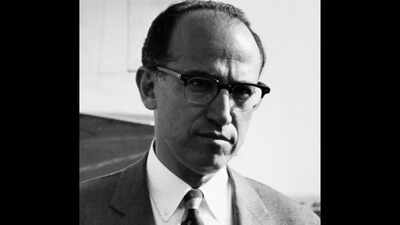
Quote of the day by Jonas Salk who developed the polio vaccine: “Good parents give their children roots and wings: roots to know where home is, and wings to…” |
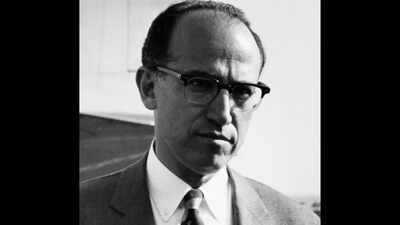
A few years ago, a university lecturer described a scene that repeated itself every autumn. New students would arrive carrying boxes, bedding and more parental advice than they could possibly use. Mothers adjusted collars. Fathers offered practical tips about bank accounts, train tickets and budgeting. Everyone tried to appear calm.Then came the goodbye.Some students barely looked back. Others hugged their parents for what felt like ten minutes. One mother reportedly cried before her daughter had even reached the entrance.By the following year, many of those same students had changed in noticeable ways. They were more confident. More independent. More certain of their opinions. Yet when things went wrong and eventually something always did, they often called the same people they had waved goodbye to twelve months earlier.That tension between independence and belonging sits at the heart of one of Jonas Salk’s most enduring observations. Best remembered for his work against polio, Salk understood something that extends far beyond medicine: human growth depends on a delicate balance. People need enough security to know who they are and enough freedom to discover who they might become.
Quote of the day by American virologist Jonas Salk
“Good parents give their children roots and wings: roots to know where home is, and wings to fly off and practice what has been taught them.”
What is the meaning of the quote by Jonas Salk
The image of roots and wings works because it captures two needs that rarely receive equal attention.Parents are usually encouraged to provide security. They create routines, establish boundaries and try to build an environment where children feel safe. These efforts become the roots in Salk’s metaphor. They give children a sense of identity and continuity. Long after childhood ends, people often carry traces of those early influences without even realising it.A particular saying used by a grandparent. A habit learned at home. A way of treating other people. These things travel surprisingly far.The second half of the quote is where the challenge begins.Wings require parents to accept uncertainty. They involve allowing children to make decisions, take risks and occasionally make mistakes. That can be uncomfortable because mistakes are rarely pleasant to watch. Yet without those experiences, independence remains theoretical.Salk’s point is not that one matters more than the other. It is that both are necessary.
Why parents often struggle with the “wings” part
Most parents find it easier to understand roots than wings.Providing food, shelter, guidance and support feels tangible. There is a clear sense of purpose. Letting go is different. It asks parents to trust lessons they can no longer supervise.Many families experience this during adolescence. A child who once asked permission for everything begins wanting privacy. Opinions become stronger. Advice is questioned. Family rules suddenly seem negotiable.These moments can feel frustrating, yet they are often signs of development rather than rebellion.Children are testing their ability to function independently. They are trying out ideas, making judgments, and discovering the consequences of their choices.Parents may interpret this as distance. In reality, it is often preparation.
The surprising power of roots
People frequently assume that independence means leaving the past behind. Life suggests otherwise.Speak to adults who have lived abroad for years and a familiar pattern emerges. Many discover that the values they absorbed in childhood remain remarkably durable.They may adopt new customs, build careers in unfamiliar places and create entirely different lifestyles. Yet when faced with difficult decisions, they often draw upon lessons learned decades earlier.Sometimes this happens so naturally that they barely notice it. A phrase heard around the dinner table returns unexpectedly.A family tradition is passed to another generation. A principle that once sounded old-fashioned suddenly makes sense.Roots do not prevent exploration. In many cases, they make exploration easier because they provide a stable point of reference.
How to apply this quote in daily life
The appeal of Salk’s observation is that it extends beyond parenting.Teachers face a similar challenge. Their task is not simply to provide information. It is to equip students with enough confidence to think independently once formal education ends.Managers encounter the same issue. A strong leader develops people who can operate without constant instruction. Mentors do it too. The goal is not to create dependence but capability.In each case, success contains a small irony. If the guidance has worked, the person eventually needs less of it.That can feel strange for the guide, but it is often the best evidence that genuine growth has taken place.
What modern families can learn from the quote
Today’s parents operate in circumstances very different from those faced by earlier generations.Technology has altered communication. Careers are less predictable. Young adults often move far from where they grew up. Some maintain daily contact with family through video calls despite living thousands of kilometres away.Yet the central challenge remains remarkably familiar.How much freedom is enough? How much guidance is too much? No universal formula exists. Every child is different. Every family is different.What Salk offers is not a rulebook but a principle: children benefit from knowing they belong somewhere, while also believing they are capable of navigating the world beyond it.
Final takeaway from the quote
There is a reason people still quote Jonas Salk decades after his death.His words recognise something many parents eventually discover for themselves. Raising children is not a choice between holding on and letting go. It is a gradual process of doing both at the same time.The roots are planted early; in conversations, examples, traditions and everyday acts that rarely seem significant in the moment.The wings appear later. Often quietly.Sometimes so gradually that parents notice them only when a child they once carried is suddenly boarding a plane, starting a career, moving into a new home or building a family of their own.And when that moment arrives, the real measure of success is not whether the child stays close. It is whether they can travel confidently into unfamiliar territory while still carrying a sense of where home is. That, perhaps, is the balance Salk was trying to describe; a balance that good parents spend years creating, one ordinary day at a time.