
NASA’s plans for a giant moon base signal a new era for lunar exploration at the South Pole |
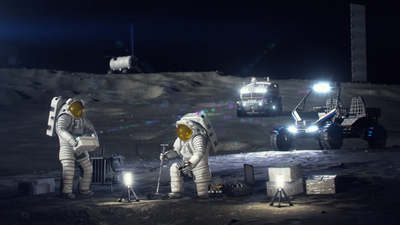
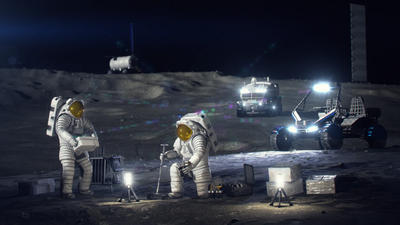
The US space agency NASA has sped up the efforts to construct the Artemis Era Moon Base with the objective of developing an enduring manned habitat at the moon’s south pole. This comes after NASA unveiled new lunar rover deals, cargo landers, robotic missions, and even the building of facilities meant to aid astronauts who will embark on missions to the moon under the Artemis program in the years to come. Together with private firms such as Blue Origin, Astrolab, and Lunar Outpost, among others, NASA seeks to create lasting lunar exploration technology ahead of manned flights set to launch in 2028.
NASA’s moon base vision for the lunar south pole
The recent announcement from NASA is one of the strongest indicators yet that Artemis is shifting gears from brief stays to building infrastructure. In an event titled ‘Moon Base’, NASA leaders have shared details about future plans in which forthcoming missions will lay the groundwork for sustained operations at the lunar south pole.Administrator Jared Isaacman has said that the moon base project represents “humanity’s first outpost on another celestial body.” He continued by saying:“Each mission crewed and uncrewed will provide invaluable experience as we return to the lunar surface; establish the capability to live off the land in a harsh and unforgiving environment; and gain experience that can be leveraged in our journey further into deep space.”NASA chose the south pole of the moon due to its scientific significance and the presence of possible sources of water ice.
The three Artemis moon base missions and lunar landers
NASA announced the first three Moon Base missions that will pave the way towards conducting operations on the surface of the Moon.
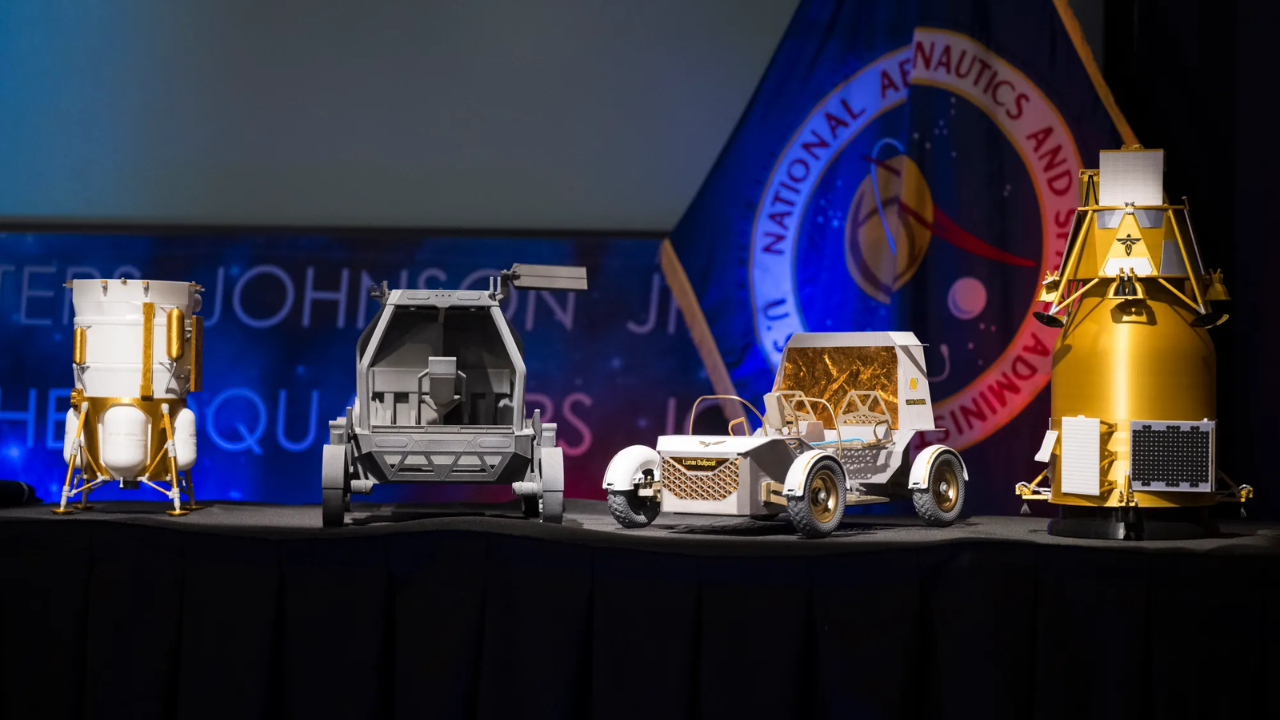
Image: NASA
The Moon Base I mission, which is expected to be launched no earlier than autumn 2026, will deploy scientific equipment via Blue Origin’s Blue Moon Mark 1 Endurance Lander. According to NASA, this will allow testing systems that will minimise risk for upcoming Artemis crewed lunar landings.The Moon Base II mission will carry over 1,100 pounds of payload via Astrobotic’s Griffin Lander, one of which will be Astrolab’s FLIP rover. This particular mission will allow NASA to test mobility systems that are necessary for astronauts to traverse difficult terrain at the south pole of the Moon.The Moon Base III mission is expected to involve a significant amount of lunar science. Specifically, according to NASA, the Lunar Vertex investigation is aimed at studying unusual bright patches on the surface of the Moon, lunar swirls. NASA wants to find out how the materials on the surface behave when subjected to extreme conditions. Payloads will also come from ESA and the Korea Astronomy and Space Science Institute.
Lunar rovers will power future moon exploration
One of the key components of the NASA mission involves the development of high-tech lunar terrain vehicles called LTVs that astronauts will use during the Artemis missions.In a joint effort, NASA provided over $439 million in contract agreements to two companies, Astrolab and Lunar Outpost, to develop the first-ever manned lunar rovers. The former’s vehicle is called the CLV-1 rover and is meant for transporting astronauts and cargo, whereas the latter’s Pegasus rover can work both autonomously, manually, and by remote control.According to NASA, these vehicles will be crucial for astronauts to spend extended periods on the Moon. Indeed, NASA said the rovers will help astronauts transport equipment, assess hazards, clear landing zones, and conduct studies in extreme conditions on the Moon.What makes the Pegasus rover stand out is its capability to work independently for an entire year at speeds of over 9mph.
Moon Base prepares NASA for Mars missions
According to NASA, besides bringing back humans to the Moon, the Moon Base project involves preparations for future manned flights to Mars.The space agency stated that there would be additional robotic exploration missions, cargo deliveries, flying robots, and tests of technologies that will go on for several more years. In particular, there will be an expedition named MoonFall, which would involve sending four robots to scout rugged regions near the Moon’s south pole in preparation for the arrival of astronauts.NASA also mentioned that this program would be focused on “collecting operational data to reduce risks ahead of crewed Artemis surface operations.” The idea was to develop sustainable systems that would allow astronauts to operate on other planets for some time.Given increasing international attention to the Moon, the Moon Base program could become NASA’s flagship space project of the decade.