Mysterious ‘space balls’ twice the size of basketballs wash ashore on Australian beach, scientists say the discovery is more common than many people think
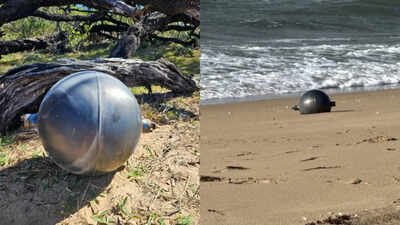
What began as an ordinary day in a small Australian beach town turned into an unusual investigation after six large metallic spheres washed ashore. The discovery forced residents to evacuate and raised fears that the objects could be dangerous.The shiny objects started appearing along Forrest Beach in Queensland on July 3, leaving residents puzzled about where they had come from and whether they posed a threat or not. With no immediate explanation for strange spheres, emergency authorities treated the discovery seriously, shutting down parts of the beach while experts examined the objects.Forrest Beach is home to around 1,300 people and is normally a quiet coastal community. But the arrival of the mysterious spheres briefly turned it into the focus of a major investigation.
Emergency response after safety concerns
The Queensland Fire Department responded after the metallic spheres were reported on the shoreline. Officials initially classified them as potentially hazardous because their contents and origin were unknown.On 5 July, the department said it had responded to the “discovery of several potentially hazardous objects”. An exclusion zone was established around the area while specialists assessed the risk, and emergency crews collected several of the spheres over the weekend for further examination.Photographs released by authorities showed smooth, metallic-looking spheres, each fitted with two small protrusions on opposite sides. Each object was roughly twice the size of a basketball. The unusual discovery left residents guessing where the objects had come from. Many wondered whether they had drifted in from the sea or fallen from the sky.
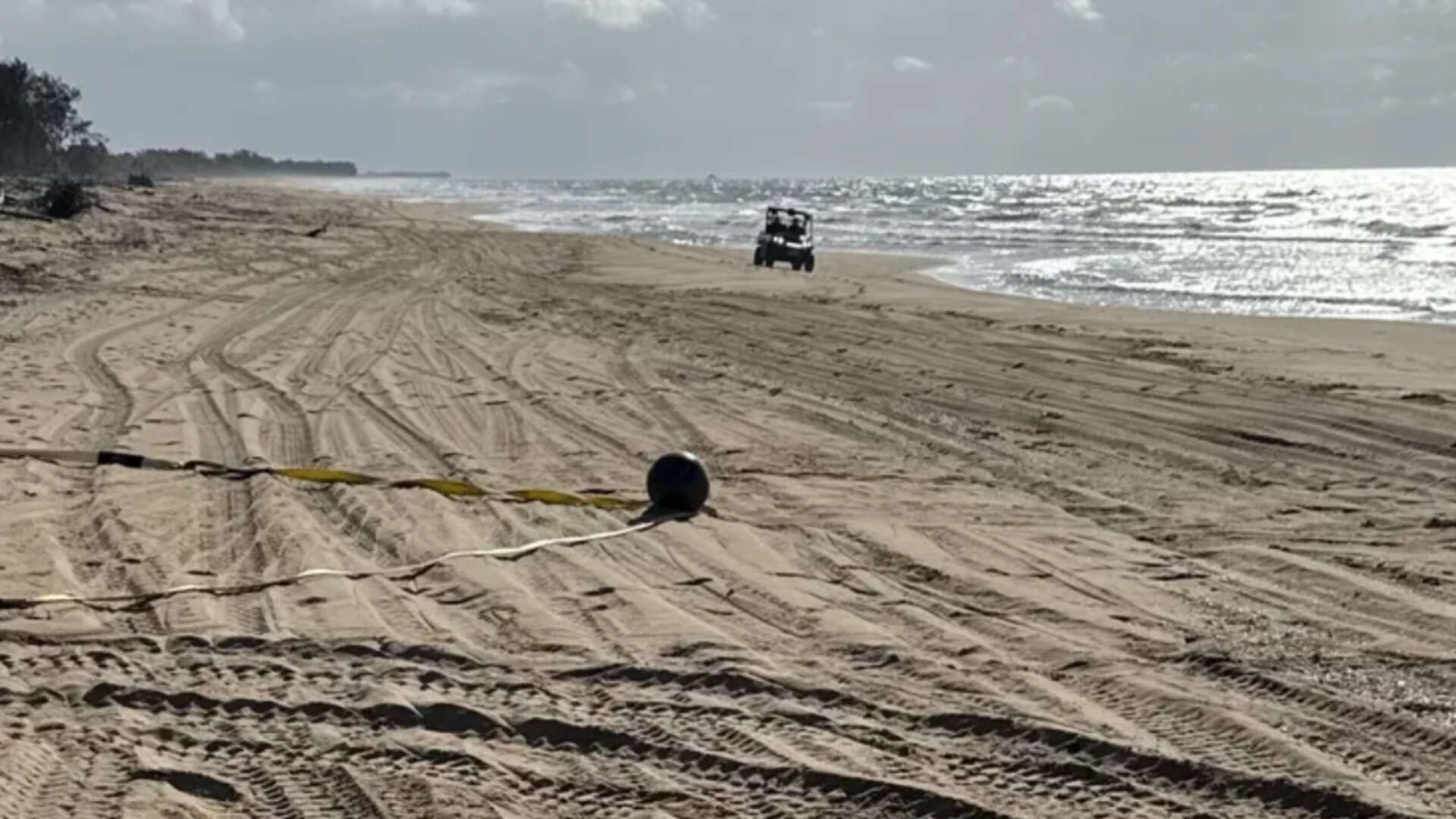
Strange, metallic-looking spheres recently washed ashore in Queensland, Australia.
Locals started joking about aliens
As emergency crews carried out their investigation, locals tried to make cope with the situation with humour.“Not much happens here. It’s a pretty quiet, sleepy little place,” Lisa Scobie, who owns a restaurant near where some of the objects were found, told The New York Times.She added: “We’ve had a bit of a laugh about things, there’s been lots of jokes about whether it’s been aliens.”
Australian Space Agency identifies likely source
On the morning of 6 July, the Australian Space Agency (ASA) announced that the investigation had reached a likely conclusion.“The recovered objects appear to be pressure vessels [that held fuel] from a space launch vehicle. The agency has identified the likely source,” the agency said in a statement.“The objects’ location and characteristics are consistent with debris from a foreign rocket body that recently re-entered the atmosphere from orbit. The agency is continuing to engage with international authorities to formally confirm the launch vehicle and launching state.”
What are ‘space balls’?
The metallic spheres are a well-known type of space debris commonly referred to as “space balls”.They are pressure vessels designed to store rocket fuel or other gases under extremely high pressure during a launch. They are made from strong, heat-resistant materials and are among the few rocket components that can survive the intense heat of re-entry, when temperatures around a spacecraft can reach about 1,500°C to 1,650°C as it passes through Earth’s atmosphere.Alice Gorman, a space archaeologist at Flinders University in Australia, said the discovery is not a new one.“The recovered objects are a classic example of what is known as ‘space balls’,” she told the Australian Broadcasting Corporation.“Many rockets and spacecraft have liquid fuel systems that involve fuels under high pressure that are in these pressure vessels made of robust material,” she added.She also said: “These parts of the fuel system often survive because their melting points are higher than the temperature coming back through the atmosphere.”Once emptied of fuel, the sealed vessels can become buoyant, i.e., they can float on water. Instead of sinking, they float across the ocean for long distances before eventually washing up on beaches, as appears to have happened at Forrest Beach.
Why space debris sometimes reaches Earth
Millions of pieces of human-made material orbit the Earth, but it is uncommon for large fragments to reach the ground intact.Most space debris burns up as it passes through the atmosphere because of the extreme temperatures and high friction created during re-entry. These intense conditions are usually enough to destroy satellites, rocket parts and other objects before they can reach the Earth’s surface in one piece.Nasa expects the International Space Station (ISS) to end its operational life in a similar way. When the station is eventually deorbited, most of its structure is expected to burn up or vaporise during re-entry, with the remaining fragments falling into an uninhabited part of the ocean in order to minimise damage.Pressure vessels are different because of their thick construction and high melting point, allowing some of them to survive the journey through the atmosphere.
Growing activity in space means more debris
The Forrest Beach discovery of giant metallic spheres is also a proof of the rapid increase in satellites and rocket launches.Space debris includes everything from discarded rocket components and broken satellite fragments to entire spacecraft that have reached the end of their missions. As more satellites are launched into orbit, the amount of debris also continues to increase.Since 2019, the number of active satellites orbiting Earth has risen from around 1,000 to more than 11,000. By March 2026, there were more than 14,500 operational satellites in orbit, with Elon Musk‘s internet company Starlink, part of SpaceX, accounting for more than 9,900 of them.Current launch plans suggest that figure could rise by a huge margin over the coming years, with projections estimating that as many as 560,000 satellites could be orbiting Earth by 2040.Sara Webb, an astrophysicist at Swinburne University of Technology in Australia, said increasing numbers of launches mean discoveries like the one at Forrest Beach are becoming less unusual.“With 130 million space debris objects orbiting the Earth, it’s never a complete surprise when we hear reports of objects burning up in the atmosphere or even strange pieces of debris washing up on our shores,” she told BBC Sky at Night Magazine.“In the last five years,” she added, “we’ve seen an increase in these events as the increase in launches and objects in space continues to grow.”