Mercedes in F1: Rise, fall, and rebirth of an empire – the story of a team that refused to stay down | Racing News
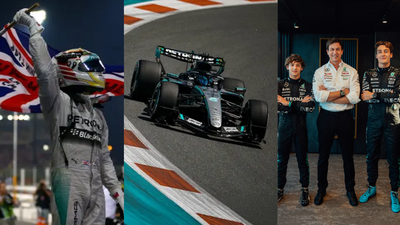
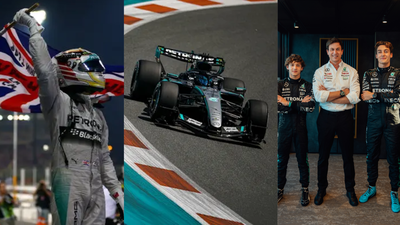
Most people think of Mercedes-Benz as just a brand for luxury cars and Maybachs you see on the road. But its story in motorsport is very different, and much deeper. It goes all the way back to the 1950s. The journey of the Mercedes-AMG Petronas Formula One Team doesn’t really start in today’s Formula 1 paddock; it starts like a legend, where speed, innovation, and ambition first came together to build what we now know as the Silver Arrows.Now, before we head into how Mercedes created an empire of its own, let’s look at why Mercedes have the upper hand this season.The 2026 season introduced another major regulatory overhaul in Formula 1, offering teams a fresh opportunity to reset. This time, Mercedes approached the changes with a very different mindset, avoiding the pitfalls that hit them in 2022.Mercedes developed an entirely new aerodynamic philosophy, focusing on creating a car that performed consistently across different circuits and conditions. This broader operating window allowed them to extract performance more reliably, something that had been missing in previous years.
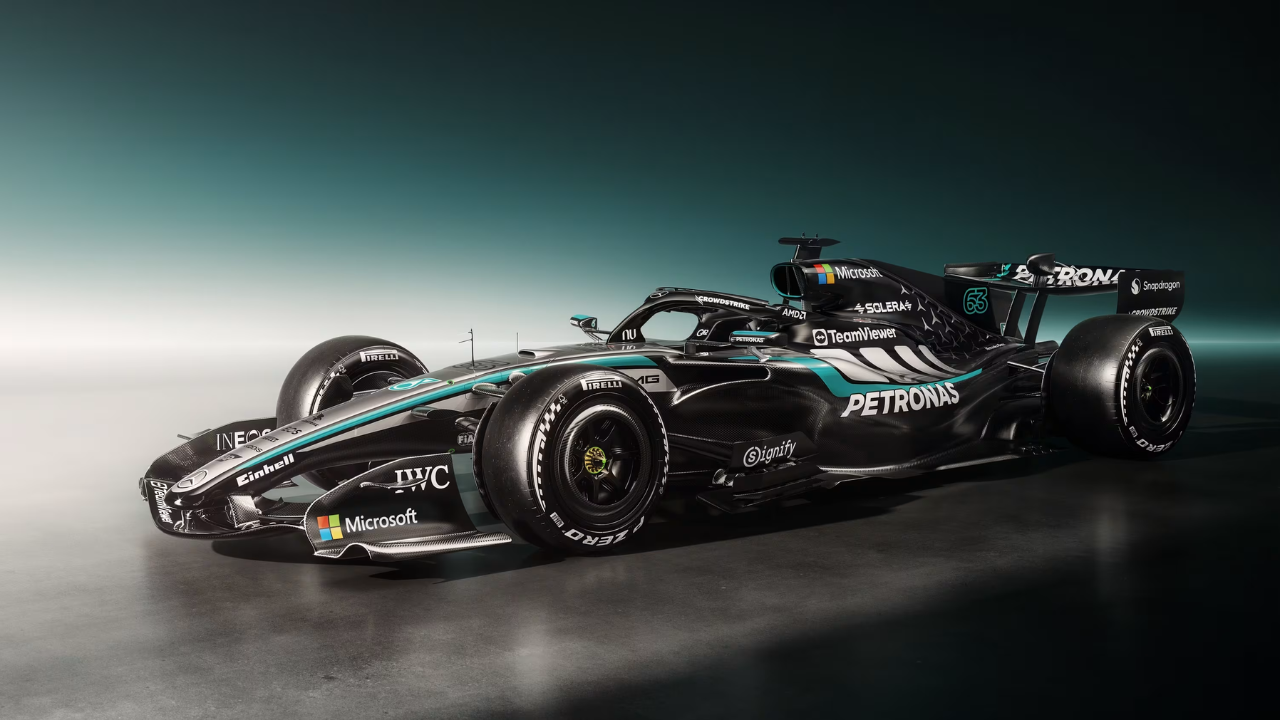
Mercedes F1 2026 (Image Credit: F1)
In the 2026 Formula 1 season, Andrea Kimi Antonelli currently leads the World Drivers’ Championship with 72 points. Driving for Mercedes alongside teammate George Russell, the 19-year-old Italian has had a record-breaking start to the year, securing back-to-back victories in China and Japan. By winning in Japan, he became the youngest driver in F1 history to lead the standings. His win in Shanghai was the first for an Italian driver in 20 years, since Giancarlo Fisichella in 2006.On 1 February 2024, Mercedes confirmed that Lewis Hamilton will depart after 12 years with the team, having activated an exit clause to sign a multi-year deal with Scuderia Ferrari starting from the 2025 season. Later that year, on 31 August 2024, Mercedes announced junior driver Kimi Antonelli as his replacement. On 19 December 2024, Valtteri Bottas was confirmed to return to Mercedes as a reserve driver. However, his second stint with the team was short-lived, as he departed ahead of the 2026 season to join the newly established Cadillac F1 Team. But the 19-year-old has proven his worth in the first three rounds of the Grand Prix.Mercedes secured back-to-back three podiums in F1 after almost 4 years, which Hamilton used to do in almost every race for Mercedes.
Lewis Hamilton’s Mercedes Era (2014–2021): A Period of Unmatched Dominance
After making a comeback in Formula 1, Mercedes had an era of dominance, largely because of the hero of the team, Lewis Hamilton. The period between 2014 and 2021 represents the peak of Hamilton’s dominance in Formula 1 with Mercedes. Across these eight seasons, Hamilton secured six World Drivers’ Championships (2014, 2015, 2017, 2018, 2019, and 2020), establishing himself as the defining driver of the hybrid era. The only seasons where he fell short came in 2016, when teammate Nico Rosberg edged him to the title, and in 2021, when he lost out to Max Verstappen in a dramatic and controversial finale.
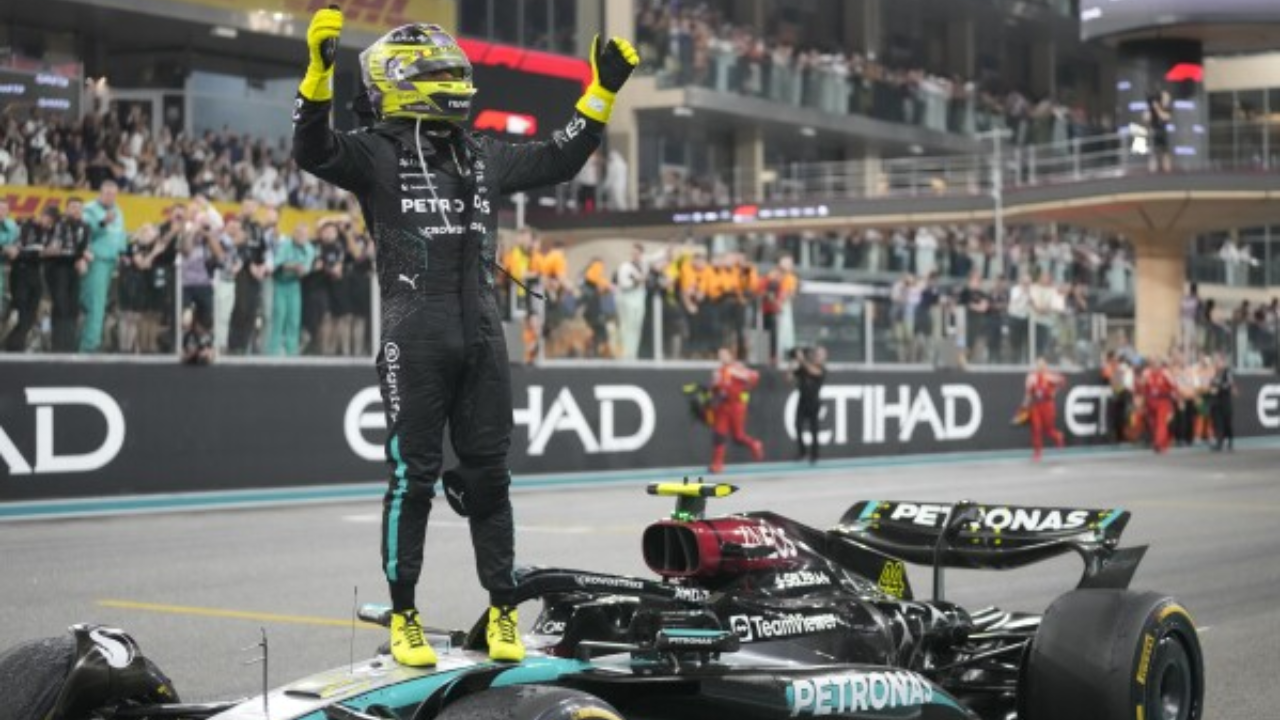
Lewis Hamilton in Mercedes (Mercedes/F1 Photo)
By 2019 and 2020, Hamilton’s dominance reached another level. In 2019, he amassed a record-breaking points tally for a single season, showcasing complete control over the championship. The 2020 season further cemented his legacy, as he equalled Schumacher’s record of seven world titles and became the most successful driver in terms of race victories, surpassing 91 wins at the Portuguese Grand Prix.The 2021 season, however, brought one of the most dramatic title fights in Formula 1 history. Hamilton achieved his milestone 100th race win but ultimately lost the championship to Max Verstappen in a controversial Abu Dhabi Grand Prix, marking the end of his uninterrupted reign at the top.But it was not only Hamilton’s era; it was the era of Mercedes, when Formula 1 shifted from raw pace to a balance of energy management. This is where Mercedes gained a decisive edge. Their power unit was not only the most powerful on the grid but also the most efficient in how it used and deployed energy. Unlike traditional engines, hybrid units rely heavily on energy recovery systems. Mercedes perfected this balance early. Their engine could generate strong straight-line speed while consuming less fuel, which allowed drivers to push harder for longer without compromising race strategy. Efficiency also meant better thermal management and reliability, two factors that often decide championships over a long season.This particular factor of the engine was fully understood by Hamilton, which he adapted to very quickly season after season. That period was known as the Mercedes-Hamilton era, when other teams were competing for second place because Mercedes always had the upper hand, until 2021, when the actual downfall of Mercedes and Hamilton began.
2022 – The Miscalculation That Changed Everything
When Formula 1 introduced ground-effect aerodynamics in 2022, it fundamentally changed how cars generated performance. Instead of relying mainly on wings, cars now produced most of their downforce from airflow under the floor. This meant teams had to rethink everything, from car shape to suspension to airflow management.Before teams could fully adapt, Mercedes faced a psychological setback after losing to Red Bull in 2021, where Max Verstappen won his first championship in the finale. The Mercedes era was shattered, and then the aerodynamic changes hit the team.Mercedes chose not to follow the conventional design path. Instead, they introduced one of the most radical concepts in modern F1, the “zero sidepod” design, where the bulky side structures were almost entirely removed.From an engineering perspective, the idea was genuinely innovative. Traditional sidepods guide airflow around the car, but they also create drag and can disturb clean airflow toward the rear. In theory, this concept could have unlocked a completely new design philosophy, giving Mercedes an advantage similar to what they had in 2014.Normally, if a concept doesn’t work, teams can gradually shift direction. Mercedes couldn’t, because their design was so extreme and different. Technically, Mercedes lost performance. But psychologically, they lost something even bigger, control. They bet on a revolutionary idea, but in Formula 1, revolution only works if it’s controllable.This four-year period was not their only downfall. Before winning back-to-back championships, when they returned in 2010, they were not even close to competing for titles. But where were they over the long term?
The Origins: 1950s Dominance and Withdrawal
Mercedes’ dominance actually dates back to the 1950s. They entered Formula 1 in 1954, and Juan Manuel Fangio won the championship that year and again in 1955. However, the team withdrew from motorsport after the tragic 1955 Le Mans disaster. Mercedes returned as a works team in 2010, they signed 7 time champion Michael Schumacher and Nico Rosberg. Although results between 2010 and 2013 appeared modest, this period was a carefully planned rebuild.
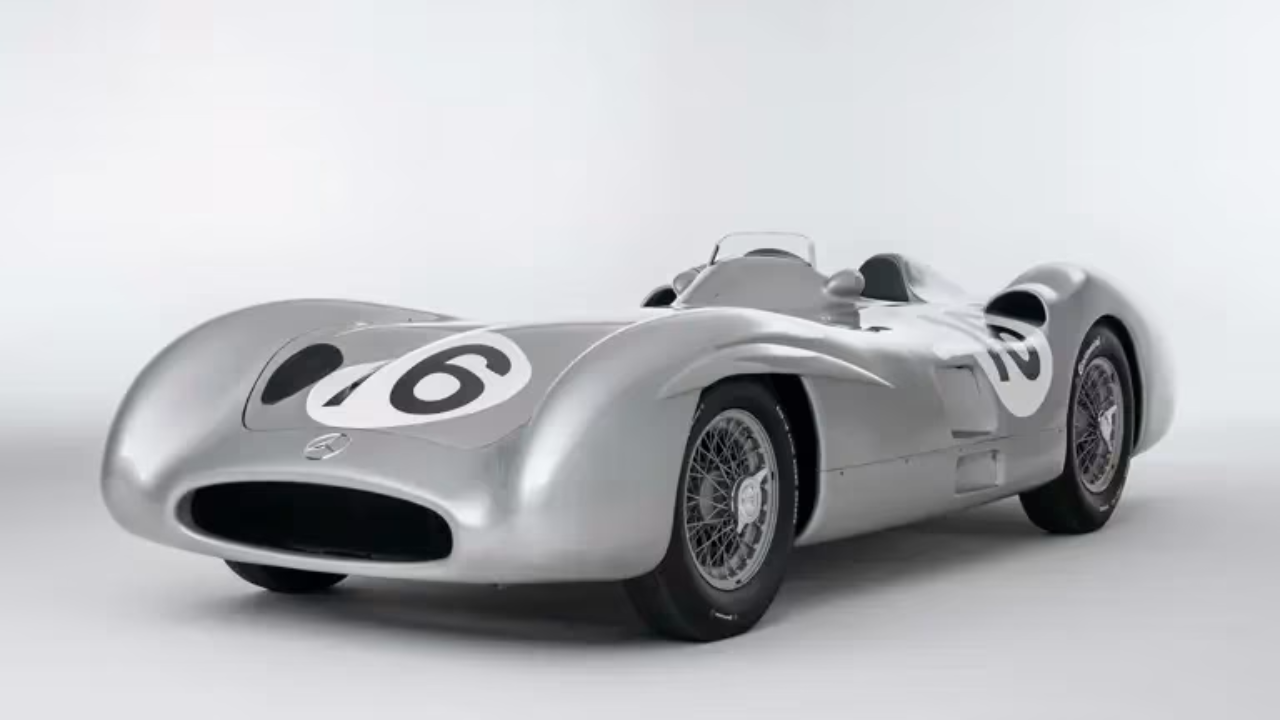
Mercedes Formula 1 car from 1950s (Photo: f1)
Behind the scenes, Mercedes was constructing a long-term system rather than chasing short-term success. This groundwork laid the foundation for their dominance in the hybrid era. The results were in the favor of the team winning 7 record championships, until they hit with Psychological setback in 2021.After the domination era, Mercedes was way back in the race for three consecutive seasons from 2022 to 2025, and then something happened that completely shocked the world of Formula 1.
The Hamilton Exit: Why It Changed Everything at Mercedes
When Lewis Hamilton left the Mercedes, it wasn’t just a routine driver move, it was the breaking point of an era that had defined modern Formula 1. Hamilton and Mercedes weren’t just successful, they were interdependent. Over nearly a decade, they built one of the most dominant partnerships the sport has ever seen. But beyond statistics, Hamilton was central to how Mercedes functioned. He wasn’t just driving the car, he was shaping its development. His feedback influenced design philosophy, race strategy, and even team confidence.
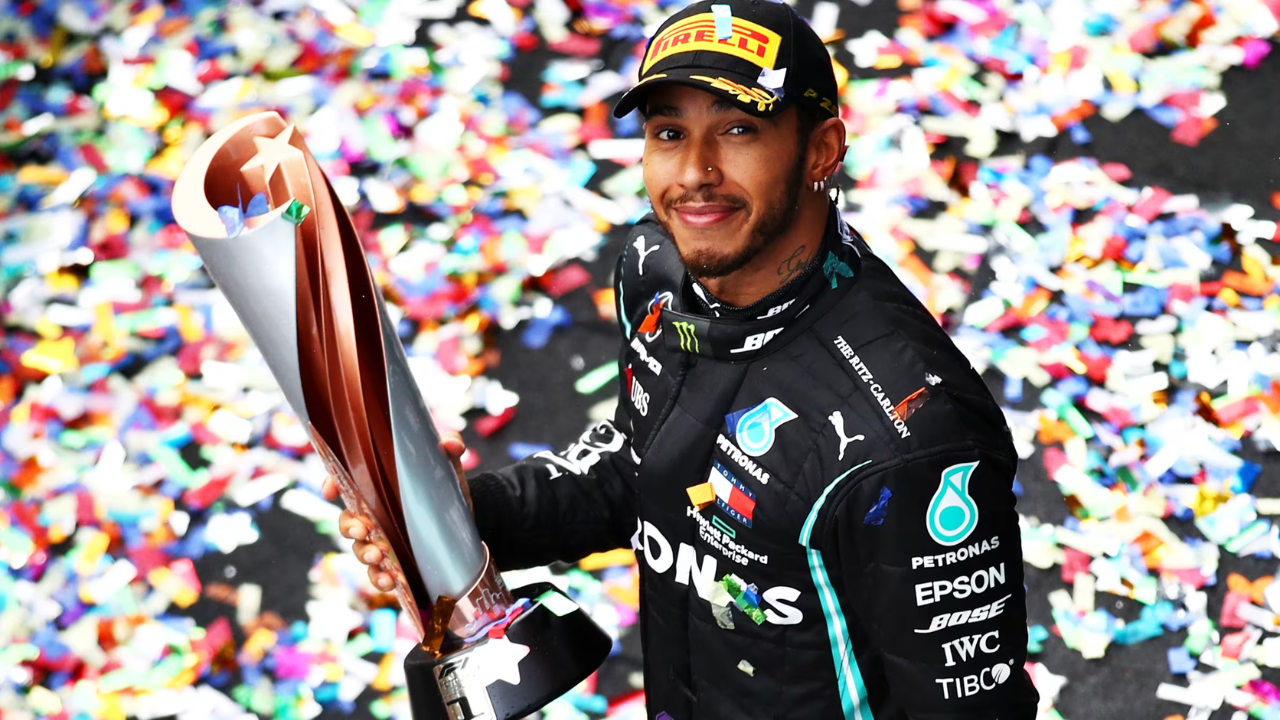
Lewis Hamilton championship (Image: F1)
Now, in 2026, Mercedes’ aerodynamic and engine package is fully under their control. Drivers Andrea Kimi Antonelli and George Russell have been actively involved in the engineering process, and the results are there for the world to see, with both drivers leading Grands Prix.Mercedes in F1 is truly a story of the rebirth of an empire. First, they dominated in an era of raw pace, then withdrew after a tragic accident. When they returned, they learned and built a seven-year period of dominance, after that a psychological setback. Now, they are experiencing yet another rebirth, with a completely different structure within the team.