Meet Cavon Hajamiri, the 17-year-old California student who built a wearable that detects vehicles approaching from behind |
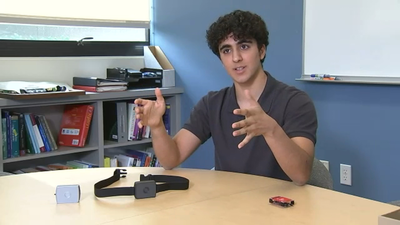
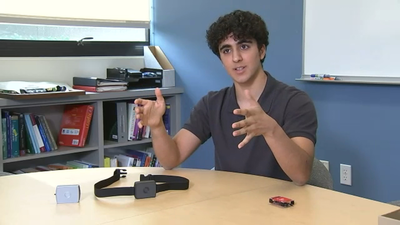
At 17, California student Cavon Hajimiri has developed a wearable device designed to warn pedestrians about vehicles approaching from behind. Called Hindsight, the invention uses radar technology to detect potential hazards and alert users through sounds and vibrations. Hajimiri, a student at Polytechnic School in Pasadena, began working on the project after experiencing several close calls with vehicles while walking. Over the past four years, he has continued improving the device, addressing technical challenges and exploring ways to make it more useful in everyday situations. His invention has received recognition at science and engineering competitions, while its development has also led to patent protection. Although Hindsight remains a prototype, Hajimiri hopes further testing could help advance pedestrian safety.
How Cavon Hajimiri’s invention began
Hajimiri’s interest in pedestrian safety reportedly began when he was 13. While walking near his home, he experienced a close call involving a vehicle approaching from behind. He said the area where he lived had limited pavements, making walking near roads potentially dangerous. After searching for a device that could alert pedestrians to vehicles they could not hear or see, Hajimiri could not find a solution that met his requirements. He therefore decided to develop his own technology. The project eventually became Hindsight, a compact wearable designed to provide users with additional awareness of their surroundings.
How Hindsight detects approaching vehicles
Hindsight uses radar to identify objects approaching from behind the wearer. The device is designed to detect movement and issue an alert when it identifies a potential hazard. According to ABC7 Los Angeles, the wearable can beep and vibrate to warn users. It can also send audio alerts to headphones or AirPods and vibrate a connected smartphone. These features are intended to give pedestrians different ways to receive warnings, including when they may not be looking at their phone. Hajimiri has described the invention as being similar to having “eyes on the back of your head”.
The technology behind the wearable
Developing a reliable radar-based wearable presents several technical challenges. The device must distinguish approaching objects from movements caused by the person wearing it. Hajimiri has worked on improving the hardware and software over multiple versions of the prototype. The project’s reported development process included testing and adjustments intended to improve its performance beyond controlled environments such as parking lots. The device is designed to provide an average of approximately seven seconds of early warning, according to Hajimiri’s comments reported by ABC7. The precise warning time can vary depending on factors such as the object’s speed, distance, direction and the surrounding environment.
Recognition at science and engineering competitions
Hajimiri’s work has received recognition at science and engineering competitions. Polytechnic School has highlighted his progress and the support he received from mentors during the development of Hindsight. The invention has also been associated with patent protection. Patent records are relevant because they document specific technical ideas connected with the device. However, obtaining a patent does not automatically mean that a product is commercially available, independently safety-tested or ready for widespread public use. Hajimiri’s work demonstrates how a student-led engineering project can develop through experimentation, technical refinement and competition-based evaluation. Its long-term impact will depend on further testing and the practical performance of the finished device.
What comes next for Hindsight?
Hajimiri’s next objective is to conduct a pilot programme involving a wider group of users. This would allow him to gather additional information about how the wearable performs in everyday environments and how people respond to its alerts. He has also discussed the possibility of using the technology to detect people approaching from behind. While this could broaden the device’s potential applications, claims about identifying predators or personal-security threats should be presented carefully. The available reporting establishes that the device is designed to detect approaching objects, but it does not independently demonstrate that Hindsight can reliably identify whether a person poses a threat. For now, the invention remains a developing safety technology. Its progress will depend on real-world validation, reliability, user feedback and whether Hajimiri can eventually translate the prototype into an accessible product.Pedestrians may fail to notice approaching vehicles because of traffic noise, headphones, poor visibility or the direction in which they are looking. A wearable that provides an additional warning could potentially help users respond earlier to certain hazards. However, Hindsight should not be described as a device that guarantees accident prevention. Its reported capabilities relate to detecting approaching objects and alerting users. The effectiveness of those alerts depends on the device’s detection accuracy, environmental conditions, user response time and other factors.