Harvard neuroscientists kept human brain organoids alive for over five years, breaking the 694-day record and mimicking brain development |
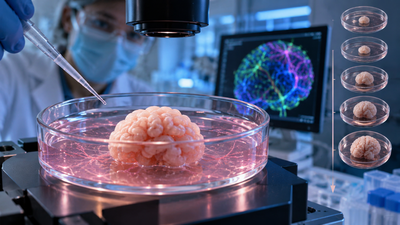
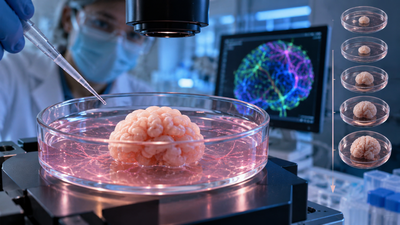
Harvard neuroscientists have kept tiny clusters of human brain cells alive in laboratory dishes for more than five years, setting a new record that could change how researchers study the human brain. The peppercorn-sized brain organoids, each containing more than one million cells from the cerebral cortex, survived for roughly three times as long as the previous record of 694 days, set in 2021. More significantly, the cells did not simply remain alive. Over years in culture, they continued to mature and followed molecular patterns associated with brain development during gestation and early childhood. According to the study published in Nature, titled ‘Human brain organoids record the passage of time over multiple years’, older cells appeared to retain a record of the developmental stages they had already passed through, allowing them to advance more rapidly when prompted to form new neurons. The findings suggest that these lab-grown brain models can reproduce aspects of human development over much longer periods than previously demonstrated, opening new possibilities for studying brain biology and disease. The organoids followed the brain’s developmental timetable.
How did the brain organoids keep developing
The researchers found that the organoids did more than simply remain alive. Over several years, their cells followed a molecular sequence resembling the development of the human brain during gestation and the first years of life. The team studied 34 organoids using single-cell RNA sequencing at eight time points, from six months to five years. When combined with earlier research, the work provided data from 110 organoids and 425,000 individual cells, allowing the scientists to follow changes across an unusually long period.DNA methylation provided one of the clearest signs that the organoids were following a developmental timetable. This process helps switch genes on and off as the brain develops and can act as an “age clock”. The researchers found that the organoids reproduced the same sequence of methylation changes documented in human brains. “The methylation clock told us that these organoids were basically doing things that the endogenous brain would do,” Arlotta said. The finding suggested that the cells were not merely surviving in an artificial environment but were progressing through developmental stages in a manner that closely reflected normal human brain development.
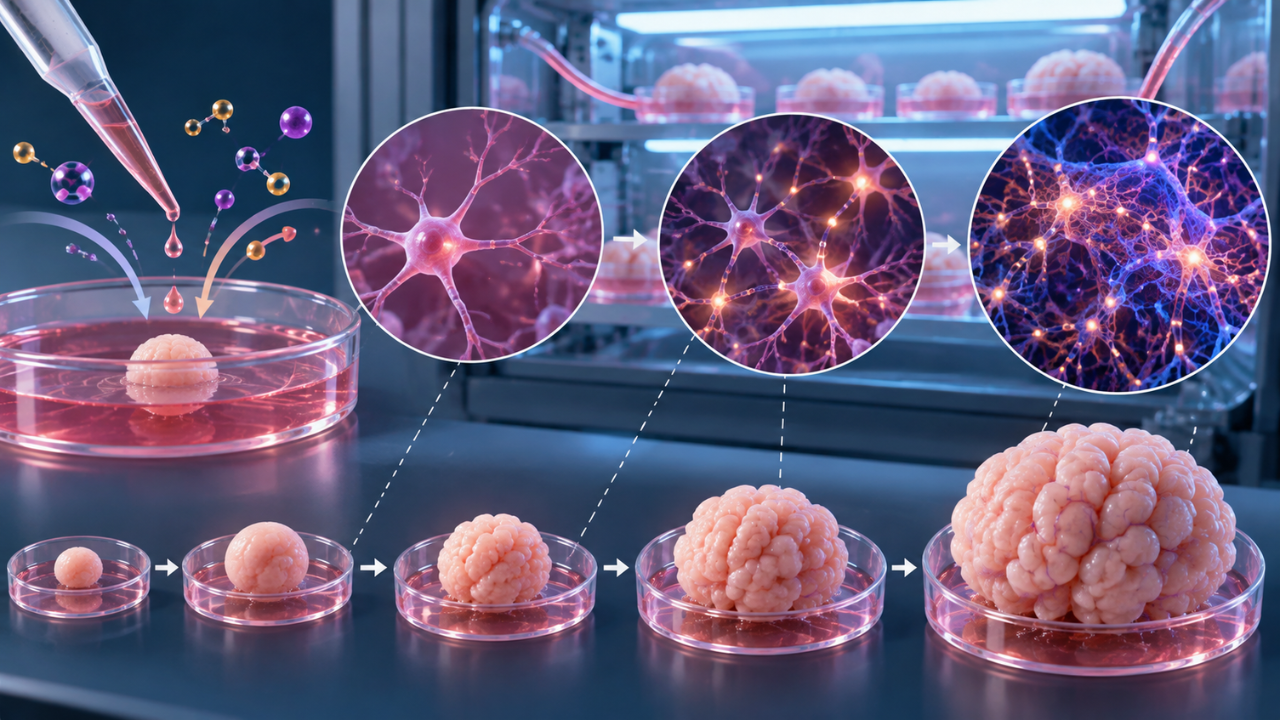
Image AI generated
How did older brain cells skip ahead
The long lifespan of the organoids also revealed something unexpected about how their cells responded to new developmental signals. Researchers combined cells of different ages and from different donors into the same organoid and then exposed them to chemical signals that stimulate the production of new neurons. Younger progenitor cells produced neurons associated with the beginning of the process, while older cells immediately moved towards producing later-stage neurons that would normally appear two or three months further along in development.The researchers interpreted this as evidence that the cells retained information about the developmental stages they had already passed through. Harvard reported that the organoid brain cells had effectively “recorded the passage of time and retain a memory of the developmental steps already performed”. Arlotta described the phenomenon as a developmental “time warp”, because older cells could skip ahead rather than starting the process again from the beginning. “We were a little bit shocked by the results,” she said. “I like to call this a ‘time warp’ of development; they skip ahead.”
What helped the brain organoids stay alive
Keeping the organoids alive for years required the researchers to improve the conditions in which the cells were cultured. The team used a liquid medium designed to encourage spontaneous electrical signalling in neurons and added an amino-acid supplement as an additional energy source. Within nine months, the number of neurons increased, and the cells developed denser synapses, the connections through which cells communicate. After a year, organoids grown in the new medium showed vigorous bursts of electrical activity, while those grown in the other medium did not. The researchers continued documenting this activity for two years.The Harvard laboratory already has some organoids that have reached seven years of age, although the researchers do not plan to keep them alive simply to pursue another longevity record. Instead, they want to use what they have learnt about the organoids’ developmental “time warp” to reach important stages more quickly. The work could eventually help researchers study brain development and disease, test medicines and investigate biological processes that are difficult to observe directly in the human brain. Arlotta said the findings could help “unlock a whole spectrum of human brain biology that we didn’t see before”, while also pointing towards future models that could improve understanding of disease progression and how patients respond to treatments.