
Endangered Species Protection: Meet Anika Puri, the 17-year-old Indian-American student who built a $300 AI system to spot elephant poachers with over 90% accuracy and won a $25,000 Davidson scholarship award
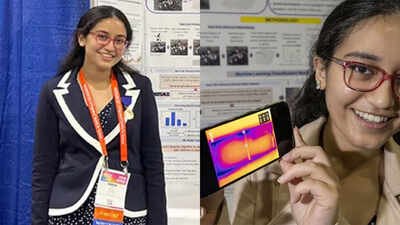
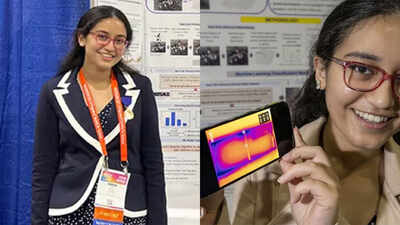
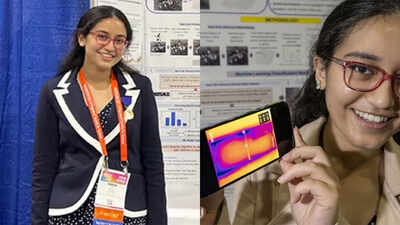
When darkness settles over a wildlife reserve, spotting a poacher from hundreds of feet above the ground can be a difficult task, even with thermal imaging technology. For park rangers working to protect endangered animals, a missed movement could have serious consequences. Anika Puri, an Indian-American student from Chappaqua, New York, set out to tackle this challenge with an unlikely combination of artificial intelligence, drone technology and a closer look at how humans and animals move. According to a report by the Society for Science, her project, ElSa, short for Elephant-Savior, developed a low-cost system designed to identify potential poachers in nighttime drone footage. The innovation earned Puri a $25,000 scholarship as a 2022 Davidson Fellow, recognising her work in engineering and its potential application to wildlife conservation. Scroll down to read the details of her journey.Turning curiosity into innovationAccording to the online release by Davidson Institute, Puri’s interest in technology grew from an early fascination with building, experimenting and exploring new ideas. From presenting a Lego Mindstorms robot at Maker Faire to developing an interest in drones and earning a commercial drone pilot licence, she approached engineering as a way to turn curiosity into practical solutions. Her focus eventually shifted towards environmental science and the protection of endangered species. During visits to India, she was struck by the continued presence of ivory jewellery and statues in Mumbai markets, despite international efforts to curb the illegal ivory trade. The experience prompted her to investigate the scale of wildlife poaching and the technology being used to prevent it.She discovered that drones equipped with thermal infrared cameras were already helping rangers monitor protected areas after dark. However, analysing the resulting footage remained a challenge, the release explains.Why traditional detection falls shortDrones monitoring wildlife reserves typically fly at considerable heights to cover large areas while working within limited battery life. At around 400 feet, people and animals can appear as small shapes in thermal images, making them difficult to distinguish accurately, states the online release.Existing detection systems often rely on analysing individual frames and identifying objects by their shape. According to Puri’s research, these approaches could achieve accuracy as low as 20% in challenging conditions. Human operators watching hours of footage also face the risk of fatigue and missed activity. Puri approached the problem from a different angle. Instead of examining only what appeared in an image, she studied how objects moved over time.Reading movement through AIThe ElSa system uses machine learning to analyse spatio-temporal patterns in nighttime thermal infrared videos. These patterns include differences in speed, turning radius and movement behaviour, as well as whether an animal moves as part of a herd, adds the report by Society for Science. By examining these characteristics across successive video frames, the algorithm aims to distinguish humans from animals more reliably than methods based primarily on static images.When tested on the BIRDSAI thermal infrared video dataset, collected from four national parks in Africa, the system achieved 90.9% accuracy in detecting humans. The result represented roughly a fourfold improvement over the existing methods cited in her research.Although identifying a human does not automatically establish that the person is a poacher, the technology could help rangers flag suspicious activity for further investigation.Making conservation technology affordableCost was another central consideration in Puri’s design. High-resolution thermal cameras can cost approximately $4,800, placing advanced surveillance technology beyond the reach of some conservation programmes. Her ElSa prototype, built using commercially available components, cost around $300. This significantly lower price point could make automated detection tools more accessible to parks in Africa and Asia, where budgets and resources are often limited. The project offers a glimpse of how artificial intelligence can be applied beyond conventional commercial uses, addressing challenges that affect biodiversity and environmental sustainability.A young researcher with a larger purposeFor Puri, the Davidson Fellowship marked recognition of a project that connected engineering with a cause she cared deeply about. Her work demonstrates how looking at a familiar problem differently can open up new technological possibilities. Wildlife protection requires a combination of trained rangers, effective enforcement, community participation and reliable monitoring. ElSa is not a substitute for those efforts, but it points towards a future in which affordable AI tools could help conservation teams identify threats faster and direct their limited resources more effectively.Images Courtesy: Society for Science