
Earth from space: NASA captures mini lake carving into Canada’s 20,000-year-old ice mass |
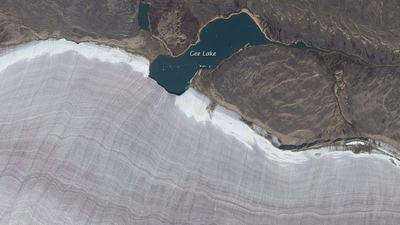
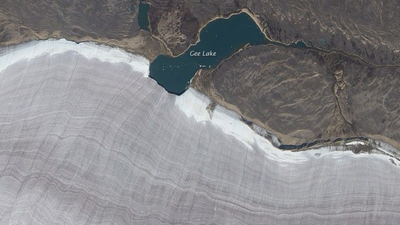
From high up in the sky, some of the remotest regions can tell a tale that can be perceived only when viewed from a high vantage point. In one particular photograph, there is a beautiful picture of a small lake hugging the edge of one of the oldest pieces of ice in all of Canada. At first glance, the photograph seems to portray a very serene landscape, an image of the lake and the ice peacefully co-existing with each other. However, behind this picturesque scene lies an important story about ancient glaciers and the gradual effects of climate change.
A rare view of Gee Lake and the Barnes Ice Cap
It should be noted that this amazing photo features Gee Lake bordering the Barnes Ice Cap in Baffin Island, Canada. This shot was taken by the NASA Earth Observing-1 satellite back in September of 2010. Hence, one could see the interaction of liquid water and ancient ice quite clearly here.Indeed, the size of the lake in question is not very big; it spans approximately 3.2 km across. Nonetheless, it is rather special owing to its location, cutting into the glacier’s bordering edge.According to NASA Earth Observatory’s account of observations made there, the glacier’s surface features characteristic ridges, reminiscent of natural growth lines of a clamshell. In other words, they have been created by moving meltwater over the ice surface. To be more precise, the glacier’s surface looks like the aforementioned shell.
Canada’s oldest ice mass and its ancient origins
The Barnes Ice Cap has an incredible history to its credit and is known to be the oldest ice mass in Canada. The analysis of the ice cores from the glacier indicates that some sections of the ice date back to around 20,000 years ago, the era of the Ice Age.What makes the Barnes Ice Cap special is that it is the only surviving part of the colossal Laurentide Ice Sheet that was once spread all over North America and sculpted the entire landscape during its existence.According to the scientific accounts, the glacier spans a surface area of 6,000 km square and is regarded as a “last remnant” of a once vast and magnificent frozen world. Simply put, the Barnes Ice Cap preserves the ice formed at the dawn of humankind.
What this scene reveals about climate change
However, there is a more serious matter behind the picturesque scene. The formation of meltwater lakes, such as Gee Lake, around the perimeter of glaciers is frequently attributed to an increase in temperatures.It is evident that the Barnes Ice Cap is shrinking steadily today; for example, it is receding several meters per year. In the future, some experts say the phenomenon might intensify. According to scientific calculations, the ice cap will be virtually melted within a couple of centuries under present conditions.As one may see, the process of melting has not only aesthetic but ecological implications since meltwater weakens the internal structure of glaciers, leading to their accelerated degradation and increasing the risk of sea-level rise.The picture of Gee Lake does not only come as one of nature’s surprises but is also symbolic as it represents the geological processes occurring on our planet. The body of water and ice together reflect the history of Earth, which goes back several thousand years ago when the last Ice Age peaked.Thus, it is crucial to keep track of climate change and its impacts, no matter how far away it is from people.