
How Chornobyl’s mysterious fungus could change medicine and future space missions |

Nearly four decades after the Chornobyl nuclear disaster, the abandoned reactor remains one of the most hostile places on Earth. Radiation levels that would prove lethal to most forms of life still linger in parts of the exclusion zone, making it an unlikely setting for biological discovery. Yet among cracked concrete, rusting steel and contaminated…
Read More

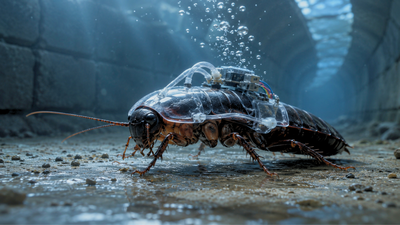
Scientists created remote-controlled cockroaches, then fitted them with tiny suits that kept them walking underwater for up to 3 hours |

Cockroaches are already famous for surviving some of Earth’s harshest conditions, but scientists have now pushed their abilities even further. Researchers have developed remote-controlled cockroaches capable of walking underwater for up to three hours by fitting them with miniature oxygen-supplying suits. The unusual technology could one day help emergency teams search flooded buildings, inspect dangerous…

Read More

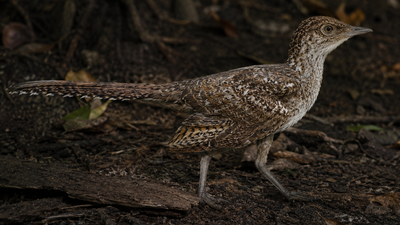
Scientists discover 149-million-year-old world’s smallest long-tailed bird fossil revealing how modern birds evolved |

While early birds existed in a time period when dinosaurs dominated, they were feathered, capable of gliding or flying, but looked nothing like the birds we have today. Unlike birds like pigeons, robins and eagles, which have short fan-shaped tails, these ancient birds possessed long, bony tails inherited from their dinosaur ancestors. The transition from…

Read More

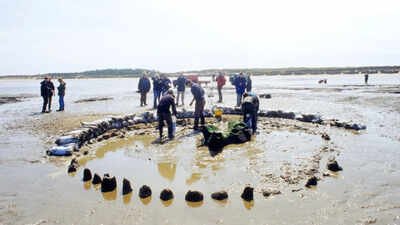
This 4,000-year-old wooden monument in England may have been built to ‘extend summer’, archaeologists say

Studies show that the ancient timber circle, dubbed “Seahenge,” was built in 2049 B.C. It was excavated from a salt marsh near a beach on England’s east coast in 1999. (Image credit: Holmes Garden Photos/Alamy) A mysterious wooden monument buried beneath the Norfolk coast may have been built more than 4,000 years ago in an…

Read More

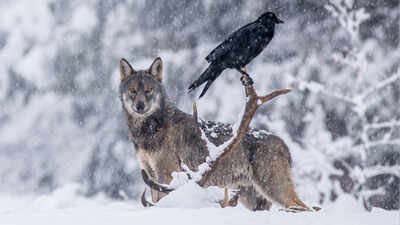
Scientists thought ravens followed wolves for food. A 2.5-year GPS study told a different story.

Scientists Thought Ravens Followed Wolves for Food. They Were Wrong. Ravens Predict Them For decades, biologists believed ravens found their next meal by shadowing wolves across the landscape until the predators made a kill. A new study in and around Yellowstone National Park suggests the birds are using a far more sophisticated strategy.Instead of constantly…

Read More

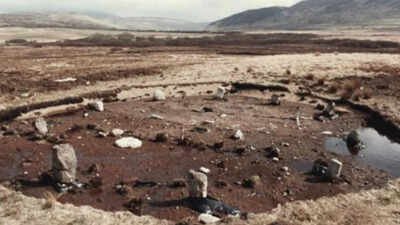
A 5,000-year-old ritual circle was hidden under a Scottish island; archaeologists found it without digging

Archaeologists have been excavating the area for ancient secrets since the 1980s Archaeologists have uncovered what could be a 5,000-year-old ritual circle hidden beneath peat on a Scottish island, all without digging into the ground.Using advanced geophysical scanning equipment, researchers from Historic Environment Scotland (HES) detected a ring of buried pits beneath Machrie Moor on…

Read More

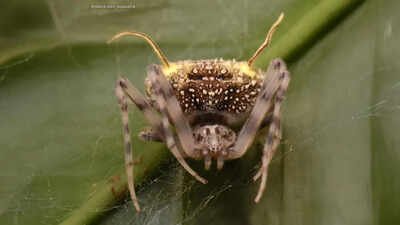
Scientists found a spider in the Amazon that looks like a parasitic fungus so perfectly they first mistook it for a mushroom |

A new species of spider from the Ecuadorian Amazon: Taczanowskia waska. Credit: David Diaz-Guevarra Researchers exploring Ecuador’s Amazon rainforest thought they had spotted a small mushroom clinging to the underside of a leaf during a night survey. A closer look revealed something far stranger. It was a spider that had disguised itself so convincingly as…

Read More

Scientists found tropical butterflies that can live nearly a year and show little sign of ageing; here’s why they may matter for longevity research

Some tropical Heliconius butterflies have evolved a remarkable way to stay young, allowing them to live far longer than most butterflies. Most butterflies survive for only a few weeks after reaching adulthood. But scientists have now identified a group of tropical butterflies that can live for almost a year while showing little sign of physical…

Read More