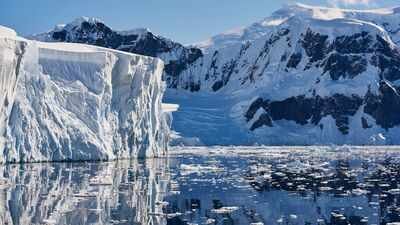
Scientists discover giant fan-shaped structure beneath Antarctica’s ice sheet: The hidden structure rewriting Earth’s ancient history

For decades, Antarctica has been treated as a kind of frozen time capsule, a place where evidence of Earth’s deep past sits preserved, undisturbed, beneath layers of ice that have built up over millions of years. As per the study published in Nature Geoscience, scientists have now uncovered something remarkable within that buried record: an…

Read More

Quote of the day by Sigmund Freud: “The only person with whom you have to compare yourself is…” |

Quote of the day by Sigmund Freud (AI-generated image) There is a particular kind of tiredness that comes from constantly checking how you measure up against everyone else. A colleague’s promotion, a friend’s holiday, a stranger’s fitness progress online, each one quietly resets the bar you are judging yourself against. Sigmund Freud, the founder of…

Read More

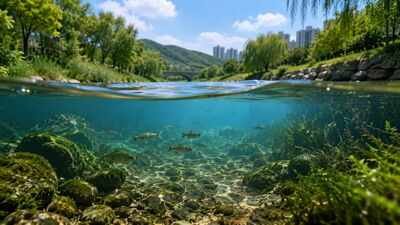
The world is losing oxygen in its rivers, but China’s freshwater recovery offers new hope |

Freshwater ecosystems have spent years under growing pressure from pollution, changing weather patterns and rising temperatures. Rivers and lakes in many parts of the world have been losing dissolved oxygen, placing fish, aquatic plants and countless smaller organisms under increasing strain. That broader pattern has often been presented as one of the more difficult environmental…

Read More

Israel planted millions of pine trees but what happened next surprised scientists |

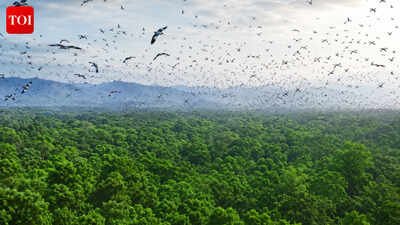
During the mid-20th century, large areas of Israel were transformed by one of the country’s most ambitious reforestation programmes. Millions of pine trees were planted to stabilise soils, combat erosion and create forests on previously open landscapes. At first, the initiative appeared to be an environmental success, with barren hillsides becoming green woodlands. However, decades…

Read More

First underwater home for scientists installed 17 metres below the Florida Keys to support marine research |

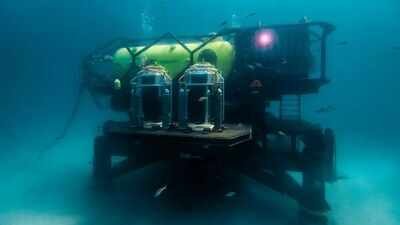
DEEP has completed the installation of Vanguard, its pilot subsea human habitat, at Tennessee Reef in the Florida Keys National Marine Sanctuary. The system now sits 17 metres below the water’s surface following a complex marine operation, marking a significant milestone in subsea engineering and long-duration underwater research capability.The installation enables multi-day subsea missions, allowing…

Read More

After the Great Wall of China, Africa is building an 8,000-km ‘Wall of Trees’ to fight climate change, restore land and feed millions |

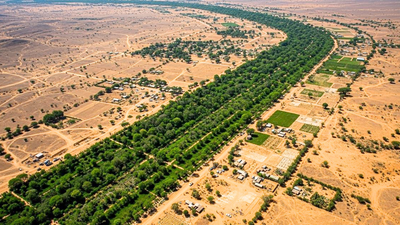
Stretching from the Atlantic coast of Senegal to the shores of Djibouti on the Red Sea, Africa is undertaking one of the most ambitious environmental projects ever attempted. Known as the Great Green Wall, the initiative spans around 8,000 kilometres across the Sahel, a vast semi-arid region bordering the Sahara Desert. Its goal is far…

Read More

Scientists found ancient teeth smaller than a fingertip; they are rewriting early primate history |

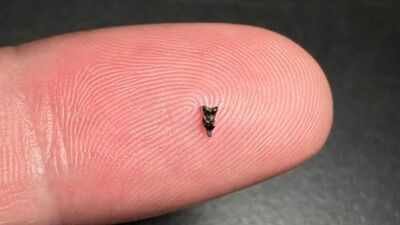
pc: Discover Magazine (Image Credit: Dr Stephen Chester) A tiny tooth can disappear between your fingertips without much effort. Yet some of the earliest clues to our own evolutionary story come from fossils no larger than that. In collections of ancient mammal remains from western North America, palaeontologists have spent decades piecing together fragments of…

Read More

Why does water taste different in different places: The surprising science behind every sip |

Almost everyone has noticed it. The water at home tastes perfectly normal, yet the moment you travel to another town or country, every sip feels noticeably different. Some water seems sweet and refreshing, while others taste metallic, salty, earthy or even slightly like chlorine. This isn’t simply imagination. The flavour of drinking water is influenced…

Read More

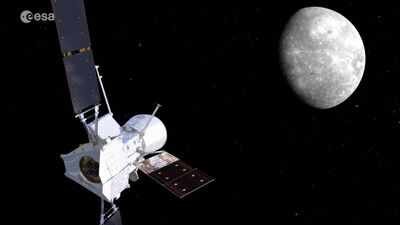
BepiColombo: The spacecraft that spent 8 years travelling to Mercury is finally arriving in 2026 |

For most space missions, the launch is the headline moment. For BepiColombo, the real milestone arrives years later. After spending nearly eight years weaving through the inner Solar System, the European-Japanese spacecraft is now approaching the point it was designed to reach from the very beginning. As reported by ESA, in November 2026, Mercury is…

Read More

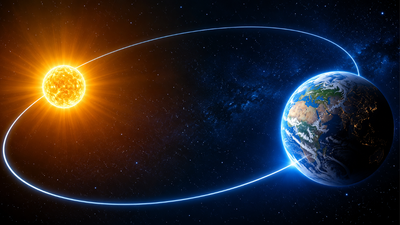
Earth to reach its farthest point from the Sun on July 6, yet the summer heat will not cool: Here’s why |

Earth will reach its farthest point from the Sun on July 6, a yearly astronomical event known as aphelion. At around 152.1 million kilometres from the Sun, the planet will be about 5 million kilometres farther away than it is in early January. Yet, despite this greater distance, the Northern Hemisphere will remain firmly in…

Read More