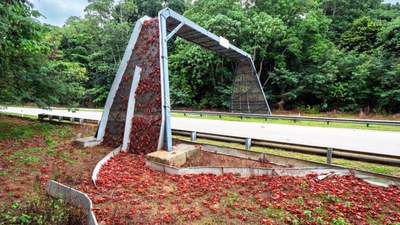
Australia has built bridges just for crabs so millions of red crabs can safely migrate across Christmas Island every year |

Every year, one of the world’s most remarkable wildlife migrations takes place on Australia’s remote Christmas Island, where millions of bright red crabs leave the rainforest and journey towards the Indian Ocean to breed. As the crabs cross roads, forests and beaches, they create a spectacular natural phenomenon that attracts visitors from around the globe….

Read More

Ahmed: Cambridge student Ahmed Abdelsalam, 12, designed a system that harvests energy from movement; the invention made him one of 10 finalists for a $25,000 prize

12-year-old Ahmed Abdelsalam created energy-harvesting system A 12-year-old student from Cambridge, Massachusetts, has developed a technology that could help find new ways to generate cleaner energy by capturing power from everyday movement.Ahmed Abdelsalam, a sixth-grade student at Darby Vassall Upper School, created VERDA, a system that harvests energy from sources including walking.Ahmed’s project has earned…

Read More

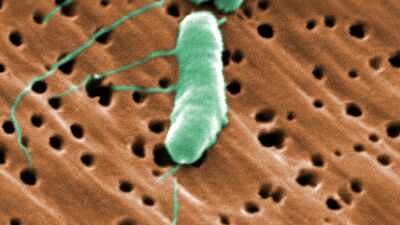
Florida’s first flesh-eating bacteria death of 2026 raises concerns during beach season as warm waters fuel infections |

Image Credit: CDC/ Janice Haney Carr Florida health authorities have officially confirmed the state’s first fatality of 2026 linked to Vibrio vulnificus, a naturally occurring ‘flesh-eating bacteria’. This specific death involved a resident of Palm Beach County aged between 80-84 years. According to the BEACON(public health program based at Boston University) , these cases are…

Read More

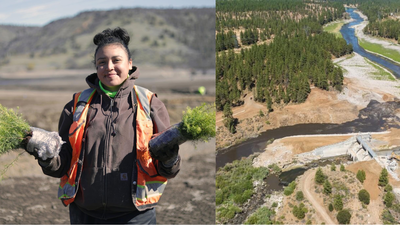
After America’s largest dam removal, the Yurok Tribe is bringing an entire river back to life by planting millions of native seeds |

A Yurok Tribe crew member plants native seedlings along the restored Klamath River (left). Image: Yurok Tribe The removal of four ageing hydroelectric dams from the Klamath River marked a historic moment for conservation in the United States, reopening hundreds of miles of waterways that had been blocked for more than a century. But while…

Read More

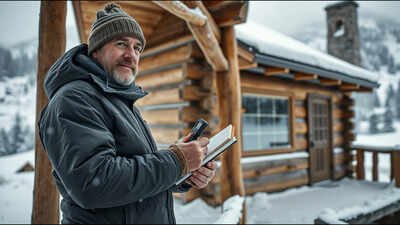
A man spent 52 winters recording snowfall by hand in Colorado. His notebooks now help scientists track climate change |

Representative Image of a man recording snowfall measurements in Colorado by hand (AI-generated image) In a remote patch of Colorado’s Gunnison National Forest, four miles from the nearest ploughed road, a man known simply as Billy Barr has spent 52 consecutive winters recording daily snowfall, temperature and weather observations from his off-grid cabin at roughly…

Read More

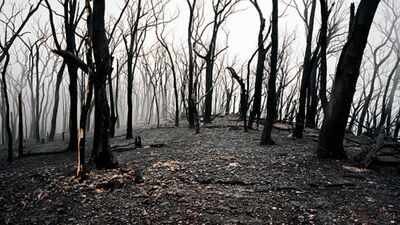
In 1987, Victoria began an A$26 million experiment inside a mountain ash forest; three decades later, the results surprised researchers

In a pioneering study within Victoria’s mountain ash forests, surprising findings have emerged over extended periods. Intense thinning of trees fostered lush growth and increased diameters in the surviving trees. These enhanced specimens exhibit greater fire resilience and are likely to create hollows for various wildlife. Interestingly, Leadbeater’s possums thrived in thinned and acacia zones,…

Read More

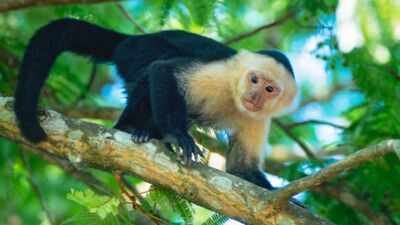
Costa Rica scientists placed an AI touchscreen in a wild forest; 16 capuchin monkeys used it for banana rewards and some learned to kiss the screen

It is a known fact that humans have evolved from their ape ancestors. From crawling to walking we have come a long way and it seems that they are following suit, delving into the world of AI. In an experiment conducted in a Costa Rica forest reserve, capuchin monkeys learned to use an AI touchscreen…

Read More

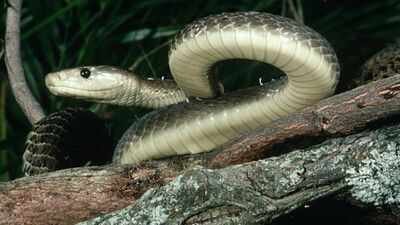
The black mamba is the fastest snake on Earth, but its incredible speed isn’t its only weapon; here’s how it hunts, strikes and captures prey with remarkable efficiency

They are fast, lethally venomous and highly aggressive. But most important of all, they have been blamed for more human deaths than you could count. Being mentioned here are the Black Mambas, the fastest and deadliest snakes on Earth. They have a slithering speed of up to 12.5 miles per hour, but that is not…

Read More

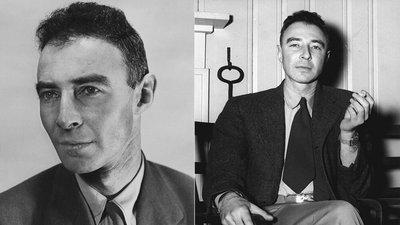
How J. Robert Oppenheimer brought together thousands of scientists to build the world’s first atomic bomb |

Image(s): J. Robert Oppenheimer/Wikipedia Prior to 1945, nuclear weapons were just an idea that could be discussed in theoretical physics literature. This changed when J. Robert Oppenheimer, the American theoretical physicist from America, who was responsible for directing the scientific work of the Manhattan Project in the Second World War, took command of the project….

Read More

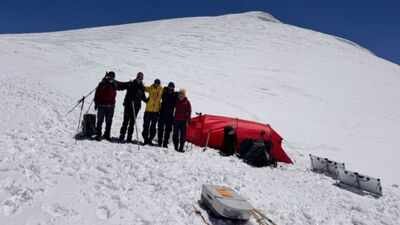
Scientists surveyed Turkey’s Mount Ararat glacier for the first time above 5,000 metres; the data will guide an attempt to recover its first ice core

The research team at 5,050 metres altitude (University of Munster photo) The glacier on Mount Ararat, Turkey’s highest mountain, has been surveyed for the first time as scientists race to study its shrinking ice before more evidence is lost.Researchers believe the shrinking glacier could preserve valuable information about both climate change and human history. While…

Read More