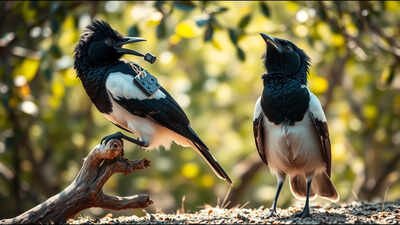
Gps: Scientists fitted Australian magpies with GPS trackers, but the birds quickly learned to remove them for each other |

Representative Image of Australian magpies cooperating to remove tracking devices from one another (AI-generated image) Researchers in Queensland fitted five Australian magpies with tiny GPS trackers, hoping to map their movements and understand how age, sex or rank affected the way the flock behaved. The birds had other plans. Within about ten minutes, an untagged…
Read More

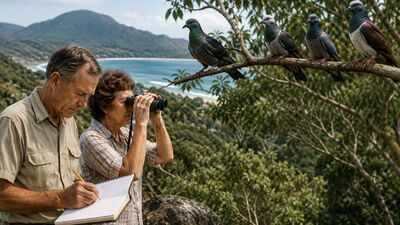
In 1965, a couple began counting pigeons in Queensland. Three years later, numbers fell from 4,692 to 1,451, beginning a 60-year conservation story |

A couple, Margaret and Arthur Thorsborne, travelled north from Queensland’s Gold Coast to Hinchinbrook Island, a place they knew largely through photographs. They would return many times, eventually making the Cardwell area their home and becoming closely associated with its forests, wetlands and wildlife. Among the animals that caught their attention were pied imperial-pigeons, which…

Read More

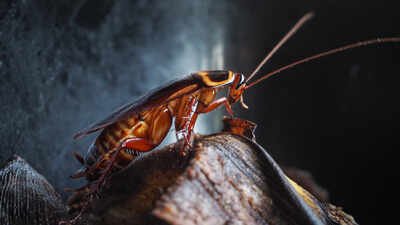
Newborn German cockroaches eat from a shared fecal pile and learn their colony’s smell; the social bond may explain why traps often fail

The discovery may also help explain why conventional traps and insecticidal baits can sometimes have trouble controlling infestations. why cockroach traps fail, how German cockroaches find their colony, how cockroach pheromones work, why cockroaches gather in groups, newborn cockroaches learn colony smell, cockroach feces used to identify colony members, using pheromones to control cockroach infestationsCockroaches…

Read More

Scientists discovered that animal poop travelled across oceans 540-million-years ago and triggered the evolution of life on earth |

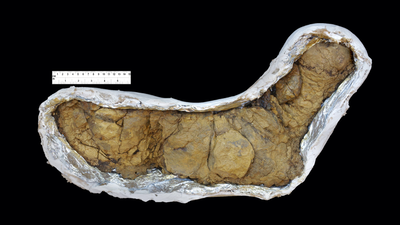
A large coprolite of a carnivorous dinosaur found in Harding County, South Dakota, US. Image Credit: Poozeum/Wikipedia Around 540 million years ago, the biological landscape of Earth went through a huge transformation called the Cambrian explosion. During this era, the ancestors of most modern animal groups began to appear, depicting a massive surge in biodiversity….

Read More

In 2022, Nasa crashed a spacecraft into an asteroid at 14,000 mph and changed its orbit by 32 minutes |

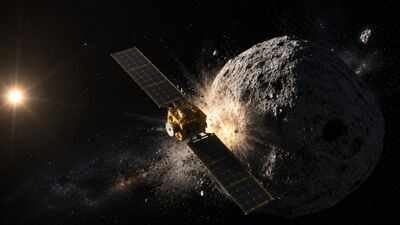
In September 2022, Nasa carried out a mission that had never been attempted before: deliberately crashing a spacecraft into an asteroid to change its path through space. The target was Dimorphos, a small moonlet orbiting a larger asteroid called Didymos. Neither object posed any danger to Earth, which made the pair an ideal testing ground…

Read More

German scientists made a sponge-like material that pulls drinking water from air as dry as 18% humidity, producing up to 1.8 litres per kg each day |

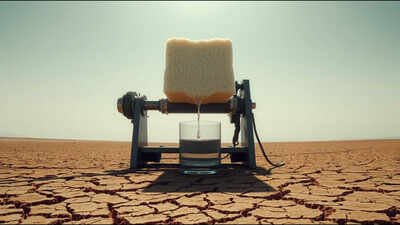
Representative Image of water harvesting technology collecting and storing water (AI-generated image) Researchers at Kiel University in Germany have developed a highly porous material that can pull drinking water directly out of dry air, offering a possible lifeline for regions where rainfall is becoming less reliable. The material, known as CAU-10-H, behaves like a sponge,…

Read More

Quote of the day by Benjamin Franklin: “What is more valuable than gold? Diamonds. Than diamonds? Virtue.” |

Benjamin Franklin (Image: Wikipedia) Two people can spend a lifetime accumulating whatever they consider valuable and end up with completely different kinds of wealth to show for it. One collects money, property, and possessions, each one clearly priced, each one able to be counted. The other spends that same effort building something that resists being…

Read More

America is turning decades-old radioactive waste into strontium-90 power systems that could keep underwater sensors running for decades |

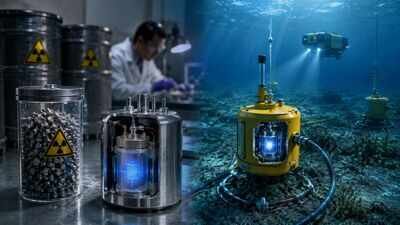
America is quietly building a network of nuclear-powered nodes on the ocean floor that could charge drone submarines for close to three decades without a cable, a support ship or a single resupply run. The fuel behind this project is strontium-90, a radioactive by-product that has sat in government storage for decades, and the Pentagon…

Read More

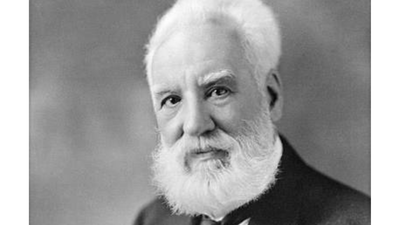
Quote of the day by Alexander Graham Bell: “Great discoveries and improvements invariably involve the cooperation of many minds” |

Alexander Graham Bell is best remembered for helping develop the telephone, an invention that transformed how people communicated across distance. Yet Bell himself recognised that major breakthroughs rarely belong entirely to one person. His statement, “Great discoveries and improvements invariably involve the cooperation of many minds”, reflects the collaborative nature of scientific progress. Bell worked…

Read More

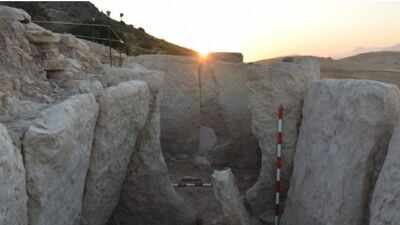
Archaeologists in Málaga uncovered a 13-metre megalithic tomb more than 5,000 years old; ivory, amber and seashells point to long-distance exchange networks

Photo credit: University of Cádiz Archaeologists working near Teba in Málaga, southern Spain, have uncovered a remarkably well-preserved megalithic tomb that is more than 5,000 years old. Announced by the University of Cádiz, the structure, known as Dolmen I of the La Lentejuela necropolis stretches about 13 metres, or roughly 42 feet, and contains multiple…

Read More