NASA confirms Artemis II launch window for February 2026 with astronauts preparing for first crewed Moon flyby in over 50 years |

Source: The New York Times NASA has shown off fresh details of its long-awaited Artemis II mission, marking a major step in the return of humans to deep space. For the first time in more than five decades, astronauts are preparing to fly around the Moon, testing systems designed eventually to take humans back to…

Read More

Cockroaches become more cautious and change their behaviour after stress, scientists discover |

Cockroaches are usually treated as simple creatures that react without pause, driven by instinct rather than experience. New laboratory work from Scotland suggests the picture is less fixed. Researchers found that male cockroaches altered their behaviour after exposure to stress, becoming more cautious when faced with uncertain signals. The study focused on how insects respond…

Read More

NASA’s Antarctic balloon campaign is complete: Mission to detect anti-matter particles entering the Earth’s environment |

NASA has completed a series of scientific balloon flights over Antarctica during a campaign that began in early December. Four balloons were launched from a site near McMurdo Station on the Ross Ice Shelf and remained in flight for several weeks. The flights were part of NASA’s ongoing Scientific Balloon Program, which supports research using…

Read More

Artemis II mission: Nasa’s new Moon rocket heads to launch pad ahead of astronaut launch as early as February

The Artemis II rocket makes its way from the Vehicle Assembly Building to pad 39B at the Kennedy Space Center, Saturday, Jan. 17, 2026, in Cape Canaveral, Fla. (AP Photo/John Raoux) Nasa’s giant new moon rocket headed to the launch pad Saturday in preparation for astronauts’ first lunar fly-around in more than half a century….

Read More

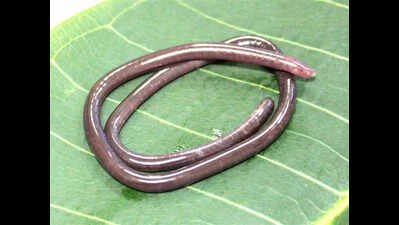
Scientists discover rare caecilian species Gegeneophis valmiki | Kolkata News

Kolkata: Indian scientists have discovered a rare subterranean amphibian species in the northern Western Ghats of Maharashtra and named it Gegeneophis valmiki.The discovery, made by a multi-institutional research team led by the Zoological Survey of India (ZSI), has been published in the international journal Phyllomedusa. The species was first collected in 2017 by K P…

Read More

What is ocean’s ‘lake of death’? What happens when marine life enters one of deadliest underwater spots |

Brine pools kill marine life because extreme salinity, oxygen absence, and toxic chemicals stop all cellular functions/ Courtesy University of Miami Brine pools, often nicknamed underwater lakes or lakes of death, are some of the most dangerous environments in the ocean. They are pockets of water so salty and oxygen-free that they form sharp, visible…

Read More