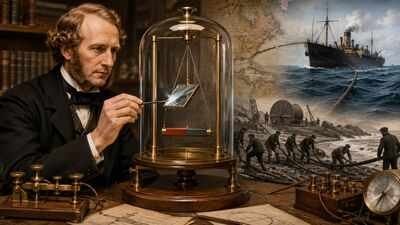
In 1854, William Thomson used a tiny mirror on a suspended magnet to help solve the problem of sending telegraph signals across the Atlantic

In the middle of the 19th century, sending a message across the Atlantic was still a distant ambition. Telegraph lines had already begun shrinking distances on land, but an ocean presented a different problem. A signal travelling through thousands of miles of cable could arrive so weak that ordinary instruments struggled to detect it. William…
Read More

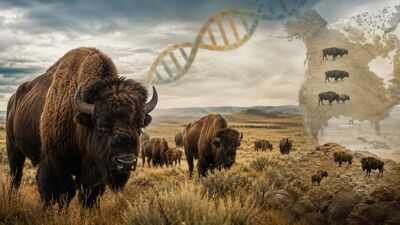
North American bison fell from millions to hundreds, but ancient DNA shows they kept much of their genetic diversity as isolated herds became different

Scientists have pieced together the deepest genetic history of the North American bison ever assembled, using DNA drawn from 115 animals that lived before the species was pushed to near extinction in the 20th century. As per the findings, led by researchers at the University of California, and featured on the cover of the 6…

Read More

Most dreaming happens during REM sleep, which makes up 20–25% of the night; if vivid dreams keep leaving you exhausted, scientists say the real culprit may be something else, keeping you from restorative sleep

Not everyone who closes their eyes and hits the bed at night goes to sleep. Some end up transitioning into a dream-like state that has them waking up while feeling hazy, lazy and heavy, with no feelings of rest and freshness. But is it the dreams that weigh you out or does it have something…

Read More

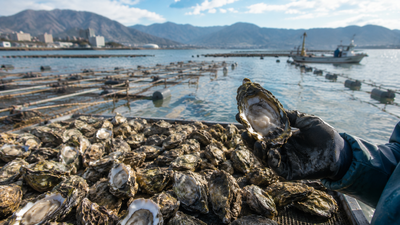
Japan’s Hiroshima produces about 60% of its farmed oysters, but up to 90% have died amid unusually warm seas

Oyster farmers across Hiroshima Prefecture are pulling up their rafts this season to find that most of what they cultivated has not survived. In several coastal districts, mortality rates have reached as high as 90%, far above the usual seasonal loss of 30% to 50%. Producers in the city of Higashihiroshima have reported losses at…

Read More

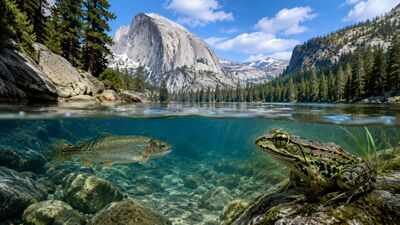
In 1877, trout began entering Yosemite’s fish-free mountain lakes. More than a century later, a native frog is finally showing signs of recovery

For more than a century, Yosemite’s mountain lakes became home to millions of trout that had never naturally reached those waters. Fish stocking began in 1877 and eventually put more than 33 million fish into the park, transforming habitats that had evolved without aquatic predators. The change came at a cost for the Sierra Nevada…

Read More

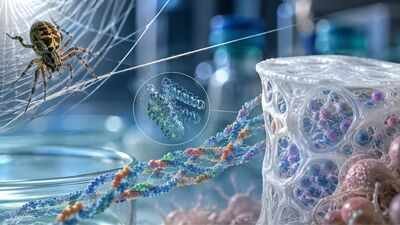
Scientists are recreating spider silk proteins to develop materials for drug delivery and tissue repair

A spider web can look like a single delicate sheet of thread, but its construction is far more complicated. Different strands are made for different jobs, with some providing the strength needed to hold the web together and others stretching to trap prey. Orb-weaver spiders are particularly good examples of this division of labour. Their…

Read More

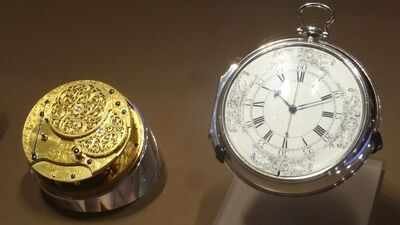
How the first clockmaker knew the correct time and how time was measured before mechanical clocks

Harrison’s H4 chronometre. Image Credit: Jordiferrer/Wikipedia The first clockmaker did not have to guess what time it was. Long before gears, wheels and moving hands appeared, people had already learned to track the passage of a day by watching the Sun, Moon and stars. Sundials, water clocks and other simple devices gave earlier societies ways…

Read More

In 2025, scientists made sound behave like a rainbow, separating different frequencies and sending them in different directions

A rainbow of light forms because different wavelengths travel through a prism or water droplets at different angles. Scientists have now shown that sound can be made to behave in a way that splits a broadband acoustic signal into separate frequency components that travel in different directions or come to rest at different positions within…

Read More

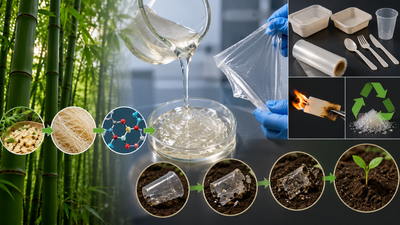
China scientists turned bamboo cellulose into a strong plastic alternative that withstands high heat, can be recycled and biodegrades in soil

Plastic alternatives made from renewable materials often struggle to match the strength, heat resistance and processing ability of conventional plastics. A new bamboo-based bioplastic takes a different approach, reorganising cellulose at the molecular level to produce a material that is both strong and easier to shape. The researchers used a hydrated zinc chloride and formic…

Read More

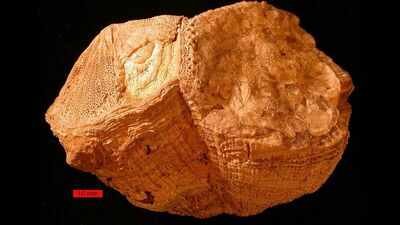
70 million years ago, Earth had 372 days a year. An ancient shell reveals days lasted just 23 hours and 31 minutes

PC: Wikipedia, Wilson44691 – Own work, Public Domain About 70 million years ago, during the late Cretaceous period, a year lasted roughly 372 days rather than 365, meaning each day was around half an hour shorter than it is today. The research team examined the growth layers of a single fossilised rudist bivalve, Torreites sanchezi,…

Read More