
Astronomers discover salt-rich clouds in the atmosphere of the ‘Pink Planet’ |
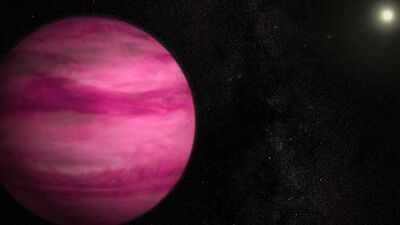
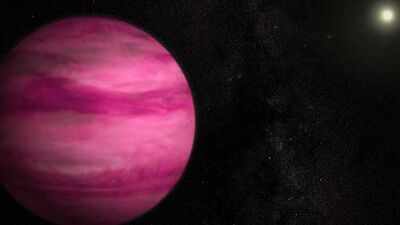
A giant world orbiting a distant sun-like star has given astronomers an unexpected glimpse into the weather systems of some of the coldest known exoplanets. Using observations from the James Webb Space Telescope (JWST), researchers have identified evidence of salt-rich clouds in the atmosphere of GJ 504 b, a massive gas giant often referred to as the Pink Planet because of its distinctive rosy appearance.The discovery adds a new layer to scientists’ understanding of planetary atmospheres beyond the Solar System. For years, GJ 504 b remained a difficult target. According to the study published in the Astronomical Journal, titled “JWST-TST High Contrast: First Direct Spectroscopy of GJ 504 b Reveals Clouds and Possible Metal Enrichment”, although it was discovered more than a decade ago, its faint glow and relatively low temperature meant that astronomers could learn only limited details about it. Webb’s sensitivity has now changed that picture, revealing an atmosphere far more complex than previously thought and offering clues about how unusual worlds evolve over billions of years.
James Webb Telescope helps astronomers study the mysterious ‘Pink Planet’
As per EarthSky, located about 57 light-years away, GJ 504 b occupies an unusual place in planetary science. It is estimated to have a mass roughly 25 times that of Jupiter, placing it close to the boundary that separates giant planets from brown dwarfs, the so-called failed stars that never gathered enough material to ignite sustained nuclear fusion. Because of that uncertainty, astronomers often describe it as a planetary-mass companion rather than a straightforward planet. Even after years of observations, debate continues over whether it formed in the same way as giant planets or through processes more closely associated with stars. Its appearance has also drawn attention. Earlier observations suggested a pinkish hue, leading to the nickname “Pink Planet”, a label that has persisted ever since.
How the James Webb Telescope captured the atmosphere of the ‘Pink Planet’ GJ 504 b
Many of the exoplanets that have been photographed directly are intensely hot worlds, glowing brightly in infrared wavelengths. GJ 504 b is different. Its atmospheric temperature is estimated at around 564 Kelvin (roughly 290°C), making it one of the coldest planetary-mass companions ever characterised through direct imaging. While that temperature is still far beyond anything hospitable, it is considerably cooler than most previously studied giant exoplanets, which often exceed 1,000°C.As per the study, the object is an ideal target for Webb because it had remained beyond the reach of ground-based spectroscopy. Previous attempts by multiple research teams struggled because the object was simply too faint, whereas Webb was able to obtain a detailed spectrum in only a few hours.
How astronomers discovered salt-rich clouds in the Pink Planet’s atmosphere
The breakthrough came when scientists analysed light passing through and emerging from the planet’s atmosphere. Spectroscopy allowed them to identify several chemical compounds, including water vapour, methane, carbon dioxide, ammonia and hydrogen sulphide. Yet something did not fit.When researchers attempted to recreate the observations using atmospheric models, the results produced unrealistic conditions. The spectra could not be fully explained by gases alone. The mismatch suggested that an important atmospheric ingredient was missing.That missing ingredient turned out to be clouds. Once cloud layers were incorporated into the simulations, the atmospheric models began to align with the observations. Several cloud compositions were tested, but one explanation consistently provided the best match: clouds formed from salt-bearing compounds.
James Webb finds evidence of salt clouds and heavy elements on GJ 504 b
According to the study, cloud layers dominated by compounds such as potassium chloride (KCl) and zinc sulphide (ZnS), materials that can condense in the cooler atmospheres of giant planets. These are not clouds in the terrestrial sense. Instead of water droplets, they are composed of mineral particles suspended high above the planet.The conditions are unlike anything found naturally on Earth. According to EarthSky, including these salt clouds solved several inconsistencies in the atmospheric models. Without them, simulations required physically unrealistic atmospheric structures. With them, the observed spectrum became much easier to explain. When salt clouds were included, signatures from molecules deeper in the atmosphere became muted, bringing the model into agreement with what scientists would expect from a cold giant planet. He noted that this was the first time salt clouds had proved essential for explaining the spectrum of such an object. The Webb observations revealed more than clouds. The planet appears to contain an unusually high abundance of heavy elements compared with its host star. Astronomers often refer to these elements collectively as “metals”, even when they include substances such as carbon and oxygen. Metal enrichment in the atmosphere, a characteristic that may favour a planet-like formation history rather than one resembling a small star. The atmospheric analysis also identified strong signatures of molecules including water, methane, carbon dioxide and ammonia, helping scientists build one of the most detailed chemical portraits yet obtained for a cold directly imaged exoplanet.