Astronomers discover a dying galaxy in the early universe as a powerful ‘galaxy-killing wind’ strips away its star-forming fuel |
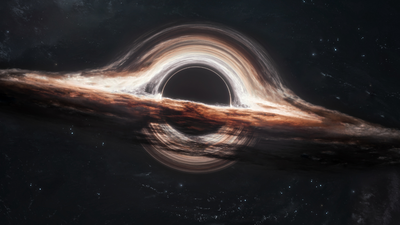
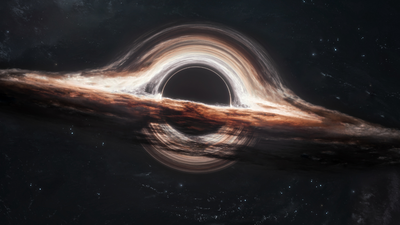
A massive galaxy in the early universe has been caught in the final stages of its life, providing astronomers with some of the strongest evidence yet for how giant galaxies die. Using observations from the James Webb Space Telescope (JWST) and the Atacama Large Millimetre/submillimeter Array (ALMA), researchers have identified a powerful outflow of gas being expelled from a galaxy known as CRISTAL-02. The discovery offers a compelling explanation for one of modern astronomy’s biggest puzzles: why so many massive galaxies stopped forming stars surprisingly early in cosmic history.Galaxies live by converting cold gas into new stars. When that gas supply disappears, star formation ceases, and the galaxy gradually becomes inactive, or “dead”. The newly observed galaxy appears to be losing its fuel at such an extreme rate that astronomers estimate it could exhaust its star-forming reservoir within less than 100 million years: an exceptionally short period on cosmic timescales. The findings, published in the Monthly Notices of the Royal Astronomical Society, suggest that powerful galaxy-wide winds may have played a major role in creating the unexpectedly large population of dead galaxies seen in the universe’s first few billion years.
James Webb Space Telescope captures rare evidence of a massive galaxy being killed by a colossal cosmic wind
The galaxy, designated CRISTAL-02, immediately stood out because it was forming stars at roughly twice the rate of other galaxies of similar size. However, the same observations that revealed this intense activity also uncovered a dramatic plume of cold gas extending away from the galaxy.Researchers from Swinburne University of Technology found that the outflow was removing gas at approximately twice the rate at which the galaxy was converting gas into stars. The expelled material appears to be travelling fast enough to escape the galaxy’s gravitational pull entirely, preventing it from being recycled into future generations of stars. According to the study, if this process continues uninterrupted, CRISTAL-02 will rapidly deplete the raw material needed for star formation and become a massive quiescent galaxy less than 1.5 billion years after the Big Bang.Lead author Rebecca Davies and colleagues note that the gas plume is nearly as large as the galaxy itself, making it one of the clearest examples yet of a galaxy-wide wind in the early universe. The observations were only possible because JWST can detect hot gas structures at unprecedented distances, while ALMA can trace the colder gas being swept away from galaxies.“The wind from CRISTAL-02 was ejecting twice as much gas as the galaxy converts into stars.” Says Davies et al., in the Monthly Notices of the Royal Astronomical Society
Cosmic collisions may trigger the violent winds responsible for killing young galaxies
The researchers believe the galaxy’s impending demise is linked to a major galactic merger. Evidence suggests that CRISTAL-02 is not a single system but several galaxies in the final stages of colliding and combining.Such mergers funnel enormous amounts of gas towards galactic centres, triggering intense bursts of star formation. Ironically, this rapid growth may also create the conditions that ultimately destroy the galaxy. The concentrated star-forming activity generates powerful winds capable of blasting vast quantities of gas into intergalactic space.The study challenges the long-standing assumption that only supermassive black holes can generate winds strong enough to shut down star formation in massive galaxies. While black holes remain important drivers of galactic evolution, the new observations demonstrate that extreme starburst activity alone may be sufficient to expel the gas needed for future stellar growth.Recent theoretical work has suggested that between 40% and 50% of massive galaxies in the early universe were undergoing mergers. If many experienced the same sequence of rapid growth followed by violent gas loss, it could explain why astronomers have found so many unexpectedly mature and inactive galaxies shortly after the Big Bang.
Discovery helps solve the mystery of why massive galaxies ‘lived fast and died young’
Since JWST began observing the early universe, astronomers have been confronted by an apparent contradiction. Standard cosmological models predicted that most galaxies within the universe’s first billion years should still be actively forming stars. Instead, Webb uncovered numerous massive galaxies that already appeared old and inactive.Some researchers proposed that exotic explanations involving dark energy or modifications to cosmological models might be required. The new findings point towards a far simpler mechanism: galaxy mergers triggering intense starbursts that rapidly expel the very gas required for continued growth.The discovery of CRISTAL-02 provides one of the clearest observational links yet between rapid galaxy growth and rapid galaxy death. Rather than slowly fading over billions of years, some of the universe’s earliest giant galaxies may have burned through their fuel at extraordinary speed before powerful winds swept away what remained.As the authors conclude, CRISTAL-02 may represent a natural explanation for why so many massive galaxies in the young universe appear to have “lived fast and died young”.