AP SSC advanced supplementary examinations May 2026 results declared at results.bse.ap.gov.in; Pass percentage rises sharply to 82.39%
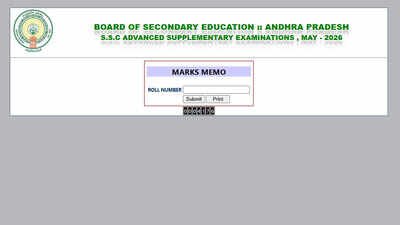
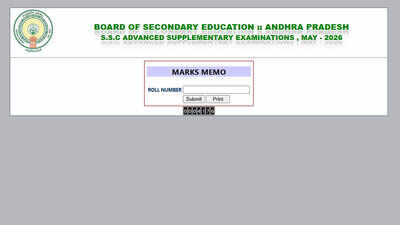
SSC ASE May 2026 results: The Directorate of Government Examinations, Andhra Pradesh, has officially announced the results of the S.S.C. Advanced Supplementary Examinations (ASE) May 2026, bringing relief and celebration to thousands of students across the state. A total of 94,990 candidates appeared for the examinations conducted between 25th May and 5th June 2026, with 78,261 students successfully clearing the exams.In a significant academic improvement, the overall pass percentage has risen to 82.39%, compared to 76.14% in the previous year—marking an encouraging jump of 6.25 percentage points. The results reflect the impact of structured academic interventions and focused remedial support introduced by the state government to improve student outcomes after the SSC Public Examinations March 2026.Strong Overall Improvement Driven by Targeted Academic SupportOfficials attributed the improved performance to the Government’s 20-Day Action Plan, which provided intensive coaching, slip tests, and personalised mentoring for students who required additional academic assistance. The initiative, implemented from 5th May to 24th May 2026, played a crucial role in strengthening conceptual understanding and exam readiness among candidates. The spot valuation of answer scripts was conducted across 24 evaluation camps (excluding Parvathipuram Manyam and Alluri Sitharama Raju districts) from 8th to 10th June 2026. The results have been released simultaneously through multiple platforms, including WhatsApp governance service (Mana Mitra), the official results portal, LEAP mobile application, and DigiLocker.Gender-wise Performance Shows Girls Ahead Once AgainThe gender-wise performance continues to reflect a positive trend, with girl students outperforming boys by a notable margin of 4.93 percentage points.Gender-wise Performance (ASE May 2026)
Officials noted that the consistent higher performance of girls highlights improved learning engagement and sustained academic focus across schools in Andhra Pradesh.District-wise Performance: Prakasam Tops, NTR Records LowestDistrict-wise analysis shows significant variation in performance across the state. Prakasam emerged as the top-performing district with an impressive 97.96% pass rate, followed closely by Kakinada and Dr. B.R. Ambedkar Konaseema districts. On the other hand, NTR district recorded the lowest pass percentage at 63.18%.Top and Bottom Performing Districts
The wide performance gap between districts has prompted discussions on the need for more balanced resource allocation and targeted academic support in underperforming regions.Results Access, Recounting & Next Steps for StudentsThe results are available through multiple digital platforms to ensure easy access for students and schools. Candidates can check their results via WhatsApp by sending “Hi” to 95523 00009 under the Mana Mitra service, or by visiting the official website www.results.bse.ap.gov.in. Results are also accessible through the LEAP mobile application and DigiLocker platform.Students seeking Recounting or Reverification can apply online from 20th June 2026 (10:00 AM) to 26th June 2026 (11:00 PM). The fee structure is ?500 per subject for recounting and ?1,000 per subject for reverification. Officials have clearly stated that offline applications and payments through CFMS Citizen Challan will not be accepted.The Directorate has also confirmed that original SSC certificates will be dispatched to schools shortly, after which they will be distributed to students. Authorities have urged students and parents to utilise the official online systems and avoid last-minute submissions.The SSC Advanced Supplementary Examinations May 2026 results mark a significant academic milestone for Andhra Pradesh, with notable improvements in overall pass percentage and district-level performance. The success of the 20-Day Action Plan has been widely acknowledged as a key factor behind the improved outcomes, reinforcing the importance of structured academic intervention in school education.With better digital accessibility, higher pass rates, and continued focus on equitable learning outcomes, the results reflect a positive trajectory for secondary education in the state.