A $29,595 robot is scanning Colorado River water for DNA left by invasive fish before they can spread into new habitats |
The Colorado River is getting a new line of defence against invasive species, with a $29,595 environmental DNA autosampler being used to search for traces of unwanted fish and other aquatic threats. Instead of waiting to catch an invasive animal, the machine collects water and looks for tiny pieces of biological material left behind by species moving through the river. The technology is being tested in several locations as scientists and wildlife officials look for ways to detect invaders earlier, when there may still be time to prevent them from spreading into new habitats.
The $29,595 robot scans Colorado River water for invasive species
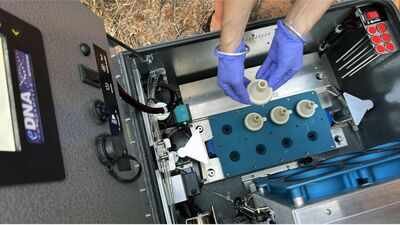
The machine, known as an environmental DNA or eDNA autosampler, looks like a plain silver storage box. According to Colorado Public Radio(CPR), the commercially available unit costs $29,595.Its job is relatively simple. The autosampler collects water automatically and searches for microscopic traces of organic material, including scales and skin cells. Those traces can contain DNA that reveals which animals have recently been present in the water.The approach gives scientists a way to look for invasive species without having to find the animals themselves. This can be particularly useful when a species is still present in small numbers and is difficult to locate using conventional methods.
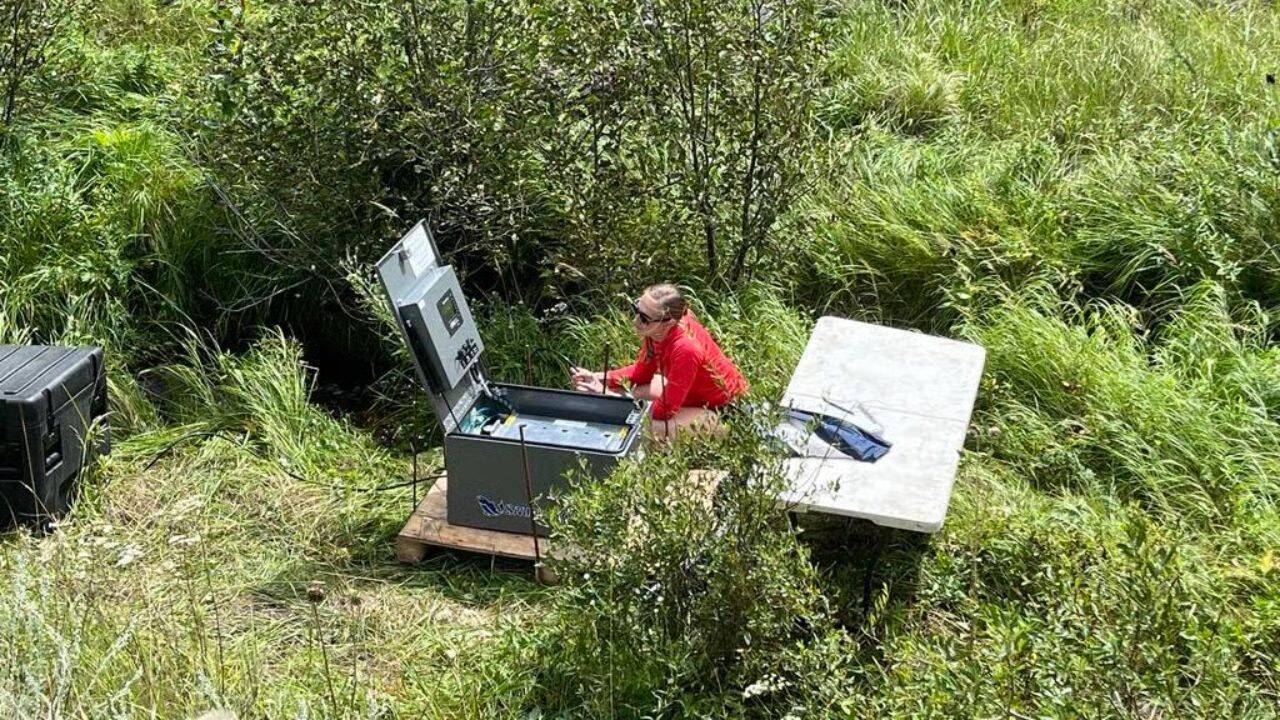
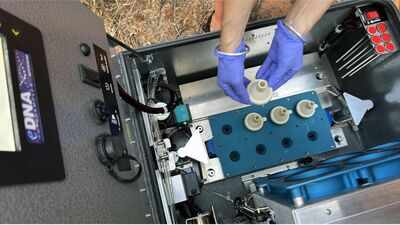
A USGS researcher works with an autonomous eDNA sampler near a creek in Montana. Image Credit: CPR/USGS
Importance of early detection for the Colorado River
The US Geological Survey explains that eDNA research is being carried out in the Colorado River downstream from Glen Canyon Dam and in Lake Powell to detect invasive fish and other aquatic threats before they become established.The need has become more pressing as conditions in the river have changed. The USGS says cold water released from Lake Powell historically helped prevent warm-water invasive fish from becoming established downstream of Glen Canyon Dam. Severe drought since the early 2000s has lowered Lake Powell’s water levels, allowing warmer surface water to pass through the dam.Those warmer conditions can provide better habitat for predatory species such as smallmouth bass, walleye and green sunfish. In 2022, these warm-water invasive fish were captured in unprecedented numbers, increasing concerns for threatened native species. The USGS identifies the razorback sucker and humpback chub among the native fish at risk from these predators.
What DNA traces can reveal about invasive species
The value of eDNA comes from what animals leave behind. The USGS states that organisms continuously shed genetic material into their surroundings through skin cells, faeces, reproductive fluids and other biological processes.Scientists can collect water containing these microscopic traces and examine the DNA to determine which species may be present. This means an invasive fish can potentially be detected even when its numbers are too low for conventional fishing methods to find it.The technology can also help researchers track where an invasive species is moving. That information can give wildlife managers an earlier warning and help them concentrate their response in a particular area.CPR described the autosampler as a kind of smoke alarm for invasive species. Rather than waiting for a population to become large, the system can provide information that helps managers decide where rapid action may be needed.
How automated monitoring changes fieldwork
Traditional monitoring can require significant time and personnel. Scientists have used methods such as electrofishing to search for invasive fish, but these approaches require people to be physically present and can be demanding when animals are rare or waterways are difficult to survey.The USGS says automated eDNA samplers can collect water on a preset schedule even when researchers are not in the field. The devices are intended for locations considered likely hotspots for invasive fish.Samples can be collected every few days throughout the year. They are then analysed in labs using genetic screening technology developed by the US Forest Service National Genomics Center.The screening system uses a specialised biochip designed to detect up to 46 of the most problematic invasive aquatic species in the US, with plans to refine it for species of particular concern in the Colorado River.
Locations at which this monitoring robot is being deployed
The technology is not limited to the main Colorado River. CPR reported that a trial autosampler had been placed at Dinosaur National Monument in north-western Colorado to search the Green River for invasive rusty crayfish. The machine allows park staff to leave the sampling work running while they concentrate on other responsibilities.Another application is taking shape in Colorado’s Grand Valley. According to CPR, zebra mussels have infested more than 100 miles of the Colorado River between the Utah border and the confluence of the Eagle River.Colorado Parks and Wildlife plans to deploy an autosampler in a canal system around Grand Junction in 2026. The aim is to increase the frequency of monitoring and improve the chances of detecting zebra mussels if they begin moving through the canal network.
Scientists aim to expand the invasive species monitoring network
The USGS is developing a broader system called READI-Net, or Rapid eDNA Assessment and Deployment Initiative & Network. The programme is intended to expand the use of eDNA for early detection of aquatic threats across western rivers.As per CPR, scientists hope eventually to have tens of autonomous samplers operating in waterways. At present only around 3 to 5 are typically deployed at any given time, meaning the wider network is still in its early stages. Cost remains one of the barriers to expanding that network, with each commercially available unit priced at $29,595.The USGS is also comparing eDNA results with traditional monitoring methods such as nets and electrofishing. Scientists are testing the approach in different habitats, from backwaters and isolated pools to the main river channel, to understand where it works best.The USGS says detecting invasive species before populations become established is more cost-effective and environmentally sound than attempting control or eradication later. Its research supports agencies including the Bureau of Reclamation, National Park Service, US Fish and Wildlife Service and Arizona Game and Fish Department.For the Colorado River, that early warning could become increasingly important as changing water conditions create new opportunities for invasive species.