
Quote of the day by Benjamin Franklin: “Many people die at twenty-five and aren’t buried until…” – why a life without curiosity is only half-lived |
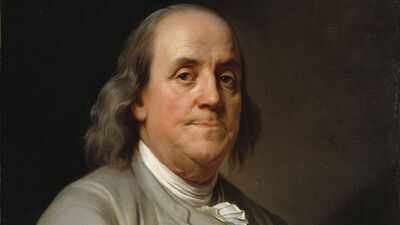
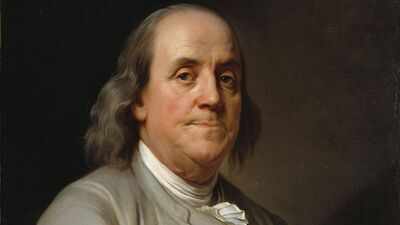
Life gets measured in years, but it is really defined by what actually happens inside them. A line widely credited to Benjamin Franklin puts that gap sharply. “Many people die at twenty-five and aren’t buried until they are seventy-five,” it goes. It is obviously not describing literal death. It is describing the moment someone stops dreaming, stops learning and stops growing, even while they carry on living for decades afterward. The line has stuck around for close to a century now, repeated so often under Franklin’s name that most people simply assume he actually said it.
Quote of the day by Benjamin Franklin
“Many people die at twenty-five and aren’t buried until they are seventy-five”
A quote with a traceable, and surprising, real history
This is worth being honest about, and the actual story turns out to be genuinely interesting. Quote Investigator, a well-regarded source-tracing project, has researched this saying in detail and found that it began circulating around 1925, in versions using different ages entirely, some talking about people dying at 40 but not buried until 80, others using 50 and 80. The earliest attribution to Franklin specifically appears in a 1935 newspaper collection out of Illinois called “Mortal Thoughts From Immortals,” a full 145 years after Franklin’s actual death in 1790. Quote Investigator’s own conclusion is direct: there is no real evidence Franklin ever said any version of this line, and the sentence itself likely evolved gradually, through several different newspapers and speakers, before eventually settling on the wording and attribution now repeated everywhere.
What the idea itself is still saying
Read as a metaphor rather than a historical quote, the point still lands. Someone can keep working, keep following the same routines, and keep meeting their responsibilities, while no longer pursuing anything new or questioning any of their old assumptions. The second half, about not being buried until seventy-five, is really making the point that simply existing physically was never quite the same thing as actually living.
Why growth should never come with an age limit
Learning tends to get associated mostly with childhood and school, but real personal growth clearly does not stop there, however comfortable that assumption might be. People take up entirely new careers later in life. They pick up new skills, travel somewhere unfamiliar, build new relationships, and sometimes change opinions they had held for years. Every stage of life genuinely offers room for growth, and people who stay curious tend to end up with a noticeably richer life than people who quietly stop exploring anything new.
Why routine can help and hurt at the same time
Daily routines are genuinely useful. They keep responsibilities manageable and give structure to an otherwise chaotic day. The trouble starts once routine quietly replaces curiosity entirely. When every day starts looking identical and nobody is asking new questions or trying anything unfamiliar, life can start to feel repetitive in a way that eventually wears people down.
Why curiosity keeps a mind genuinely active
Curiosity is what pushes someone to pick up a new book, learn an unfamiliar skill, meet different kinds of people, or actually sit with an idea they had not considered before. Nearly every major scientific discovery, artistic achievement or new invention has come from someone who simply refused to stop asking questions. Curiosity is often one of the clearest outward signs that a person is still genuinely engaged with life.
Why fear of change quietly stops so much growth
Plenty of people give up on their own goals not because they lack the ability to reach them, but because uncertainty and the possibility of failure feel safer to avoid altogether. Growth almost always requires stepping into something unfamiliar, learning a new language, changing careers, starting a business, going back to education later in life. Every one of these paths involves real uncertainty, and every one of them also opens up genuine room to grow.
Why purpose gives life its actual direction
Purpose and success are not quite the same thing. Success usually points at an achievement. Purpose points at meaning and contribution. People who feel a genuine sense of purpose tend to keep moving forward because they believe what they are doing actually matters, whether that means raising a family, teaching, helping a community, or building something from scratch.
Why Franklin’s own life fits this idea so well, whether or not he coined the line
Whatever the true origin of this exact sentence, it fits Franklin’s own documented life closely. Despite very limited formal schooling, he became a writer, inventor, scientist, diplomat and statesman almost entirely through relentless self-education and curiosity. His actual life demonstrates that learning was never confined to a classroom. It was a habit he kept up throughout adulthood, which is really the same idea the quote is describing, regardless of who first put it into words, and regardless of the fact that he was already gone from the world decades before anyone thought to attach his name to it.
Other famous quotes by Benjamin Franklin
- “An investment in knowledge pays the best interest.”
- “Well done is better than well said.”
- “Energy and persistence conquer all things.”
- “Without continual growth and progress, such words as improvement, achievement and success have no meaning.”
Why this quote still matters today
More opportunities to learn exist now than at any point in history, online courses, digital libraries, professional training available at almost any hour. Plenty of people still get stuck in routines that leave very little room for any of it. This quote, whoever actually said it first, is a reminder that growth takes conscious effort. Simply growing older was never going to guarantee a richer life on its own. Continuing to actually learn is what does that, regardless of how many decades have already passed since the quote first began circulating under Franklin’s name.