Scientists finally reveal where the world’s most valuable diamonds are born |
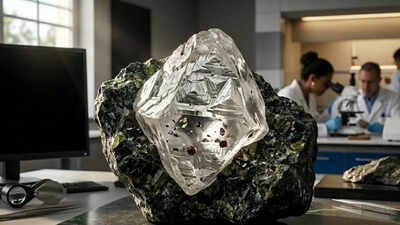
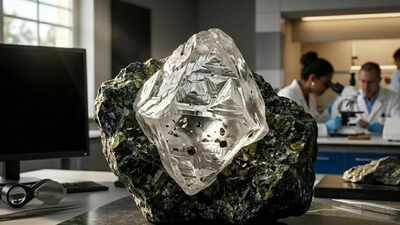
A groundbreaking study by the Kimberlite Research Group at the University of Cape Town has pinpointed where the world’s most precious diamonds originate. Standard diamonds form within Earth’s lithospheric plates. However, ‘CLIPPIR’ gems – those similar to Cullinan diamonds in size and purity – emerge from much greater depths. As noted in China.org, Associate Professor Geoffrey Howarth’s team discovered that these large stones develop within rare, iron-rich areas located at the base of the sub-continental lithospheric mantle (SCLM). Through analysing olivine’s chemical traits, researchers traced these diamonds back to ancient oceanic crust that subduction forces pulled deep into the mantle. This insight offers a unique glimpse into Earth’s deep-mantle geochemical heterogeneity.
Geological birthplace of the world’s most valuable diamonds
A study from UCT has found that extremely rare gem-quality diamonds, like the massive 3,106-carat Cullinan, come from areas rich in iron. These regions are located over 150 kilometres beneath Earth’s surface, as noted in the study at the University of Cape Town. The formation of these ‘iron-rich domains’ happens when ancient oceanic crust sinks deep into the Earth and eventually becomes part of the continental base.
The role of liquid metal in growing the world’s largest gems
According to the study published by the University of Cape Town, the diamonds contain metallic inclusions like iron, nickel, carbon, and sulfur. These inclusions serve as ‘time capsules,’ indicating that these gems formed in liquid metal pockets. This environment was deep in the mantle, where oxygen was scarce.
How subducted oceanic plates forge massive crystals
As noted in research published at ResearchGate, standard lithospheric diamonds are about 150 to 200 kilometres beneath the Earth’s surface. In contrast, CLIPPIR diamonds form at much greater depths. Some of these diamonds have majoritic garnet inclusions, hinting that they originate from depths between 410 and 660 kilometres, even reaching into the mantle transition zone. The research uncovers a ‘Deep Carbon Cycle’ where materials from the surface get recycled. Oceanic plates descend, taking carbon with them, and this leads to the formation of large crystals. This finding aids geologists in grasping how carbon moves and is stored between Earth’s surface and core over billions of years.
Geochemical fingerprints identify ‘gem-rich’ Kimberlites
The University of Cape Town’s groundbreaking research does more than just recount the history of diamond formation. It provides a blueprint for future exploration by predicting geochemical patterns. Pinpointing unique isotopic signatures in iron-rich areas and spotting specific minerals like olivine with unusual chemical traits allows for predictive geochemical prospecting, which suggests that kimberlite pipes might contain these extraordinary gems. This marks a shift from relying on chance to using science for targeted prospecting, fundamentally altering the diamond industry’s economic landscape. Moreover, these discoveries highlight the deep mantle’s role as a vast and complex reservoir, showing that the world’s most coveted treasures are actually ancient surface materials transformed over billions of years into remarkable geological phenomena.