








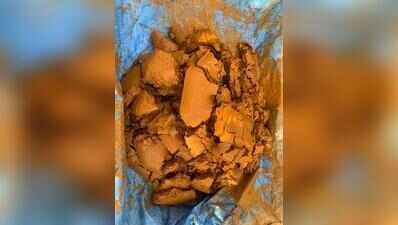
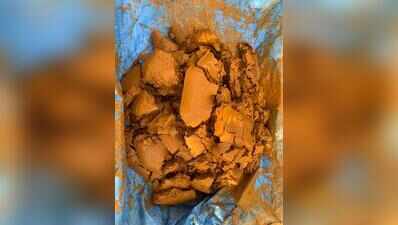
Chennai: Ingredients for paints and fertilisers could have an unlikely source — hazardous acid waste generated by the steel industry. Researchers at CSIR-Central Leather Research Institute (CLRI) have developed a technology to recover valuable materials from this waste and convert them into commercially useful products.The technology, recently transferred to industry, recovers iron and chloride from spent pickling acid, a highly acidic liquid used by steel manufacturers to remove rust and other impurities from steel surfaces. The recovered iron is converted into pigment-grade iron oxide, used in paints and construction, while chloride is converted into ammonium chloride, which has applications in the fertiliser industry.Steel manufacturers use hydrochloric acid baths to remove rust, scale, oil, grease and dirt from hot-rolled steel, improving its surface properties before coating or painting. Over time, iron dissolves into the acid, reducing its cleaning efficiency. When the acid concentration drops by 75-85%, it becomes unsuitable for further use. Every metric tonne of steel production generates around 30-60 litres of spent pickling acid, some of which is sold to other industries.S Easwaramoorthi, scientist at the Inorganic and Physical Chemistry Laboratory, CSIR-CLRI, said the technology changes the conditions of the spent acid to oxidise dissolved iron from its ferrous to ferric form before recovering it as iron oxide. Atmospheric oxygen can be used for this step, avoiding the need for a chemical oxidising agent. The chloride is also recovered and converted into ammonium chloride.“Though the acid becomes unusable after a point, it contains a large amount of iron, which is a valuable material. We take the spent acid and convert the dissolved iron into iron oxide nanoparticles, which are of pigment grade and have commercial value,” he said. The process can be installed within steel plants using a system of about three tanks and scaled up for continuous operation, Easwaramoorthi said.“The water coming out of the process is clean and can be reused. It does not generate secondary waste that requires a separate treatment process,” he said.With India producing 151 million tonnes of steel in 2024-25, a figure projected to reach 300 million tonnes by 2030, the technology offers a waste-to-wealth solution for recovering resources while reducing industrial pollution, the researchers said.