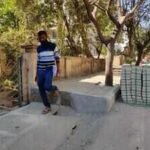

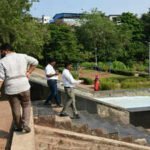






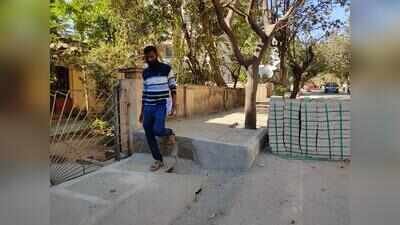
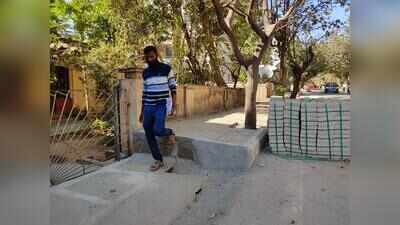
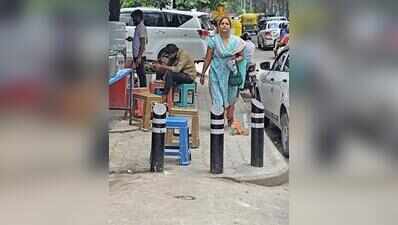
Bengaluru: “Have you ever walked on footpaths? You are interested in completing work and claiming bills. You don’t bother to check if the footpaths are usable,” said Bengaluru development minister Krishna Byre Gowda during a Greater Bengaluru Authority (GBA) review meeting on Wednesday.The minister shot multiple, uncomfortable posers to civic officials and engineers, while urging them to rethink how they build pavements for the city. He was surprised at the presence of step pavements — instead of slope pavements — which are least pedestrian friendly.These searing questions were at the heart of discussions at GBA meeting. Gowda pointed to problems faced by the elderly and the children while navigating pavements. He pulled up civic engineers and officials for constructing step pavements. Flagging footpaths as high as two feet, he asked whether children and senior citizens could use them. “Even healthy adults will avoid such footpaths,” he said, adding people might ask for escalators to access them.Gowda asked engineers to go for slope footpaths without single or multiple steps, particularly near property gates and driveways. On complaints from property owners that pavements are higher than their entrances, the minister countered: “When the road has a slope, is there a rule that stated that the footpath cannot have a slope?” he asked.He instructed engineers to ensure continuity of footpaths at edges and turning points and install bollards to prevent vehicles from being driven onto pedestrian pathways.TOI spoke to engineers who maintained that step pavements are usually done on congested roads where pedestrian movement is high. This apart, step pavements would deter two-wheeler riders from riding on pavements, which is a major menace in the city. The minister countered: “If the number of steps are more, then the number of people wanting to use footpaths would reduce. Pay attention to usability too.”‘Remove Obstacles From Footpaths’“Footpaths must be raised by 6 inches, but ramps could be provided at places where there are gates, while ensuring the footpath remains continuous. Steps may become inevitable only at intersections if there’s a height difference. The most important thing is to remove obstacles from footpaths,” said Anil Kumar J, retired engineer, Jalahalli West.“Discussions on making footpaths accessible have been going on for 20 years with little progress. Even when facilities are created for persons with disabilities, people do not cooperate. Even if good footpaths are built, they last only a couple of months. This is a very difficult task,” added P Balaram, International Para Athlete, Jeevanahalli.“If footpaths are not built at a height, vehicles will ply or park on them. Even drivers trying to overtake will use such footpaths. Our civic sense is at a low. Railings separating footpaths are essential. However, footpaths can be made seamless. Engineers should supervise the work better. At least in Bengaluru, there are efforts to make footpaths accessible,” said Ajay Kumar C, Swayam Jagruthi NGO, Nagarabhavi.STEP OR SLOPE?Step pavement: This design raises the footpath above the carriageway and relies on vertical drops or concrete steps at driveways, intersections, and level changes. The abrupt height difference creates a physical barrier that keeps vehicles off the walkway and channels rainwater into the roadside storm drain below.Slope pavement: Also called ramped pavements, these are commonly seen on TenderSURE roads such as Church Street, St Mark’s Road, and Residency Road. At property driveways and junctions, the footpath stays continuous and the slopes allow effortless movement for wheelchairs and luggage. Elderly pedestrians do not have to strain themselves stepping up and down.