








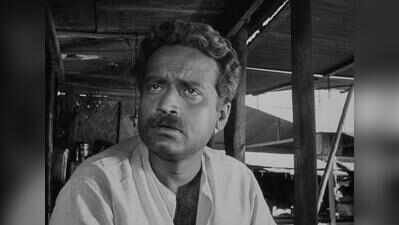
Kolkata: Tollywood has long celebrated only a few actors while overlooking many storehouses of talent, and Gyanesh Mukhopadhyay stands among them. Across a wide body of work—including landmark films by Ritwik Ghatak, Mrinal Sen, Rajen Tarafdar, and Barin Saha—he left an enduring imprint on Bengali cinema while remaining largely unsung. Marking his centenary at the 32nd Kolkata International Film Festival (KIFF) with an exhibition and film screening restores a towering yet neglected screen figure to his rightful place in film history. Actor-turned-BJP MLA Papiya Adhikari, who shared stage, screen, and deep family ties with him, is writing a KIFF tribute to him.For Adhikari, the bond with the actor of “Tero Nadir Pare”, “Ganga”, “Meghe Dhaka Tara”, “Ajantrik”, “Komal Gandhar” and “Baishey Shravana” began in childhood long before she knew they were not blood relations. She called Mukhopadhyay “Jethu” and his wife “Maima”. “Maima would tell my mother, ‘Send the girl over, I’ll keep her at my place for a few days. You do theatre, I’ll take care of her’,” she recalls, adding that her aunt would plead for her to stay longer when her mother, Kalyani Adhikari, came to fetch her. With no daughter in the house then, the couple, Mukhopadhyay’s younger brother Ratnesh, and his wife, Indrani, treated her as their own.Adhikari’s childhood was steeped in warmth and theatre. Maima bathed her, scrubbed her back, and packed “luchis”, “alur dom”, oranges, and boiled eggs for Alipore zoo picnics while Jethu stayed back for engagements and shows. At home, artists gathered beneath the stairs, and Adhikari loved watching them. “Gyanesh jethu had fantastic Bengali handwriting and wrote scripts at the table in the bedroom while smoking bidis. With all my love and devotion for him, I loved everything about him. That included his handwriting, his dusky complexion and even the smell of his ‘bidi’!” she said.Among his films, Adhikari’s favourite is Mrinal Sen’s “Baishey Shravana”, though she isn’t sure if this will be screened at KIFF. “His realistic acting made even the mundane moments so memorable. We acted together in Amal Dutta’s ‘Atikrom’,” she said.Stage memories stay vivid too—from “Rahumukta” at Mitra Institution, where he played Sangram Singh alongside her mother’s Rani Arundhati and famously locked Biru Mukhopadhyay in a room to finish writing its script, to his 12-foot leap in “Nil Darpan”, his powerhouse performance as Andrei in “Mother”, and his villainous turn in “Haraner Natjamai”.Performing “Bishe June” at the windswept Brigade Parade Ground also left a vivid memory. Dressed in a white skirt, blouse, stockings, and ballerina shoes amid fierce winds, Adhikary was distracted by the fear of her skirt blowing up while juggling heavy dialogue, expressions, and movement. From the wings, Mukhopadhyay—who was otherwise strict about precision and blocking after rigorous rehearsals—repeatedly said: “Think positive, think positive!” She acted under his direction in “Shyamali” too. Above all, his lesson during the staging of “Ankhai Kando” endured: “Don’t act for applause. Acting in group theatre is a collective effort… Like a joint family, if everyone stands together, then the family runs well.”After his move to Behala from Bhowanipore, Adhikari couldn’t meet him as often as she wanted to. Being summoned during his final moments at his residence in 2008 brought waves of memory. “My mind was flooded with so many memories. I loosened his belt and unbuttoned his shirt, hoping he would feel better… Looking back, all I can say is that he will forever be remembered. Jethu was a very great actor but an even greater teacher!”