
Quote of the day by Neil deGrasse Tyson: “When students cheat on exams it’s because…” – a sharp lesson on exam pressure, the education system and why marks can sometimes overshadow the joy of learning |

Quote of the day by Neil deGrasse Tyson (AI-generated image) A student who cheats is usually judged entirely on the act itself, without much thought given to what actually pushed them there. Neil deGrasse Tyson, the astrophysicist, pointed the question in a different direction. “When students cheat on exams it’s because our school system values…
Read More

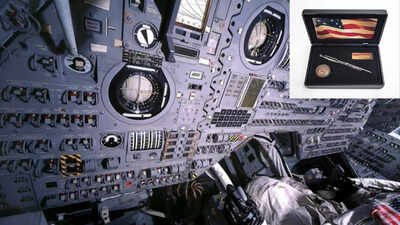
This ordinary felt-tip pen helped save Apollo 11 astronauts Neil Armstrong and Buzz Aldrin from being stranded on the Moon in 1969, now it has sold at auction for $857,600

Buzz Aldrin used nothing but a felt-tip pen to fix a broken switch and rocket Apollo 11 home from the Moon An ordinary felt-tip pen that helped save two astronauts from being stranded on the Moon has been sold at auction for $857,600.During the historic Apollo 11 mission in July 1969, Buzz Aldrin used the…

Read More

Scientists create liver and kidney tissues in space for the first time in a microgravity environment: Expected to change the future of biological manufacturing |

The biological landscape is no longer just limited to the earthly realms, it has travelled far and wide into space. In a one-of-a-kind biological manufacturing operation, researchers managed to cultivate organs in space using technologies that are now being tested for scalability. Mission for biomanufacturing The mission was conducted in June 2026 and concluded with…

Read More

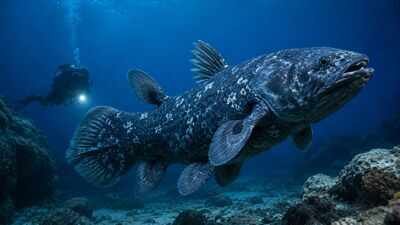
Scientists thought this ancient fish had been extinct for 66 million years, until it suddenly appeared in a fishing net in South Africa |

For decades, the coelacanth existed in scientific literature as a creature of the distant past. Fossils showed that members of this ancient fish lineage had lived alongside dinosaurs and vanished from the fossil record around 66 million years ago. The assumption seemed straightforward: they were gone.Then, in December 1938, a fishing trawler operating off the…

Read More

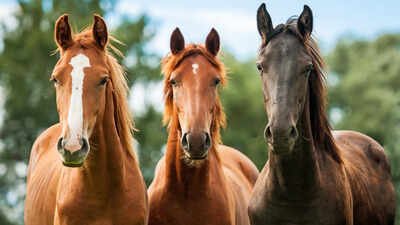
Scientists showed horses silent videos of wolves and found their hearts raced even when they showed no obvious fear, raising new questions for riders and handlers

When eyeing a predator, horses keep a poker face as their hearts race Horses have a hidden poker face when they face danger, hiding severe internal stress from their handlers even as their hearts beat at extremely high speeds.A study from The Ohio State University found that horses can instantly recognise a predator just by…

Read More

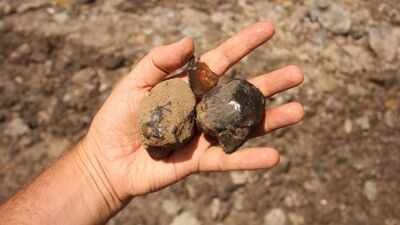
Scientists found South America’s first insect-bearing amber, a 112-million-year-old time capsule from a lost dinosaur-era forest |

PC: National History Museum For more than a century, amber has helped scientists reconstruct vanished worlds by preserving tiny fragments of life that would otherwise have disappeared. Insects trapped inside these golden fossilised resins have revealed details about ancient forests across several continents, but South America remained a missing piece in that record. That changed…

Read More

‘Hello from ISS’: Indian-origin Nasa astronaut Anil Menon shares day 1 message from space after reaching the space station |

Less than a day after arriving aboard the International Space Station (ISS), Nasa astronaut Anil Menon offered a glimpse into his first hours in orbit, sharing a message that was as much about the people who helped him get there as it was about the view from space.Posting on X (formerly twitter) from the orbiting…

Read More

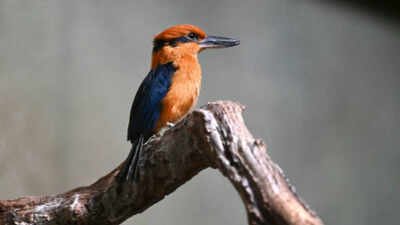
In the 1980s, Guam’s kingfisher vanished from the wild after invasive snakes devastated the island’s birds: The last 29 were rescued and four new chicks are now helping rebuild the species |

The Guam Kingfisher is known as the “sihek” in Chamorro, the native language of the Marianas Archipelago and is the rarest species at the Smithsonian Conservation Biology Institute in Front Royal, Virginia. The bird is classified by the IUCN as extinct in the wild, meaning a single one is not present outside the conservation centre….

Read More

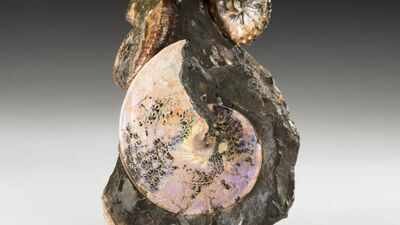
An ancient sea once divided North America from north to south; 70-million-year-old creatures from its waters still shimmer like gemstones

Fossils from this period are displayed at the Smithsonian’s National Museum of Natural History. South Dakota is one of the most landlocked states in the United States. It is more than 1,000 miles away from both the Pacific and Atlantic oceans. It is hard to imagine that this dry landscape was once covered by water.But…

Read More