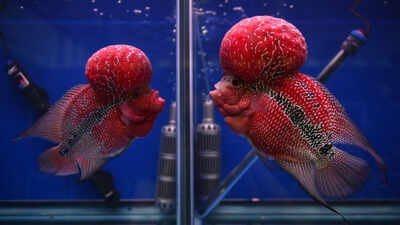
A human-bred aquarium fish prized for its bright colour and head hump has escaped into a Philippines crater lake, where scientists fear it may threaten native biodiversity

Flowerhorn cichlids are aquarium fish prized for their bright-gold colour and prominent head humps. Photograph: Lillian Suwanrumpha/AFP/Getty Images A human-bred aquarium fish prized for its bright gold colour and distinctive head hump has escaped into a volcanic crater lake in the Philippines, where scientists fear it is threatening native wildlife and spreading into local aquaculture.Flowerhorn…
Read More

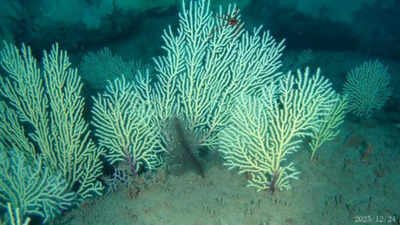
Scientists marked this West African coral reef as probably dead in the 1960s; underwater drones found it alive more than 50 metres below the sea

An image of the rediscovered coral reef by Gérard Zinzindohoué (Photo: Gérard Zinzindohoué) A deep-water coral reef off the coast of West Africa that was believed to be dead for six decades has been discovered alive and thriving more than 50 metres below the ocean surface.The forgotten reef was first identified off the coast of…

Read More

Avian Malaria Uk: Mosquito species in the UK are potential carriers of avian malaria, new study finds

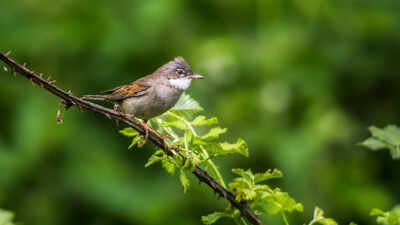
A mosquito lands on a blackbird’s wing. It pierces the skin, draws blood, and moves on. Somewhere in that moment, a parasite called Plasmodium slips into the bird’s bloodstream. Researchers have long known this happens across the UK, but they weren’t sure which mosquitoes do the transmitting. They finally have answers to that puzzle. A…

Read More

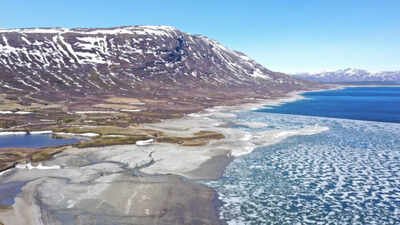
Hunter-gatherers carried trout past waterfalls into fishless Norwegian mountain lakes 7,000 years ago; their descendants are still caught there today

7,000-year-old fish traps show hunter-gatherers brought fish to Norway’s mountains centuries before farming Ancient hunter-gatherers carried live brown trout past steep waterfalls to stock empty mountain lakes in Norway 7,000 years ago, creating managed fisheries whose descendants are still being caught by local anglers today.Archaeologists at the University of Oslo discovered well-preserved wooden fish traps…

Read More

Nasa explored putting astronauts into a hibernation-like state for Mars missions, but scientists are still trying to make the science-fiction idea safe for humans |

Sending humans to Mars is one of Nasa’s greatest ambitions, but the journey presents enormous challenges. A round trip could take well over a year, exposing astronauts to dangerous cosmic radiation, muscle and bone loss caused by microgravity, psychological stress and the need to carry vast amounts of food, water and supplies. To tackle these…

Read More

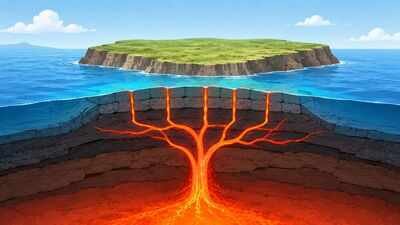
The world’s largest oceanic plateau formed more than 100 million years ago, but scientists have now found the ancient magma pathways still hidden beneath it |

For decades, scientists have known that the Ontong Java Plateau, the world’s largest oceanic plateau, was created by an extraordinary burst of volcanic activity more than 100 million years ago. What remained uncertain was how enormous volumes of magma travelled through the Earth’s lithosphere during that event. According to the study published in Advancing Earth…

Read More

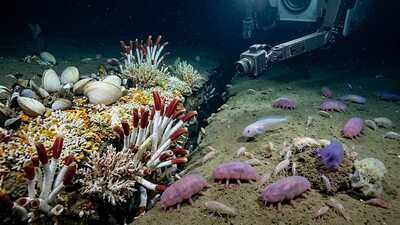
Scientists discover the deepest animal ecosystem ever found, thriving nearly 10 kilometres beneath the Pacific Ocean |

Scientists have discovered the deepest known animal ecosystem on Earth, thriving almost 10 kilometres beneath the Pacific Ocean where sunlight never reaches. At depths of up to 9,533 metres, researchers found dense colonies of blood-red tubeworms, white clams and other marine animals living around methane-rich cold seeps on the ocean floor. The discovery ‘Flourishing chemosynthetic…

Read More

More than 2,200 years ago, an ancient Greek scholar calculated the Earth’s circumference with a stick and the Sun |

More than 2,200 years before satellites, GPS and space missions revealed the Earth’s true size, an ancient Greek scholar calculated the planet’s circumference using nothing more than a stick, sunlight and basic geometry. Around 240 BCE, Eratosthenes, the chief librarian of the Library of Alexandria, carried out one of history’s most brilliant scientific experiments. By…

Read More

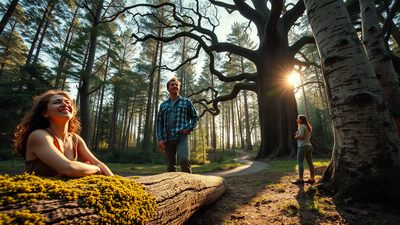
Japan created forest bathing as a public health idea in 1982, but 40 years of research have found a more complicated picture of how forests affect stress |

Forest bathing sounds like an ancient tradition, but it is actually younger than the personal computer. The practice known as shinrin-yoku was coined in Japan in 1982, not passed down through centuries. It began as a public health idea rather than a spiritual one, aimed at a country that was mostly forest but rapidly urbanising,…

Read More

A planet 48 light-years away has 3 key ingredients scientists seek: Rock, an atmosphere and the right temperature, does it have life?

This might be the closest humans have come to finding another planet that can support life. In a shocking discovery, astronomers have detected an atmosphere around an Earth-like, rocky planet about 48 light-years away.The planet, called LHS 1140 b, is orbiting in the habitable zone around its star meaning that it is at the right…

Read More