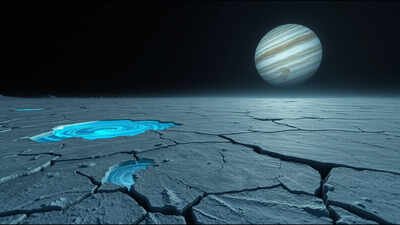
Europa may hold more water than Earth, but a new study suggests its hidden ocean is almost impossible to reach |

Representative Image of Europa’s hidden ocean beneath its icy surface (AI-generated image) Europa, one of Jupiter’s icy moons, may hold more liquid water than all of Earth’s oceans combined, sealed beneath a thick shell of ice. For years, one of the most promising ideas for studying that hidden ocean was that water rising through cracks…
Read More

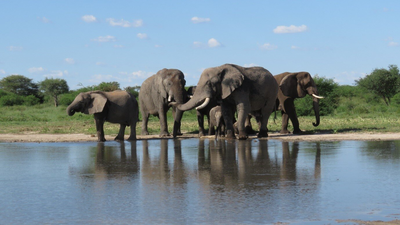
South Africa released 11 formerly captive elephants onto wild reserves; five years later, their behaviour closely matched elephants that had never lived in captivity

Rewilded elephants on Khamab Kalahari Reserve, who were observed during this research project (from left to right: Ngwedi, Mana, Michael, and Chikwenya) South Africa released 11 elephants that had spent years in captivity into protected reserves. Five years later, researchers found that their behavior was very similar to elephants that had always lived in the…

Read More

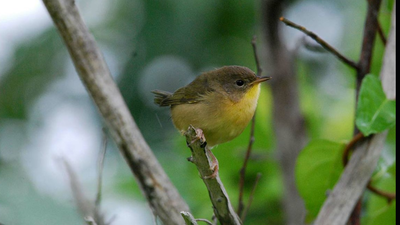
Female mammals usually outlive males, but a 27-year study found the pattern was reversed among dozens of North American bird species

Female birds have shorter lifespans than male birds, researchers find Female mammals usually live longer than males, but a 27-year study of North American birds has found the opposite pattern in birds.Researchers at the University of California, Los Angeles (UCLA) analyzed more than 563,000 bird-banding records and found that adult female birds had a 12.4%…

Read More

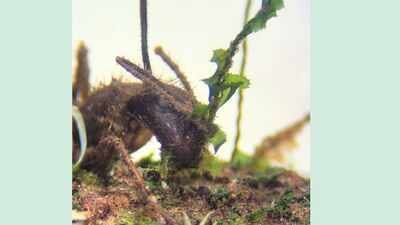
The Amazon’s zombie fungus manipulates ants into biting plants before death; scientists have now found it living silently inside mosses more than 10 metres away

An ant (Camponotus renggeri), infected by a fungus, bites into a liverwort plant while holding onto nearby moss with its claws.Photo: IMA Fungus journal The so-called zombie-ant fungus has long fascinated scientists because of the way it takes control of infected ants, forcing them to bite plants before they die. Now, researchers in the Amazon…

Read More

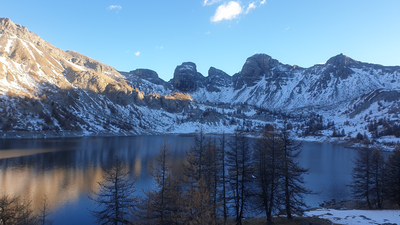
In 1924, Arctic charr from Lake Geneva were stocked into Lake Allos; a century later, their descendants showed distinct metabolic responses under identical conditions

Lake Allos (French Alps), the largest natural high-altitude lake in Europe and one of the two study sites for this research. Credit: Hervé Rogissart In 1924, Arctic charr from Lake Geneva were introduced into Lake Allos. A hundred years later, scientists found that their descendants had developed different metabolic responses, even when raised under the…

Read More

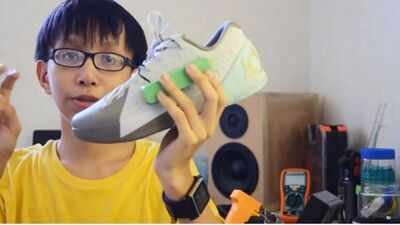
Meet Angelo Casimiro: The 15-year-old who designed shoes that generate electricity from human footsteps |

Image Credit: inhabitat.com The global energy landscape is rapidly changing as the dangers of fossil fuels are becoming visible to researchers and the public. As traditional energy sources will probably diminish by the year 2088, the search for renewable options has expanded from wind and solar farms to personal, wearable technology. A prime example of…

Read More

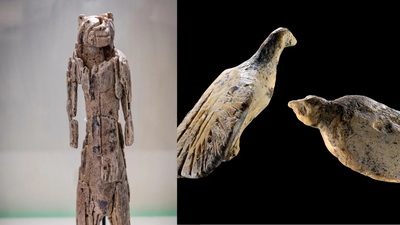
Archaeologists discover 40,000-year-old bird figurines no bigger than a thumbnail that are rewriting the story of Ice Age art |

Archaeologists excavating the renowned Hohle Fels Cave in southwestern Germany have uncovered two exquisitely carved bird figurines made from mammoth ivory that date back around 40,000 years. Although each carving is no bigger than a thumbnail, researchers say the tiny sculptures demonstrate an extraordinary level of craftsmanship and artistic sophistication among some of Europe’s earliest…

Read More

In 1997, a mysterious sound echoed across the Pacific. Years later, scientists traced the ‘Bloop’ to Antarctica |

The deep ocean has a way of turning ordinary events into unanswered questions. Far below the waves, sounds travel through water in ways that can make distant sources appear much closer or far stranger than they really are. In 1997, a powerful low-frequency noise recorded across the Pacific Ocean created one of the most unusual…

Read More

Meet Lucas Tadao: 14-year-old Brazilian student who turned cassava peels into biodegradable trays that could help replace Styrofoam and reduce plastic pollution |

As concerns over plastic pollution continue to grow, a 14-year-old student in Brazil has developed a sustainable alternative using materials that would otherwise be discarded. Lucas Tadao Sugahara Wernick, a student from Curitiba in the southern state of Paraná, created biodegradable food trays made from cassava peels and araucaria tree residues. Designed as a substitute…

Read More

Quote of the day by Richard Feynman: “The first principle is that you must not fool yourself and…” |

Richard Feynman’s most enduring quote was never intended as a memorable slogan. It came from his 1974 commencement address at the California Institute of Technology, where the Nobel Prize-winning physicist spoke about the principles that should guide scientific research. Among his remarks, one sentence has outlived the rest: “The first principle is that you must…

Read More