This NASA supercomputer compresses 500 years of computing into a single day to power Moon and Mars missions |

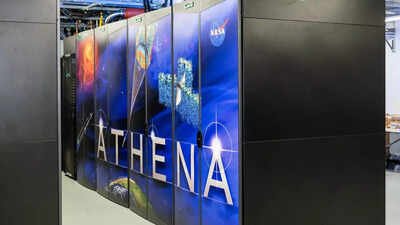
For most people, a powerful computer means faster loading times or smoother video edits. For NASA, it means compressing centuries of work into a single day. That’s the promise behind Athena, the agency’s newest and most powerful supercomputer, unveiled in January 2026. Sitting quietly at the Ames Research Center in California, Athena doesn’t look dramatic….

Read Full News

Mosquitoes now prefer to feed on humans instead of wildlife: Study finds shocking reasons behind the shift |

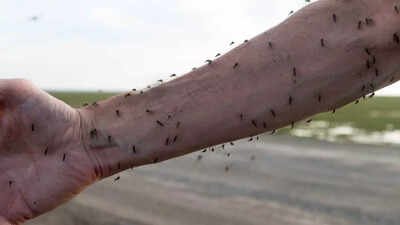
As forests disappear, mosquitoes are not vanishing with them. Instead, they are adapting in ways that bring them closer to people. A new study published in Frontiers in Ecology and Evolution shows that in Brazil’s rapidly shrinking Atlantic Forest, many mosquito species are increasingly feeding on humans rather than on wild animals. Scientists warn that…

Read Full News

Gene-editing therapy removes extra chromosome behind Down syndrome in a landmark lab study |

Scientists have achieved a genetic feat once thought impossible: removing an entire extra human chromosome using gene-editing technology. In a landmark laboratory study published in PNAS Nexus, researchers used CRISPR-Cas9 to delete the additional copy of chromosome 21 that causes Down syndrome. After the edit, human cells grown in the lab showed gene-activity patterns much…

Read Full News

Scientists find a breakthrough technique to track falling satellites |

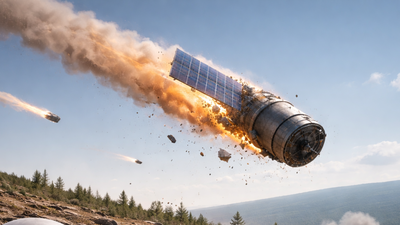
Scientists have uncovered an unexpected method to track falling satellites by listening to the Earth itself. Researchers found that when space debris re-enters the atmosphere at extreme speeds, it produces powerful shockwaves that travel through the ground and are picked up by earthquake-monitoring instruments. By analysing these signals, scientists can reconstruct the object’s flight path,…

Read Full News

Scientists warn: A giant asteroid could hit the Moon in 2032 and send fireballs toward Earth, risking satellite damage |

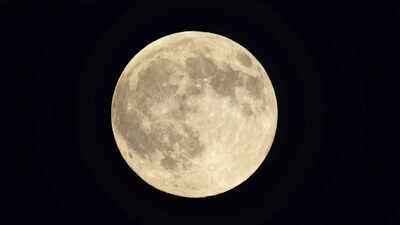
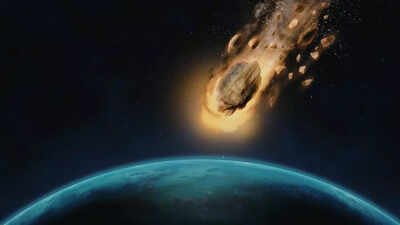
The Moon might be getting some attention in 2032. A small asteroid, roughly 60 metres wide, could smack it. Experts say the odds are low, about 4 percent, but that’s not zero. And that little number has scientists both nervous and excited. Nervous for obvious reasons: debris, satellite damage, potential fireballs raining down. Excited because…

Read Full News

NASA’s Juno scan reveals what lies below frozen surface of Jupiter’s moon |

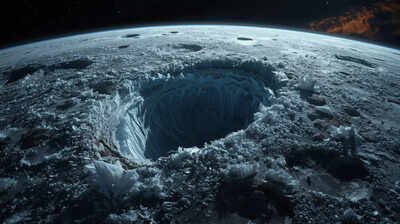
NASA’s Juno scan reveals what lies below frozen surface of Jupiter’s moon (AI-generated) New measurements from NASA’s Juno spacecraft have offered a clearer picture of what lies beneath the frozen surface of Jupiter’s moon Europa. During a close flyby in 2022, Juno gathered microwave data that allowed scientists to probe the moon’s icy crust to…

Read Full News