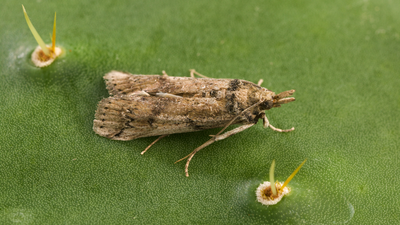
A cactus-eating moth released on Caribbean islands as biological control later reached Florida; since appearing there in 1989 it has spread west to Texas and become a threat to native prickly pears

Cactoblastis cactorum, commonly known as the Argentine cactus moth An invasive South American moth that was once released as a biological control agent in the Caribbean is now spreading across the southern United States, creating a serious ecological and economic threat to native prickly pear cactus populations. The insect, Cactoblastis cactorum, commonly known as the…
Read More

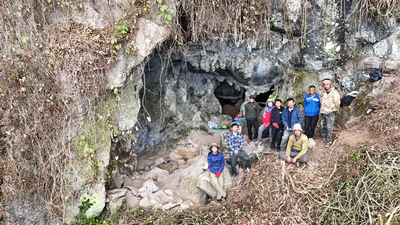
Northeast India’s human story may be 3,500 years older than previously thought: What archaeologists found in Nagaland’s Noklak

The discovery was made during a March 2026 archaeological expedition. (Photo credit: Nagaland Tribune) A pottery fragment sticking out of a rock shelter in Nagaland may have changed what archaeologists know about the region’s past. Archaeologists working in Noklak district have found evidence suggesting that people were living in the region around 3,500 years ago,…

Read More

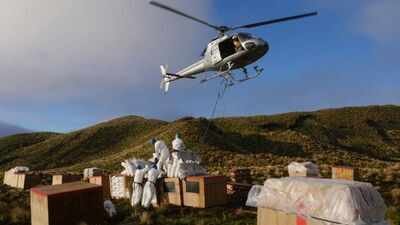
In 2016, New Zealand targeted an estimated 200,000 mice on Antipodes Island; two years later they were declared gone, and subsequent surveys found two native bird populations had more than doubled

The team used helicopters to spread cereal bait containing the rodent toxin brodifacoum (Picture:   Mouse free marion) In 2016, New Zealand launched a major operation to remove an estimated 200,000 mice from the remote Antipodes Island. The mice were the only mammalian pest species on the island, but their impact on the ecosystem was…

Read More

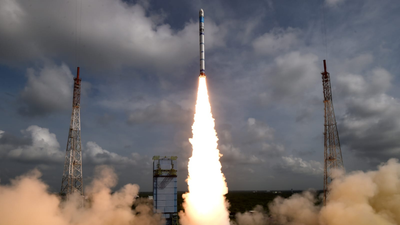
Indian Space Programme: From Thumba to tomorrow: Indian space programme is preparing for its biggest leap yet

Indian space programme (representative image) BENGALURU: August 23, 2023, gave India an image it had waited decades to see: a spacecraft settling on the Moon, its lander and rover beginning work near the lunar south polar region. But the significance of Chandrayaan-3 was perhaps easier to understand if one looked backwards.Six decades earlier, India was…

Read More

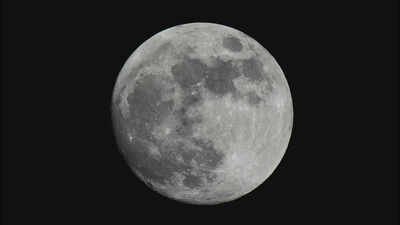
Apollo 15 astronauts collected tiny green glass beads from the Moon in 1971; more than 35 years later scientists found evidence of water inside, changing what we knew about the lunar interior

Representative Image (Image Credit: Canva) In 1971, Apollo 15 astronauts David Scott and James Irwin noticed something unusual on the Moon: tiny green flecks scattered across the otherwise grey surface. They collected samples and brought them back to Earth, unaware that the material would decades later challenge a long-held belief about the Moon. According to…

Read More

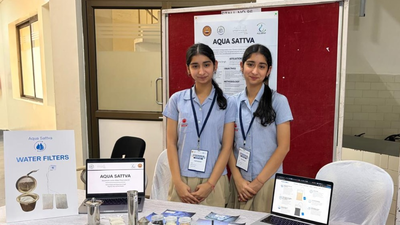
Cost-Effective Water Filter: Delhi-NCR twin sisters turn okra, fenugreek and rice husk into a Rs 100 electricity-free water filter; IIT Delhi tests show up to 93% removal of PFAS

​Naina and Nayantara Singh developed the low-cost plant-based water filter. What if some of the ingredients sitting in a kitchen cupboard could help tackle pollutants that conventional water filters struggle with? For Delhi-NCR twins Naina and Nayantara Singh, that question became the starting point for a nearly year-long scientific experiment. The Class XII students have…

Read More

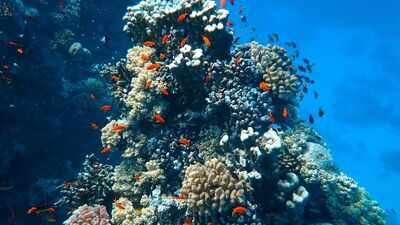
In 2025, Miami Beach sank 22 concrete cars 20 feet underwater; the surreal traffic jam was built to support 2,200 corals and marine life

In 2025, Miami Beach launched one of the most ambitious underwater art and conservation projects in the world. According to a report by the Miami Herald, the city sank 22 concrete cars 20 feet beneath the ocean surface, creating a surreal traffic jam designed to support 2,200 corals and marine life. The installation, part of…

Read More

The Eiffel Tower is not always 330 metres tall: Why Paris’ iconic landmark gets slightly taller during hot summer days

Why Paris’ Eiffel Tower Gets Taller When Temperatures Soar: The Simple Scientific Reason Behind Its Unexpected Seasonal Change (Canva) The Eiffel Tower looks as solid and unchanging as a monument can possibly be. Yet, on a hot summer day, Paris’ most famous landmark can actually become slightly taller.There is no new section being added, of…

Read More

After helping turn a barren Dhanbad coal-belt hillock into forest, CISF is planting 1,000 trees and one lakh vetiver slips across six acres beside Delhi’s Yamuna to revive the degraded land

Delhi’s Yamuna is all set for a much-awaited green makeover. The Central Industrial Security Force (CISF) has started replicating a forest-reclamation experiment that was successfully carried out in the coal-mining belt of Dhanbad, Jharkhand. As per a recent report on the initiative, about 100 CISF personnel planted 1,000 fruit-bearing and medicinal trees and one lakh…

Read More

Researchers turned data from roughly 1,200 Starlink satellites into a giant scanner for Earth’s upper atmosphere, mapping a hard-to-observe region around 500 kilometres above the planet

Representative Image (AI-generated) A network of Starlink satellites designed primarily for internet connectivity is giving scientists a new way to study one of the hardest-to-observe regions of Earth’s atmosphere. According to a study by researchers at Kyoto University, publicly available orbital data from roughly 1,200 Starlink satellites were used to estimate the density of the…

Read More