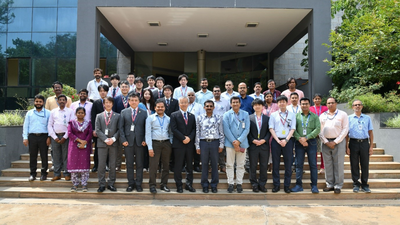
2028 Chandrayaan-5 launch site preparation begins: ISRO team visits Japan for assessment |

The ISRO team’s visit to Japan to evaluate the launch site preparations for Chandrayaan-5 is another milestone in terms of international cooperation for space exploration, especially between ISRO and the Japanese space agencies. The visit will be primarily aimed at evaluating the preparations of the launch facility, compatibility in technicalities, and joint mission planning for…

Read More

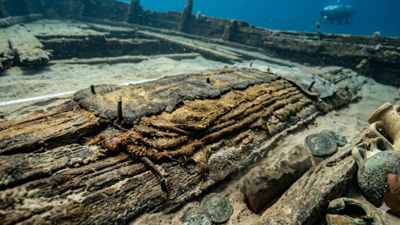
A 2,200-year-old Roman shipwreck reveals a secret history of emergency repairs that kept ancient trade alive across the Adriatic |

An ancient Roman merchant ship, submerged for over two millennia off Ilovik, has revealed secrets of Roman seafaring. Archaeologists discovered evidence of extensive repairs using a unique marine glue, showcasing the resourcefulness of sailors. Image Credit: Google Gemini The Roman merchant ship had been resting for over two millennia under the clear waters of the…

Read More

Deja vu has an exact opposite, jamais vu: Why the familiar can suddenly feel completely new |

Most people have experienced Deja vu, the strange sense that a moment has already happened. Far fewer recognise its counterpart, Jamais vu, where something deeply familiar suddenly feels unfamiliar or new. This can happen when a common word looks misspelt after repeated reading, or when a well-known place briefly feels strange. Although unsettling, the experience…

Read More

This giant ‘heavenly pit’ in China holds a hidden ecosystem below ground that has its own climate and wildlife far below the surface |

A colossal sinkhole, Xiaozhai Tiankeng, discovered in Southern China, reveals a hidden forest ecosystem. This “heavenly pit,” deeper than skyscrapers, harbors over 1,200 plant species and adapted wildlife, including the endangered clouded leopard. Image Credits: Google Gemini Unique geographical features continue to attract global attention due to their remarkable characteristics. In southern China, the vast…

Read More

In 2012, archaeologists digging up a Leicester parking lot unearthed a skeleton later DNA-identified as the long-lost King Richard III |

A car park in Leicester unexpectedly yielded the remains of King Richard III, the last English king to die in battle. Scientific analysis, including osteological evidence, DNA comparison with descendants, and examination of battle injuries, confirmed the skeleton’s identity Image Credits: Peter_Glyn, via Wikimedia Commons Usually, history tends to be found in magnificent churches or…

Read More

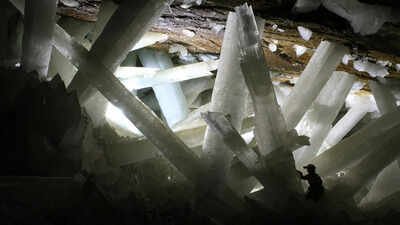
In 2000, silver miners in Mexico accidentally drilled into a 300-meter-deep crystal fortress that looks like a scene from another planet |

Miners in Chihuahua’s Naica Mine discovered a massive cave filled with colossal, white gypsum crystals, some reaching 12 meters in length. Image Credits: Alexander Van Driessche, via Wikimedia Commons Deep within the arid regions of Chihuahua, the Naica Mine had been operating on an industrial level for ages by pulling lead and zinc out of…

Read More

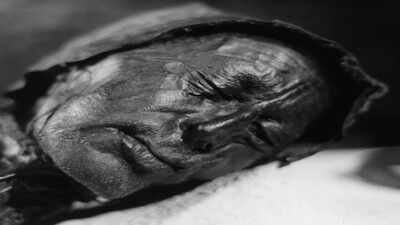
In 1950, a routine cut through a Danish bog revealed a face so fresh it looked alive until it was dated to 300 BCE |

On a rainy May day in 1950, Danish peat cutters Viggo and Emil Hojgaard unearthed a remarkably preserved Iron Age man in Bjældskovdal Bog. (Image Credits: Sven Rosborn, Public domain, via Wikimedia Commons) It was a rainy day on May 6, 1950, for Viggo and Emil Hojgaard. They were deep inside the Danish Bjældskovdal Bog,…

Read More

Meet Dattatreya Ramchandra Kaprekar: The Indian mathematician who discovered a ‘ghost number’ that always returns to itself |

In a modest classroom in Devlali near Nashik, a schoolteacher quietly uncovered one of the most intriguing patterns in mathematics. Dattatreya Ramchandra Kaprekar, born in 1905, was not part of elite academic circles, yet his fascination with numbers led him to discover a remarkable constant: 6174. What makes this number extraordinary is its behaviour. Apply…

Read More

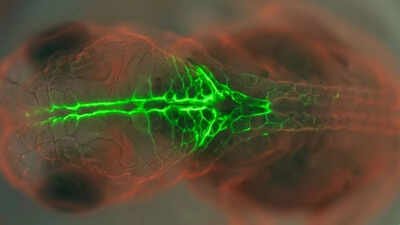
PRICKLE1 protein study uses glowing embryos to understand birth defects |

Neural tube defects, such as Spina bifida, are one of the leading congenital disorders (affecting about one in 1,000 live births worldwide) and are associated with the junctional neurulation. Though NTDs are most likely to develop within the first four weeks of pregnancy, it has historically been challenging to observe the specific molecular mechanisms that…

Read More